
Why Backyard Dimensions Matter More Than Yard Size
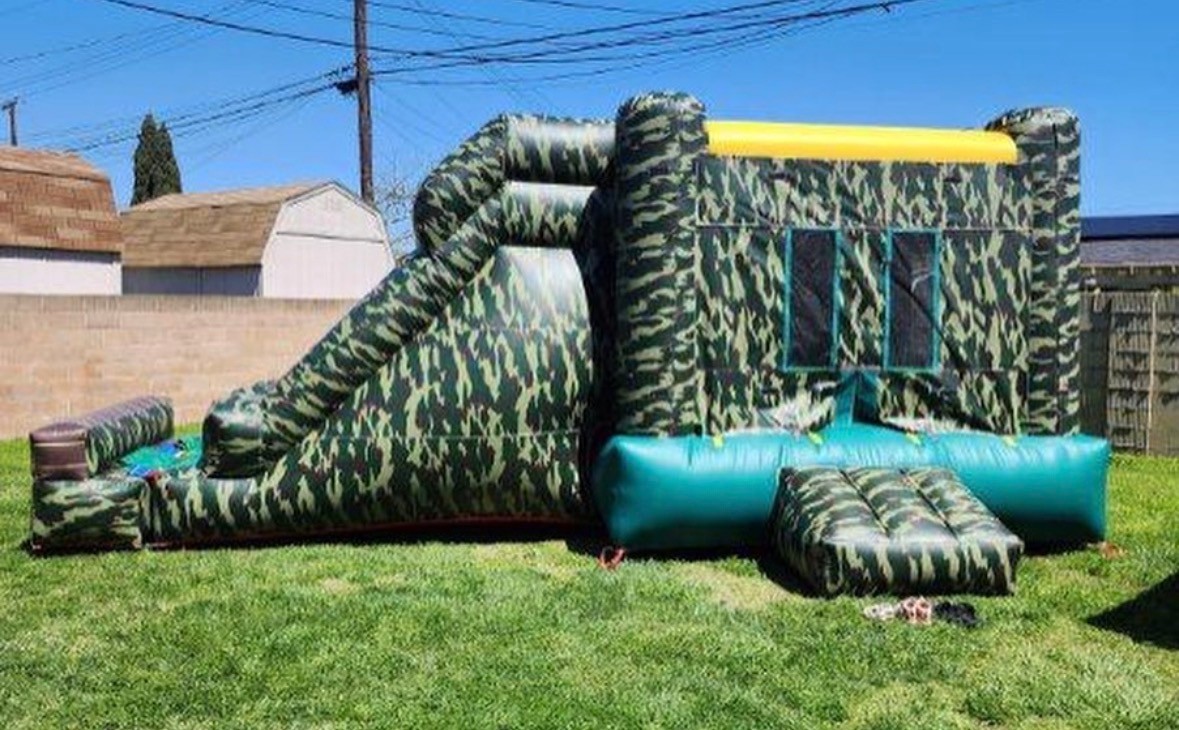
Here is the scenario that plays out more often than you might expect: a parent measures their backyard, sees a generous number, and books a large inflatable with confidence. Then delivery day arrives, and the crew discovers that a patio slab, a row of mature hedges, and a built-in BBQ island have quietly claimed most of the open space. The inflatable that looked perfect on paper simply does not fit the actual installation zone.
This is the most common sizing mistake Orange County families make, and it is completely understandable. Total yard size and usable installation space are two very different measurements. When you are planning a backyard birthday party in CA, the number that matters is the clear, flat, obstacle-free area where the inflatable can actually sit, with room to breathe on every side.
A practical way to start is to walk your yard with a tape measure and identify the largest rectangle of open ground you can find. Then subtract roughly two to three feet on each side for safety clearance, blower access, and a clear entry and exit path. That remaining footprint is your real working space, and it is the number you want to share when you reach out to a rental company. If you want a deeper look at how to prepare that space before your rental arrives, the backyard prep guide for OC inflatable rentals walks through exactly what to clear and check in advance.
Common culprits that shrink usable space in Orange County backyards include pool decks, raised garden beds, AC condenser units, patio furniture, and mature trees with low-hanging branches. Slopes are another factor worth noting early. Even a gentle grade can affect how an inflatable sits and anchors. If your yard has any noticeable pitch, the sloped backyard checklist is worth reviewing before you finalize your unit choice.
Bounce House Size Ranges and Who They Fit Best
Inflatables come in a wider range of footprints than most parents realize, and each size range tends to serve a different type of party well.
Compact units in the eleven-by-eleven to thirteen-by-thirteen foot range are a natural fit for toddler parties, smaller gatherings, or backyards where usable space is genuinely limited. These units are easier to position in tighter yards and still deliver a full bounce experience for younger children. If your guest list skews toward the three-to-six age range and your yard has some real constraints, a compact unit is often the smarter and safer choice rather than trying to squeeze a larger inflatable into a space it was not designed for. The toddler-friendly inflatable guide for OC birthdays covers unit options specifically suited to younger kids.
Mid-size units in the thirteen-by-thirteen to fifteen-by-fifteen foot range cover the widest variety of backyard birthday parties. This is the sweet spot for most families hosting a mixed-age group of kids, typically somewhere between six and twelve children bouncing at a comfortable capacity. These units fit in a standard suburban backyard when the installation zone is properly cleared, and they offer enough bounce area to keep kids engaged without overwhelming a modest yard.
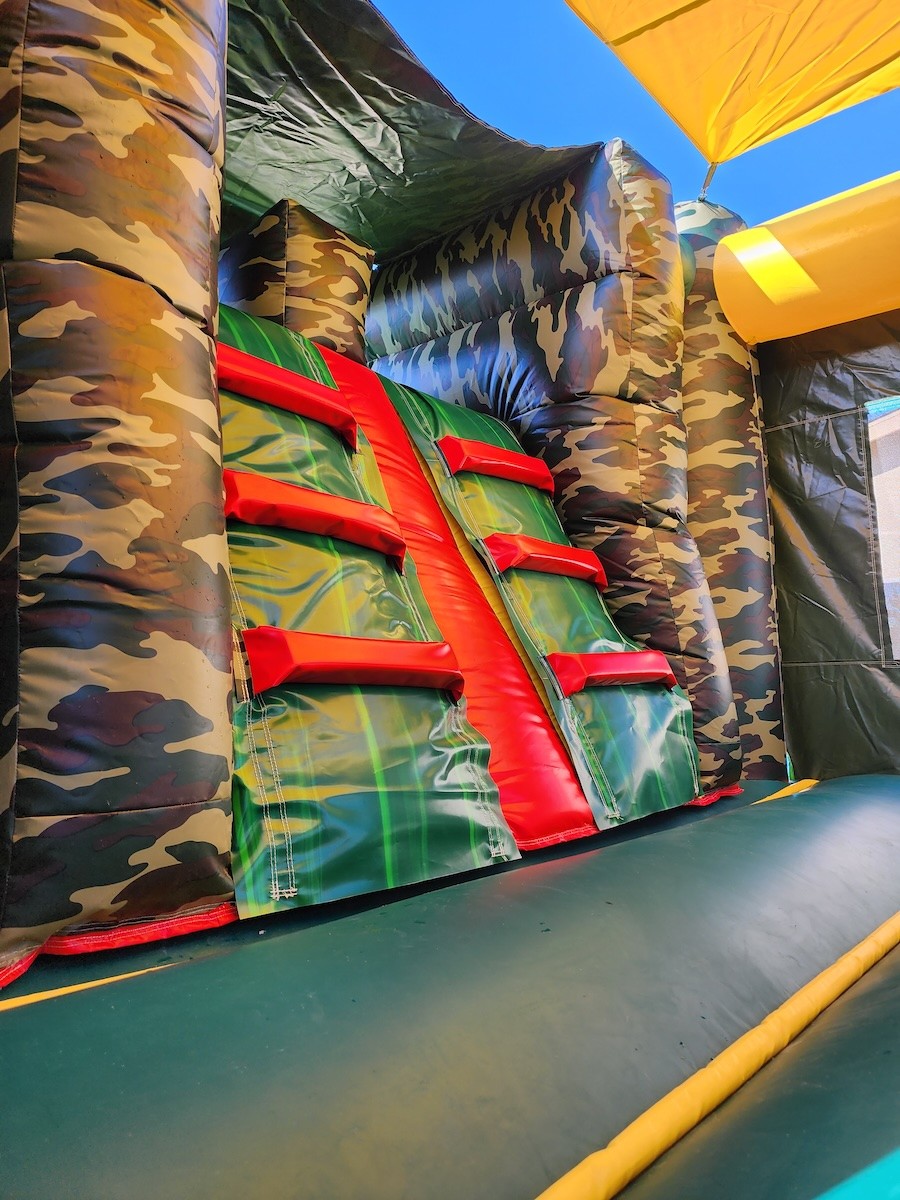
Larger units and combo inflatables, which often run from fifteen-by-fifteen feet up to twenty-by-twenty feet or beyond, make sense when you have older kids, a bigger guest list, or a yard with genuinely open space. Combo units that include a slide, climbing wall, or obstacle features naturally require more room, both in footprint and in overhead clearance. If you are planning a party for a larger group and want to understand how unit size scales with guest count, the inflatable capacity guide explains how capacity ratings work in practical terms.
One thing worth keeping in mind: a unit that is slightly smaller but properly sized for your yard will always deliver a better experience than an oversized unit that is crowded against a fence or positioned awkwardly around obstacles.
Clearance, Access, and Power: The Three Setup Factors Parents Miss
Even when parents measure the footprint correctly, three setup factors tend to catch them off guard: overhead clearance, gate access, and power availability.
Overhead clearance is easy to overlook because most people are thinking horizontally when they measure. A standard bounce house typically needs fifteen to eighteen feet of vertical clearance to inflate and operate safely. That means tree branches, roof eaves, patio covers, and utility lines all need to be factored in. If your yard has a beautiful mature tree shading the only flat area, that tree may be a dealbreaker for the unit you had in mind, even if the ground footprint works perfectly.
Gate access is the second factor. Delivery crews need to move equipment from the street or driveway to the installation zone, and that path needs to be wide enough to accommodate the inflatable in its transport configuration. A gate opening of at least thirty-six inches is a common practical minimum, though wider is always easier. If your only access point is a narrow side yard or a gate that opens inward, let the rental team know when you book so they can plan accordingly.
Power is the third piece. Most inflatable blowers run on a standard twenty-amp household outlet, but the outlet needs to be reasonably close to the setup location. Running a blower on an undersized or overloaded circuit can cause problems during the party, and very long extension cord runs can affect performance. The power and extension cord guide for OC inflatables covers what to check and how to plan your power setup before delivery day.
Sharing these three details (overhead clearance, gate width, and nearest outlet location) when you contact a rental company gives the team everything they need to recommend the right unit and confirm that setup will go smoothly.
Matching Guest Count to the Right Inflatable
Guest count and inflatable size are connected, but the relationship is not always as simple as a chart makes it look. Age, energy level, and how you plan to manage the bounce house during the party all factor in.
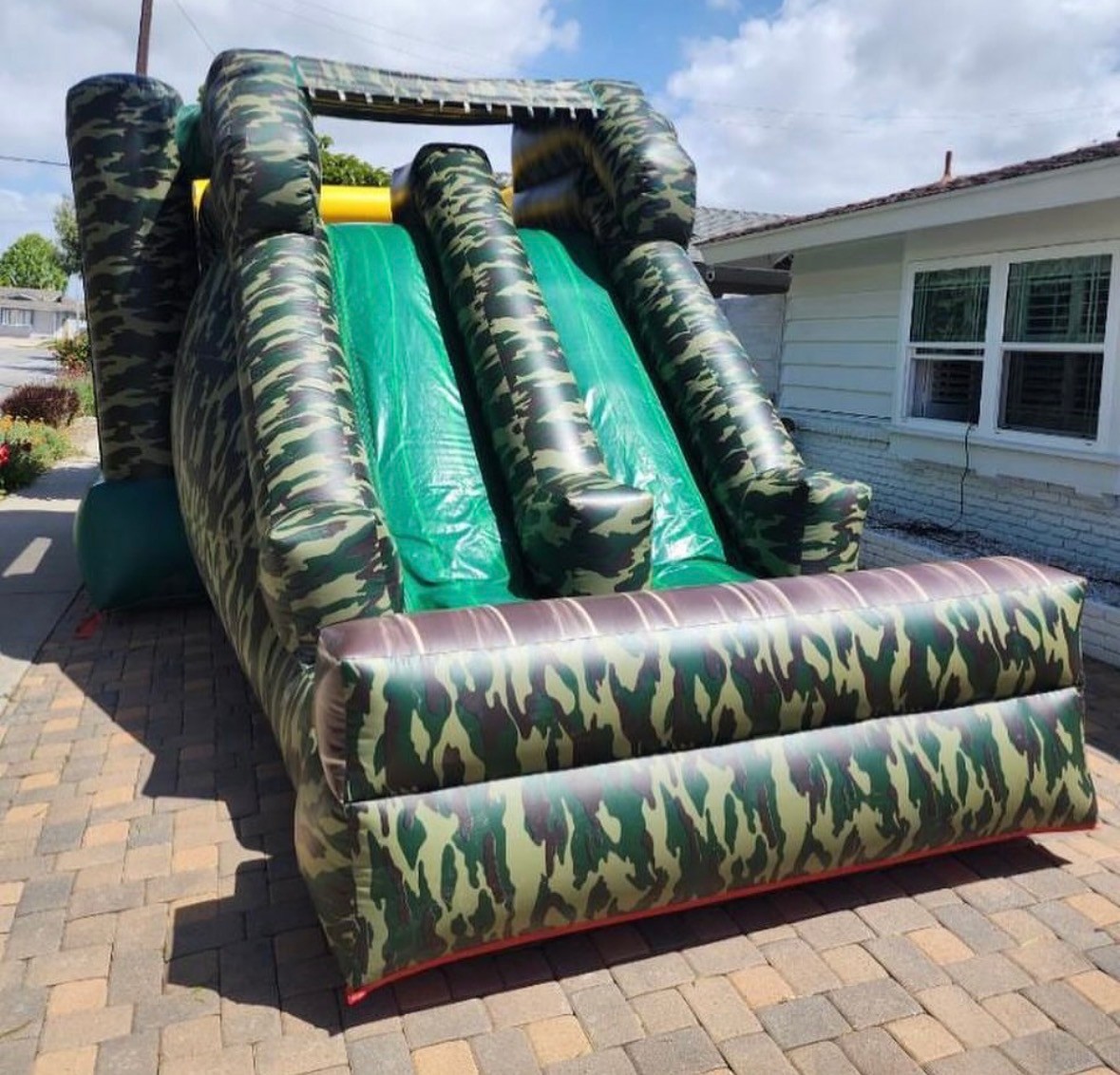
As a general planning framework, a thirteen-by-thirteen foot unit comfortably holds around six to eight children at a time, depending on their ages and sizes. A fifteen-by-fifteen foot unit can typically accommodate eight to twelve children bouncing simultaneously at a reasonable activity level. Larger combo units with slides or obstacle features spread kids across more play zones, which can actually help manage flow at a bigger party even if the total footprint is larger.
The key word in all of this is "simultaneously." Capacity ratings describe how many children can use the unit at one time safely, not how many guests can attend the party overall. If you are hosting twenty kids but plan to rotate groups through the bounce house in shifts, a mid-size unit may serve you perfectly well. If you expect all the kids to want to bounce at the same time and you have the yard space for it, a larger unit or a combo inflatable gives everyone more room. For parties where the guest list is pushing fifty or more, the large-group inflatable rental guide for OC addresses how to think about unit selection and logistics at that scale.
Age mix matters too. A party with mostly five and six year olds will use a bounce house very differently than a party where older siblings and cousins are also jumping. Mixing age groups in the same bounce session is something to plan for in your supervision approach, and it can also influence which unit size or style makes the most sense for your group.
How to Book the Right Size with Jump High Rentals
Once you have your usable space measurement, your guest count estimate, and a sense of your overhead clearance and power situation, you are ready to have a genuinely useful booking conversation.
The Jump High Rentals team serves Orange County families across a wide range of backyard setups, from compact Irvine townhome yards to larger lots in Yorba Linda and Anaheim Hills. The goal of that pre-booking conversation is not to upsell you to the biggest unit available. It is to match the right inflatable to your actual space so that delivery day is smooth and the party goes exactly as planned.
Summer weekends in OC fill up quickly, and popular units tend to book four to six weeks out during peak season. If you are planning a warm-weather party, earlier is always better. The booking timeline guide for OC inflatable rentals gives a clear picture of when to reach out based on your party date.
You can browse the full selection of inflatables, combos, and waterslides in the Jump High rentals catalog to get a feel for what is available and what footprints different units require. When you are ready to talk through the specifics of your yard and your guest list, the contact page is the easiest place to start. A quick conversation before you book can save a lot of stress on the day of the party, and that is exactly what the team is there for.