
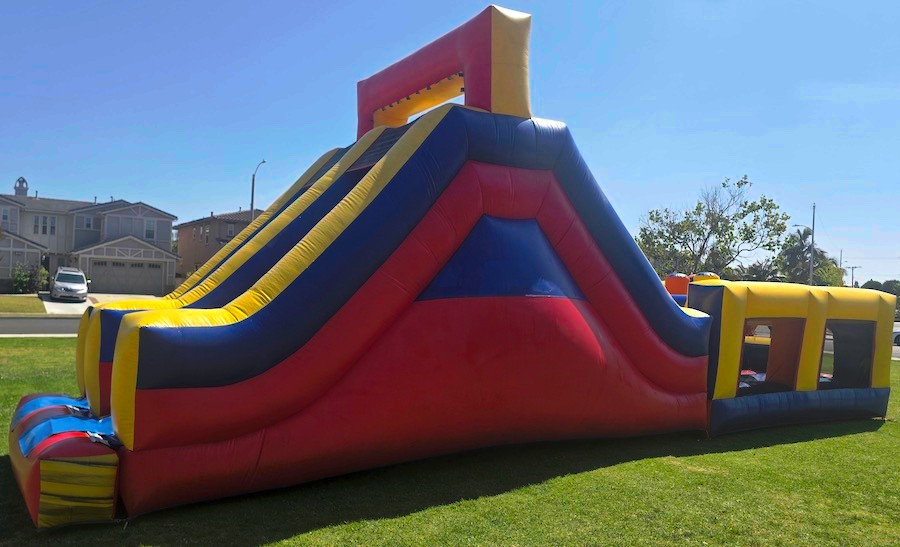
Block parties bring neighborhoods together, and a well-placed bounce house or obstacle course can turn a simple gathering into something kids talk about for weeks. For HOA boards and community event planners across Orange County, renting inflatables is one of the most popular ways to add energy to a block party without overcomplicating the setup. The key is knowing what to confirm before you book, so the day itself stays focused on the community rather than the logistics.
This guide walks through the five areas that matter most for OC HOA events: venue approval, site requirements, unit selection, delivery and pickup, and timing. Whether you are organizing a small cul-de-sac gathering or a larger community celebration, these steps will help you move from idea to event day with confidence.
Start With HOA and Venue Approval Before You Book
The first question to answer is where the event is happening and who controls that space. HOA block parties in Orange County take place in a few different settings: private HOA common areas, community parks managed by the HOA, or public parks maintained by the city. Each setting comes with its own approval process, and the paperwork can look very different depending on the venue.
If the event is on private HOA property, your board likely has an internal approval process. Check whether your community has vendor rules, a reservation window, or any restrictions on inflatables specifically. Some HOAs require vendors to carry their own liability insurance and provide a certificate before setup begins. Getting that information early gives your rental company time to prepare the right documentation.
If the party is at a public park, city approval is usually required before any inflatable can be set up. Many Orange County cities ask for a permit, and some require the rental company to be listed as an additional insured on an insurance certificate. This is not something to sort out the week before the event. Start the approval process as early as possible, ideally four to six weeks out, so you have time to gather what the city or venue needs.
A practical tip: ask your rental company what documentation they can provide and what they have handled for similar community events. A company experienced with HOA and neighborhood events will already know what is commonly requested and can help you avoid surprises.
Space, Power, and Access: What Your Site Needs to Support
Once approval is in place, the next step is a realistic look at your site. Inflatables need more room than most people expect, and this is one area where early planning pays off.
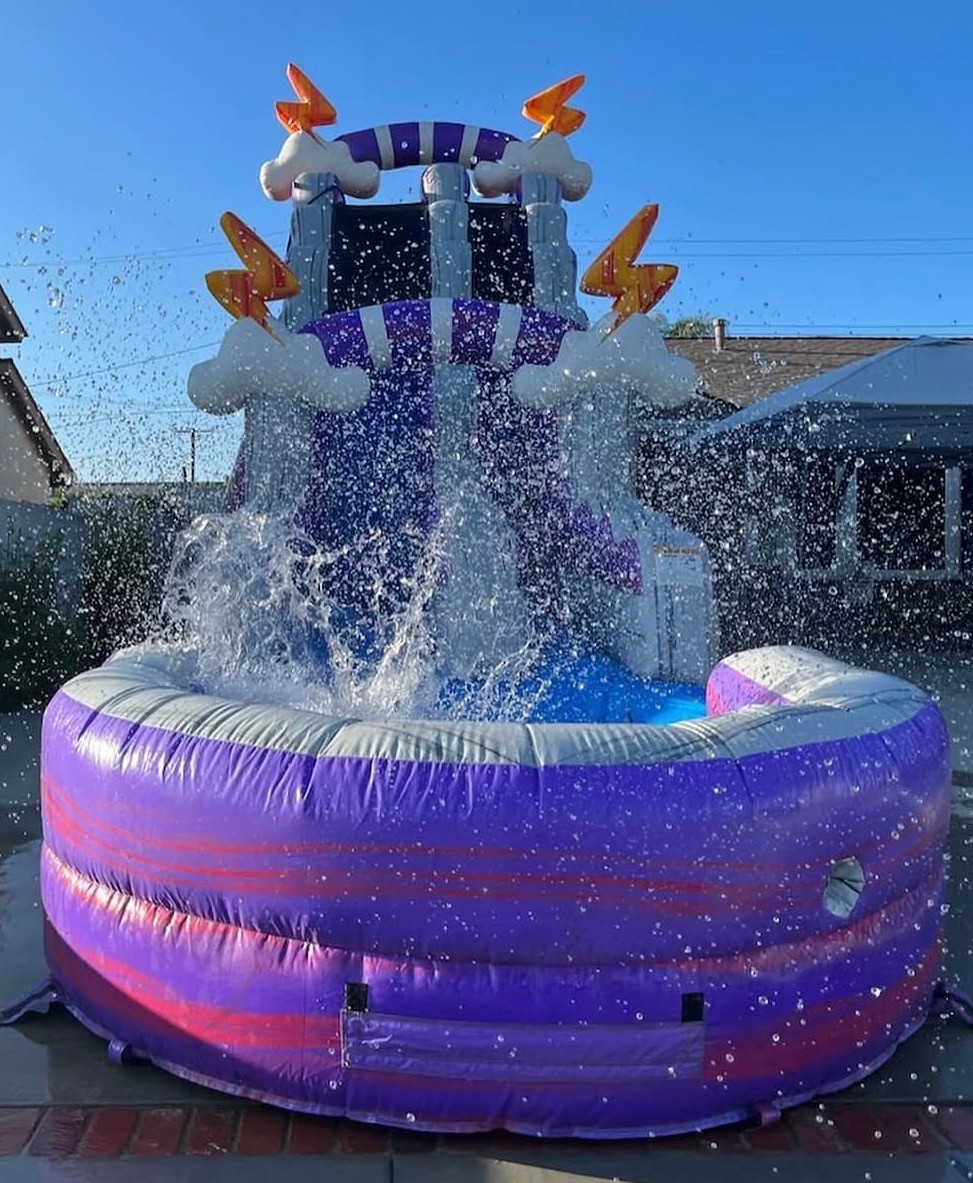
Every inflatable requires a safety buffer around the unit itself, not just the footprint of the inflatable. Obstacle courses and larger waterslides need especially generous clearance on all sides. Beyond the unit, you also need to account for the path guests will use to enter and exit, the area where kids will wait in line, and the delivery route the crew will use to bring in equipment.
A few site factors to evaluate before booking:
- Ground surface: Level grass is the most common setup surface, but concrete, pavers, and asphalt are also workable with the right anchoring approach. Uneven terrain or slopes can limit what is safe to set up.
- Access path: Delivery crews typically bring equipment through a gate or driveway. Measure the width of any entry points and note any overhead obstructions like tree branches or power lines.
- Power source: Most inflatables run on standard electrical power. Confirm that an outlet is within reach of the setup area, or ask whether a generator is needed. Your rental company can advise on power requirements based on the specific units you are considering.
- Water access: If you are considering a waterslide or wet inflatable, a nearby hose connection is necessary. Confirm that water is available at the site and that the venue allows wet inflatables.
Sharing photos or a rough sketch of your space with your rental company before booking helps everyone plan more accurately. It also reduces the chance of a last-minute adjustment on event day.
Choosing the Right Inflatable for a Mixed-Age Neighborhood Crowd
HOA block parties typically draw a wide range of ages, from toddlers to older kids and sometimes adults who want to join in. Choosing the right inflatable means thinking about who will actually be using it and how the line will flow throughout the event.
For younger children, a standard bounce house with lower walls and a simple entrance is usually the safest and most comfortable option. Kids ages two through six tend to do best in a dedicated space that is not shared with older, heavier participants.
For mixed-age groups, combo units and obstacle courses are often a better fit. A combo unit combines a bounce area with a slide, giving kids of different ages something to enjoy without needing separate setups. Obstacle courses are especially popular at community events because they encourage friendly competition and keep kids moving through the activity rather than waiting in a static line.
For older kids and teens, larger slides and more challenging obstacle courses tend to hold attention longer. If your event has a strong contingent of kids ages eight and up, it is worth asking your rental company about units designed for that age range.
One practical approach for larger HOA events is to rent two smaller units rather than one large one. This keeps wait times shorter and allows you to separate age groups naturally, which makes supervision easier for the adults managing the activity area.
What Good Delivery, Setup, and Pickup Looks Like for HOA Events
For neighborhood events, the way a rental company handles delivery and pickup matters as much as the equipment itself. HOA boards and community organizers are accountable to their neighbors, and a vendor that arrives late, leaves a mess, or causes disruption reflects on the event as a whole.
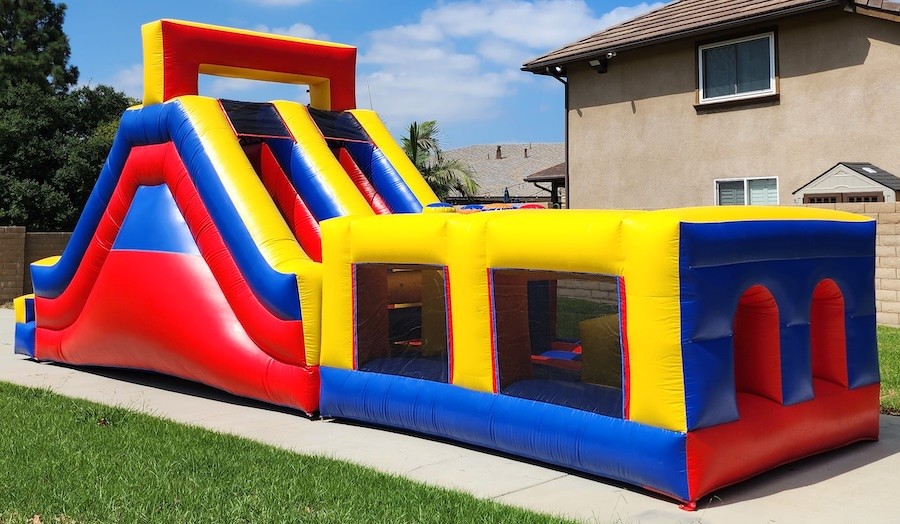
A reliable rental company will confirm the delivery window in advance, arrive with a crew that handles all setup, and leave the area clean after pickup. For HOA events specifically, this means not blocking shared driveways longer than necessary, keeping equipment staging tidy during setup, and removing all gear promptly when the rental period ends.
Before your event, confirm the following with your rental company:
- What time will the crew arrive for setup, and how long does setup take?
- What time will pickup happen, and how long does breakdown take?
- What does the crew need from you on arrival (access codes, parking, a point of contact)?
- Is there anything the site needs to have ready before the crew gets there?
Building a buffer into your event schedule is also helpful. If setup is expected to take 45 minutes, plan for an hour. If pickup is scheduled for 6 p.m., make sure your event activities wrap up with enough time for the crew to work without rushing.
Timing and Backup Plans for Outdoor OC Block Parties
Orange County weather is generally favorable for outdoor events, but 2026 is a good reminder that even mild climates can surprise you. Wind, unexpected rain, and heat all affect whether an inflatable can be operated safely on a given day.
Most rental companies have weather policies that address high winds and rain. Inflatables should not be operated in sustained winds above a certain threshold, and wet conditions can make surfaces slippery in ways that increase risk. Ask your rental company what their weather policy covers and what the process is if conditions change on event day.
For HOA block parties, a few timing strategies help reduce weather-related stress:
- Schedule the event during a part of the day when temperatures are comfortable and wind is typically calmer. In Orange County, late morning through early afternoon often works well for spring and fall events, while late afternoon can be better in summer when peak heat has passed.
- Have a simple backup plan ready. This might mean identifying an indoor space nearby, shifting the event time by a couple of hours, or having non-inflatable activities available if the inflatable needs to come down temporarily.
- Stay in contact with your rental company in the days leading up to the event. A good vendor will monitor conditions and communicate proactively if anything looks like it could affect the plan.
Planning an HOA block party takes coordination, but the inflatable piece does not have to be complicated. When you start the approval process early, know your site, match the equipment to your crowd, and work with a vendor that handles community events regularly, the day comes together smoothly.
If you are in the early stages of planning a block party or community event in Orange County, reach out to Jump High Rentals before your date fills up. The team can help you think through space requirements, unit options, and delivery logistics so you can focus on bringing your neighborhood together.