
Bounce House Safety for Mixed Age Groups in OC
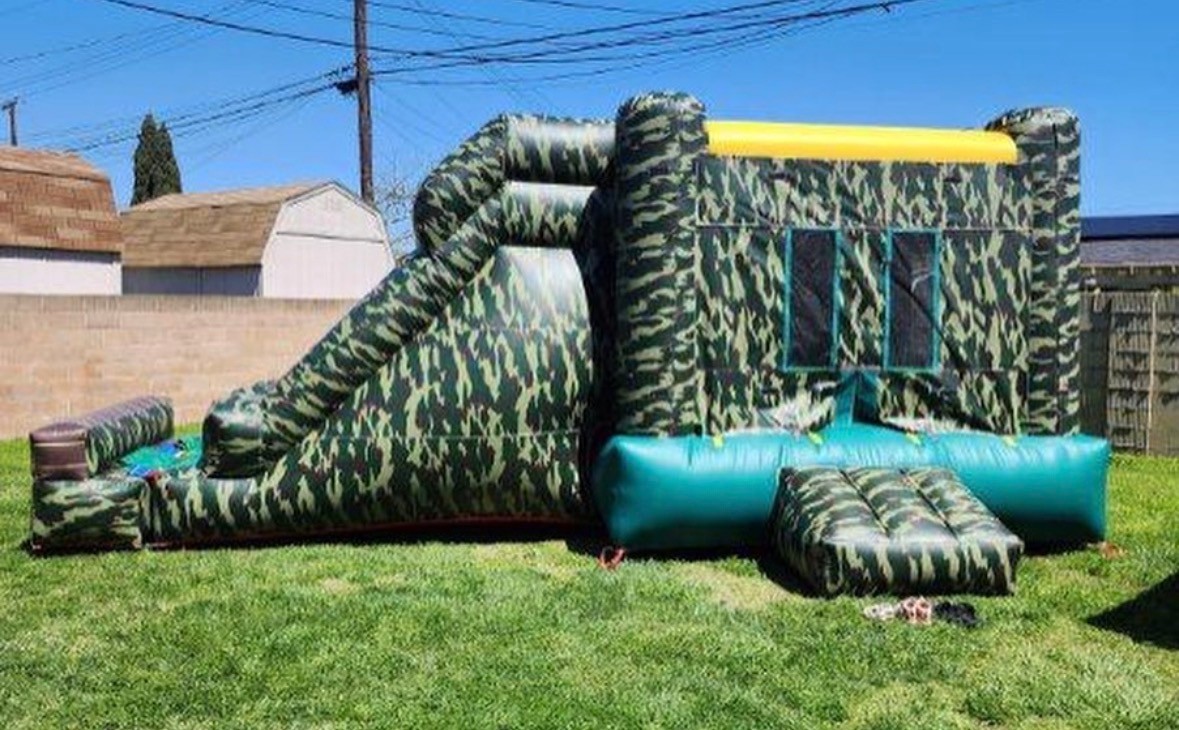
Most bounce house injuries don't come from equipment failure. They come from a six-year-old landing on a two-year-old who had no business being in the same unit. If you're planning a backyard birthday or neighborhood party in Orange County with a guest list that spans toddlers to tweens, understanding how age differences and capacity limits interact is the most important safety step you can take before the first kid climbs through the entrance.
This guide walks you through the real risks, the right unit sizes, and the supervision strategies that keep every child safe while still making the party genuinely fun.
Why Age Differences Create Real Safety Risks in a Bounce House
The core problem is physics. Older children bounce with more force, move faster, and have far less awareness of smaller kids around them. A toddler under three years old lacks the neck and core strength to absorb the impact of a collision, the balance to stay upright on a moving surface, and the spatial awareness to step out of the way when a bigger kid comes down hard nearby.
When you mix a four-year-old and a ten-year-old in the same inflatable, the size and weight difference alone creates a collision risk that supervision alone cannot fully eliminate. The ten-year-old isn't being reckless. The physics simply don't favor the smaller child.
Industry standards from ASTM (the American Society for Testing and Materials) and guidance from the American Academy of Pediatrics (AAP) both reflect this reality. Most rental companies, including Jump High Rentals, set a minimum of three years old and 42 inches tall for standard bounce houses. The AAP often recommends age six and up for mixed or unsupervised group play. Those aren't arbitrary numbers. They reflect the developmental stage at which children have enough coordination and body awareness to share a bouncing surface more safely with peers of similar size.
The takeaway for Orange County parents is simple. A mixed-age guest list is not a reason to skip the bounce house. It is a reason to plan more carefully before you book.
Capacity Limits by Unit Size: How Many Kids Is Too Many
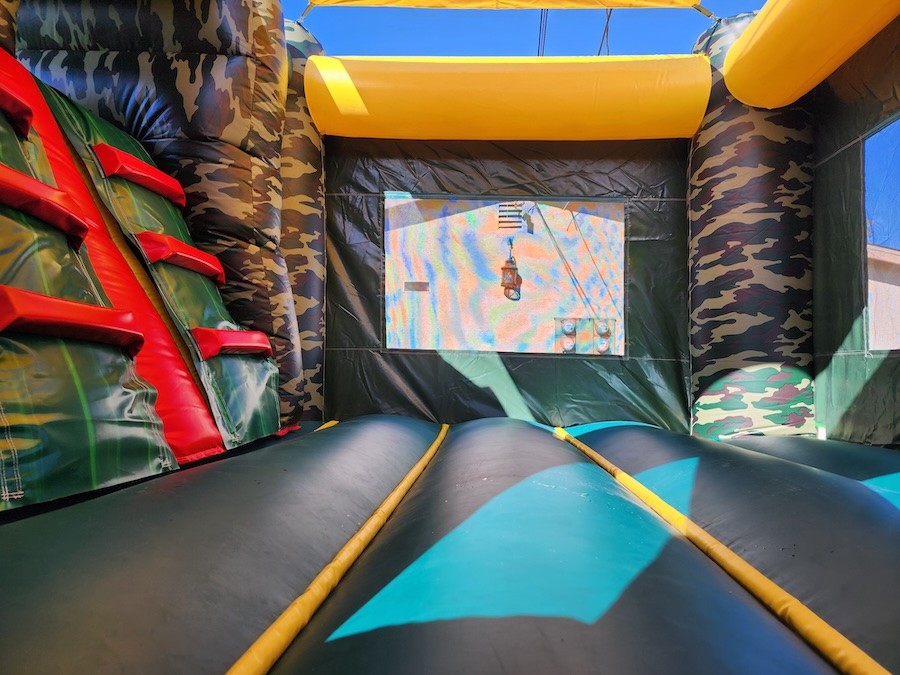
Every inflatable has a manufacturer label near the entrance that lists the maximum number of occupants and the total combined weight allowed. These limits exist for structural and safety reasons, and they apply whether you have one age group or four.
Here is a general breakdown of how capacity works across common unit sizes:
- Small units (10x10): Best suited for four to six children, with a total weight limit typically in the range of 600 to 800 pounds.
- Medium units (13x13): Comfortable for six to eight children, with a combined weight limit of roughly 800 to 1,000 pounds.
- Large units (15x15 and above): Can support eight to ten children, with weight limits ranging from 1,000 to 1,500 pounds depending on the manufacturer.
Overcrowding makes every other safety risk worse. When kids are packed in tightly, collisions become unavoidable, and a toddler in a crowded unit has almost no chance of staying on their feet. Staying within the posted capacity is not optional, and it matters even more when the group includes children of very different sizes.
When you call Jump High Rentals to book, sharing your expected headcount and the age range of your guests helps the team match you to a unit that fits both the space and the group.
The Safest Ways to Handle a Mixed-Age Party
If your guest list includes toddlers alongside school-age kids, you have a few practical options that keep everyone safer without canceling the fun.
Rent two separate units. This is the cleanest solution. A toddler-friendly unit designed for ages two to three gives your youngest guests a surface scaled to their size and ability. A standard bouncer or combo unit handles the older kids. Both groups get their own space, and the collision risk between age groups drops to zero.
Use timed rotation. If a second unit isn't in the budget, set defined time blocks where younger children (ages three to five) use the unit first, followed by older kids. Keep the blocks to around 30 minutes, make sure the unit is completely empty before the next group enters, and assign an adult to manage the transition. This approach works, but it requires consistent enforcement throughout the party.
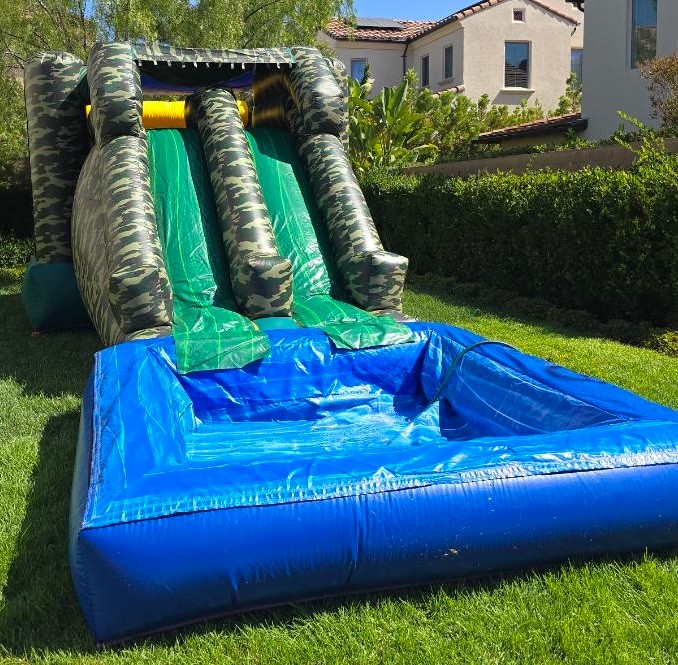
Strict same-unit supervision. If you must have mixed ages in one unit at the same time, assign one adult whose only job is managing that entrance. That person counts kids in and out, enforces the capacity limit, and stops rough play immediately. This option carries the most residual risk and works best only when the age gap is small, such as a five-year-old alongside a seven-year-old, rather than a toddler alongside a preteen.
Supervision Rules Every Parent Should Enforce
Good supervision is not standing nearby while watching your phone. For a bounce house with mixed ages, it means active, eyes-on management from the moment the first child enters to the moment the last one climbs out.
A few rules that make a real difference:
- Remove shoes, glasses, and any sharp accessories before kids enter.
- No flipping, wrestling, or piling on, regardless of age.
- Keep food, drinks, and gum out of the unit entirely to prevent slipping and choking.
- Maintain three to five feet of clearance on all sides of the unit and at least eight feet of vertical clearance overhead.
- Stop use immediately if wind picks up, rain begins, or the temperature climbs to a point where kids need a hydration break.
- Never leave the bounce house unattended while children are using it.
The adult assigned to the unit should feel empowered to pause play and remove kids who aren't following the rules. A short break is far better than an injury.
Choosing the Right Unit for Your OC Guest List
Orange County's year-round party season means Jump High Rentals sees guest lists of every combination imaginable, from all-toddler birthday parties to neighborhood block parties with kids ranging from two to twelve. Matching the right unit to your specific group is one of the most practical things you can do before the day arrives.
If your party skews young (mostly ages two to five), ask about toddler-specific units or gentle combo bouncers designed for smaller children. If your group is mostly school-age kids between six and ten, a standard 13x13 or 15x15 unit gives them room to move without overcrowding. For older kids ages eight to twelve, an obstacle course or sports inflatable often works better than a plain bouncer because it channels their energy into a structured activity rather than open bouncing, which reduces collision risk and keeps them more engaged.
If you're hosting a larger neighborhood event or school party where the age range is genuinely wide, a two-unit setup is worth the investment. One unit for the little ones and one for the bigger kids means both groups are safer and both groups have more fun because they're not being held back or put at risk by the size difference.
Ready to figure out the right setup for your party? Contact Jump High Rentals and share your guest age range and headcount. The team can walk you through unit options, help you decide whether a single unit or a two-unit setup makes more sense, and make sure your Orange County party is set up safely from the start.