
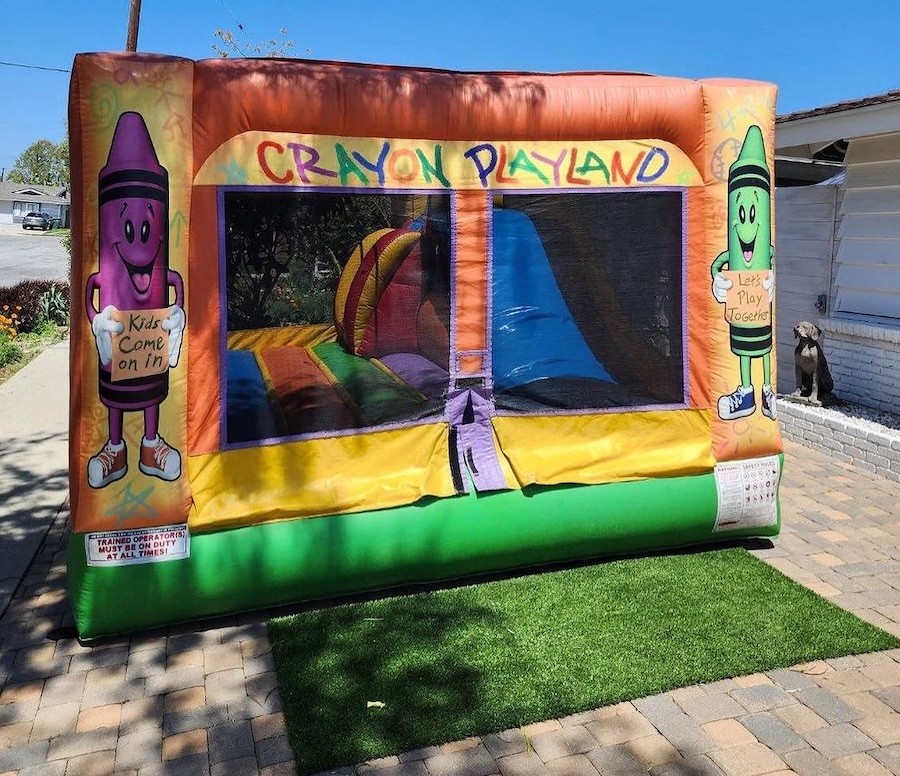
If you've been searching your backyard and wondering whether your surface type will work for a bounce house rental, you're asking exactly the right question before booking. The short answer is that both grass and concrete can work well for a bounce house setup. What matters most is that the surface is level, clear of hazards, and properly anchored for the conditions.
This guide walks through what changes between the two surfaces, what to prepare before delivery day, and how to share the right details with your rental company so setup goes smoothly.
Why Your Backyard Surface Matters Before Booking
The surface under a bounce house affects two things directly: how the unit gets anchored and how safe the surrounding area is for kids entering and exiting.
Rental companies like Jump High Rentals ask about your surface type before delivery because the anchoring method is different for grass versus concrete. Bringing the wrong equipment to a job site means delays or, worse, a unit that isn't secured the way it should be. Letting your rental team know in advance means they arrive prepared.
Beyond anchoring, the surface affects what happens when a child steps off the inflatable. A soft lawn is more forgiving than a concrete pad. That doesn't make concrete off-limits, but it does mean the setup needs a little more attention to the entry and exit zone.
The most common misconception parents have is that concrete automatically disqualifies a space. It doesn't. What disqualifies a space is a surface that's uneven, cluttered with hazards, or too small to give the inflatable proper clearance on all sides. Surface type is one factor among several, and it's one your rental company can work with when you communicate it clearly.
Setting Up on Grass: What Makes It the Easier Choice
Grass is generally the simpler surface for bounce house setup, and there are a few practical reasons why.
Stake anchoring is the standard method on grass. The crew drives stakes into the ground at the anchor points around the inflatable, which keeps the unit stable during use. This process is straightforward on a healthy lawn and doesn't require extra equipment beyond what's already on the truck.
That said, not every grass yard is automatically ready to go. Before setup, the area should be:
- Mowed and free of long grass that could hide hazards
- Cleared of rocks, twigs, sprinkler heads, and any sharp objects that could puncture the inflatable floor
- Checked for slope, since even a gentle grade can affect stability and increase the chance of kids sliding toward one side
- Free of low-hanging branches, fences, or structures within the recommended clearance zone around the unit
In Orange County, many backyards also have in-ground sprinkler systems. If your yard does, let your rental company know where the heads are located so stakes can be placed safely without hitting irrigation lines.
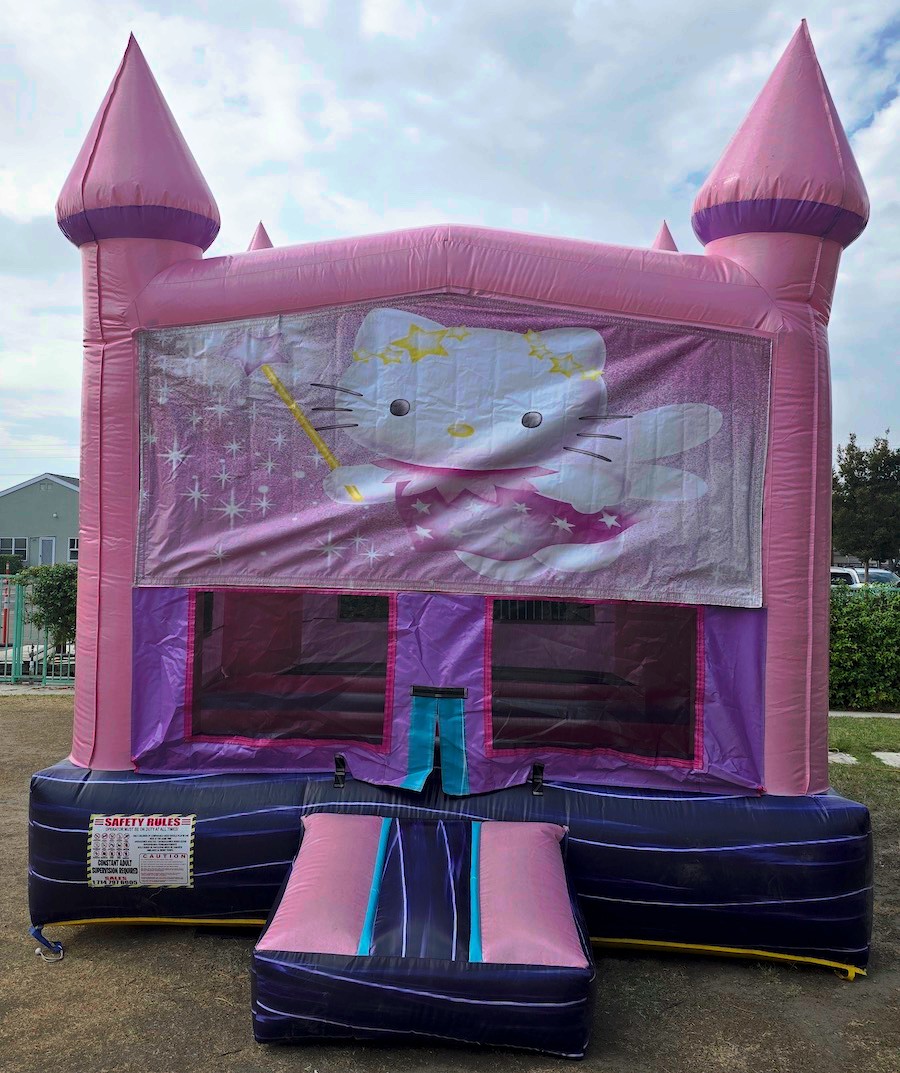
One more thing worth mentioning: wet grass from recent watering or morning dew can get slippery around the entry and exit point of the inflatable. A simple rubber mat or towel near the step can help keep that area safer for kids hopping in and out.
Setting Up on Concrete: What Changes and What to Prepare
Concrete is a workable surface for bounce house rentals, but the setup process is different in a couple of important ways.
Because stakes can't be driven into a concrete pad, the anchoring method shifts to weight-based systems. Sandbags or water barrels are placed at the anchor points to hold the inflatable in position. These are just as effective as stakes when used correctly, but they need to be part of the delivery plan from the start. When you book and mention you have a concrete surface, your rental company can make sure the right weights are loaded on the truck.
The other key difference is the entry and exit zone. Concrete is harder than grass, so a fall near the step of the inflatable carries more impact. Protective mats placed at the base of the entry point help cushion that area and give kids a safer landing spot. Ask your rental company whether mats are included in the setup or whether you should have something on hand.
A few other things to check on a concrete surface before delivery:
- Look for cracks, uneven sections, or raised edges that could create a tripping hazard near the inflatable
- Make sure the pad is large enough to accommodate the inflatable plus the required clearance on all sides
- Check that there are no overhead obstructions like patio covers, awnings, or utility lines above the setup area
- Confirm the surface is clean and dry before the crew arrives
Concrete patios in California backyards are often shaded by patio covers or surrounded by fencing, so take a moment to measure the open area carefully. Your rental company can help you confirm whether the dimensions work for the unit you're considering.
What to Tell Your Rental Company Before Delivery Day
The more specific you can be when you book, the smoother your delivery will go. When you contact Jump High Rentals, here's the information that helps the team prepare:
Surface type. Is the setup area grass, concrete, asphalt, or a combination? If it's a mix, describe which part of the space is which.
Dimensions. Measure the length and width of the available area. Include any fixed obstacles like trees, fences, or patio furniture that can't be moved.
Slope. If your yard has any grade to it, mention that. Even a small slope can affect placement and anchoring decisions.
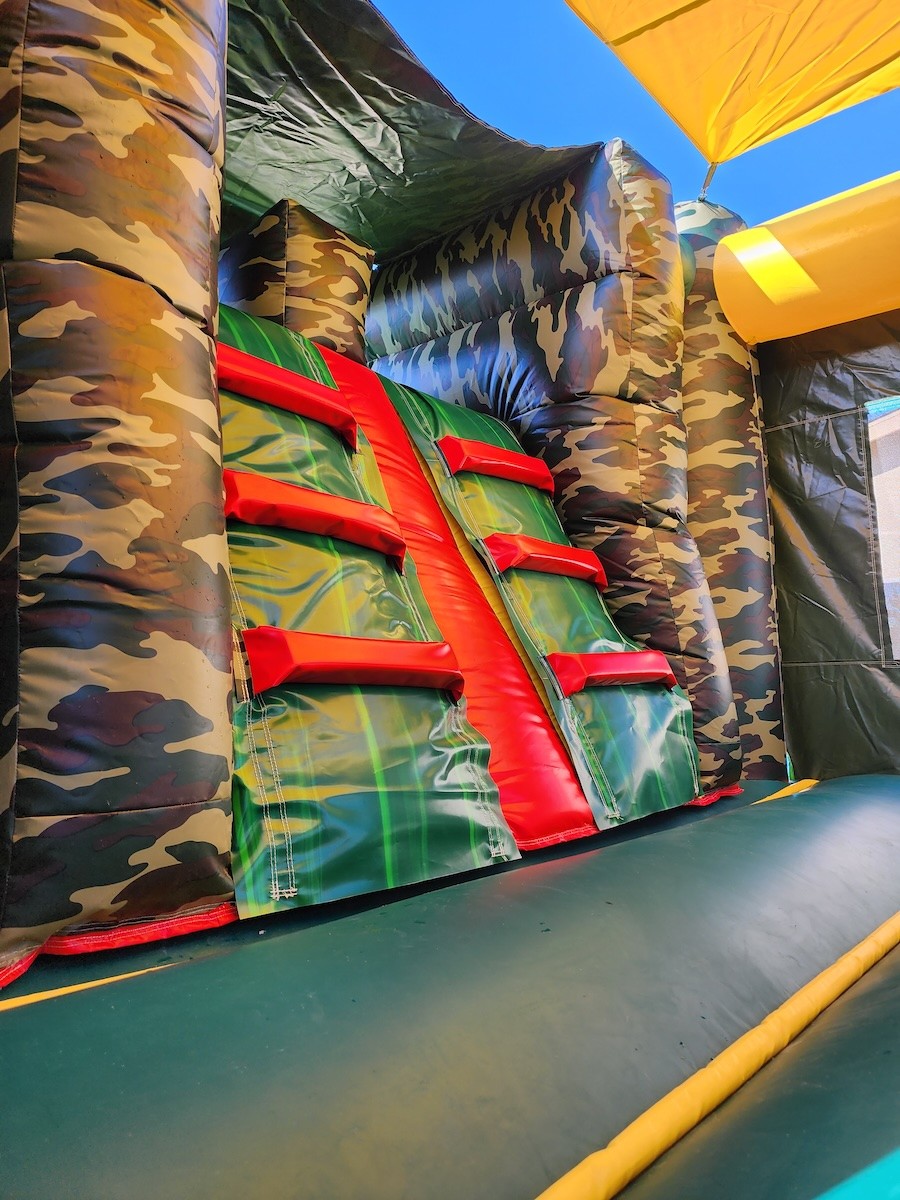
Sprinkler system. If you have in-ground irrigation, note where the heads are located so the crew can avoid them during stake placement.
Access route. Let the team know how they'll get the inflatable from the street or driveway to the setup area. A narrow side gate, steps, or a long carry distance all affect delivery logistics.
Overhead clearance. If there's a patio cover, awning, or tree canopy over the setup area, share the approximate height. Most inflatables need clear vertical space well above the unit.
Sharing these details upfront isn't just helpful for the delivery crew. It also means you're less likely to face a last-minute change on the day of the party.
Safety Habits That Apply to Every Surface
Once the inflatable is set up and anchored, a few safety habits apply regardless of whether you're on grass or concrete.
Keep the area around the inflatable clear throughout the party. Kids running nearby, chairs placed too close, or decorations hung near the unit can all create hazards that weren't there at setup time.
Watch the weather. California backyards in Orange County enjoy great weather most of the year, but wind can pick up quickly, especially in the afternoon. Inflatables should not be operated in strong wind conditions or rain. If conditions change during your event, bring kids off the unit and wait until it's safe to resume.
Follow the capacity and age guidelines your rental company provides. Overcrowding a bounce house is one of the most common causes of bumps and falls. Keeping the number of kids inside to the recommended limit makes a real difference.
Assign an adult to supervise the inflatable at all times. This person's job is to watch the unit, not chat with other guests. Rotating that responsibility among parents throughout the party keeps supervision consistent.
Finally, remove shoes, glasses, and any sharp accessories before kids enter the inflatable. This applies on every surface and every setup, and it's one of the simplest ways to keep the experience safe for everyone.
When you're ready to share your yard details and find the right inflatable for your space, reach out to Jump High Rentals. The team is happy to talk through your surface type, dimensions, and any questions about what setup will look like at your home. Getting those details right before delivery day is the best way to make sure your party starts smoothly and stays that way.