
Why Blower Specs Matter More Than Unit Price
When Texas fleet buyers start comparing commercial inflatables, the conversation almost always begins with unit price. How much does the bounce house cost? What does the obstacle course run? Those are fair questions, but experienced operators will tell you the blower spec sheet deserves just as much attention as the price tag. A unit that arrives with an undersized or mismatched blower will deflate mid-event, trip a venue breaker, or wear out twice as fast as it should. Any one of those outcomes costs you more in refunds, reputation, and replacement parts than the money you saved buying cheap.
Commercial inflatables are continuous-inflation systems. Unlike sealed inflatables that hold air like a balloon, bounce houses and waterslides rely on a blower running the entire time the unit is in use. The moment that blower loses power or can't keep up with the unit's volume demands, the walls soften and the structure becomes unsafe. That makes the blower less of an accessory and more of the operational heart of every unit in your fleet.
For TX fleet buyers specifically, the stakes are higher than in many other markets. Texas summers push ambient temperatures well above 90 degrees Fahrenheit across most of the state, and heat affects both motor performance and vinyl pliability. A blower that performs adequately in a 70-degree warehouse demo may struggle to maintain pressure in a 98-degree Dallas parking lot. Buying to spec means buying with your actual operating environment in mind, not the manufacturer's ideal conditions.
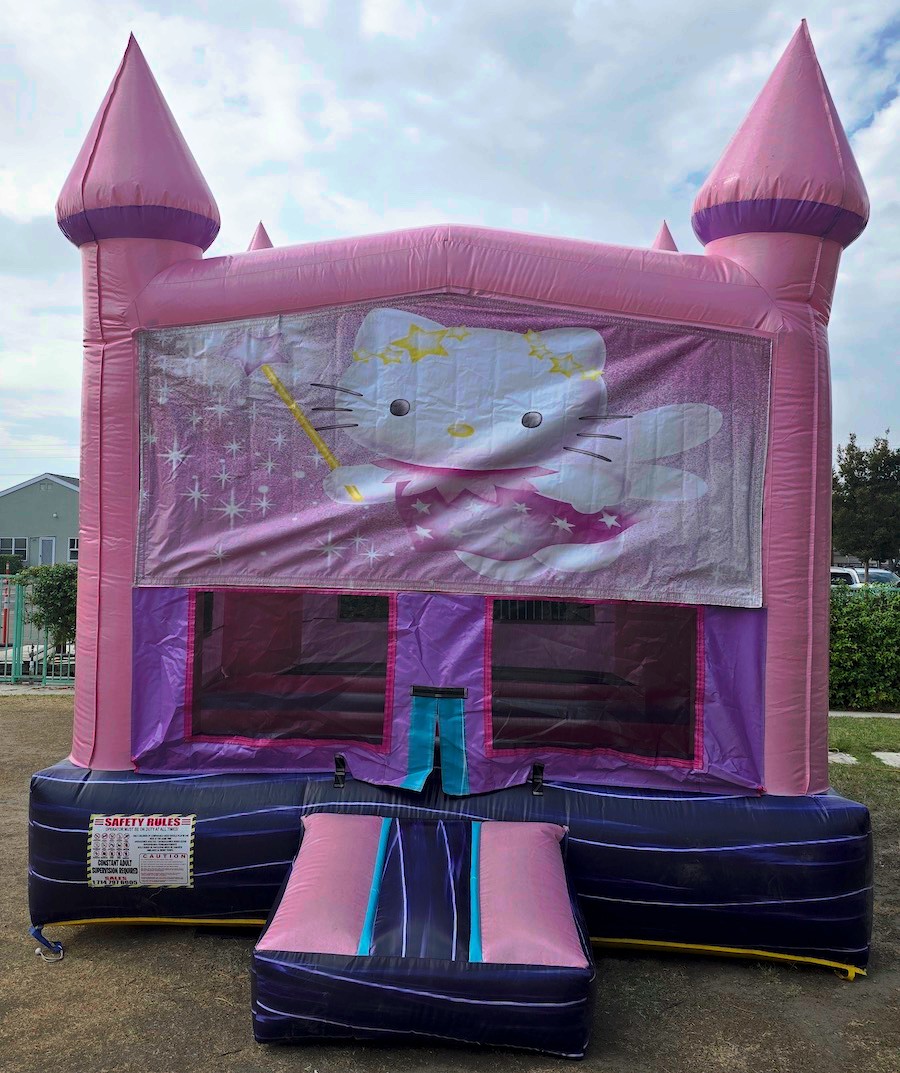
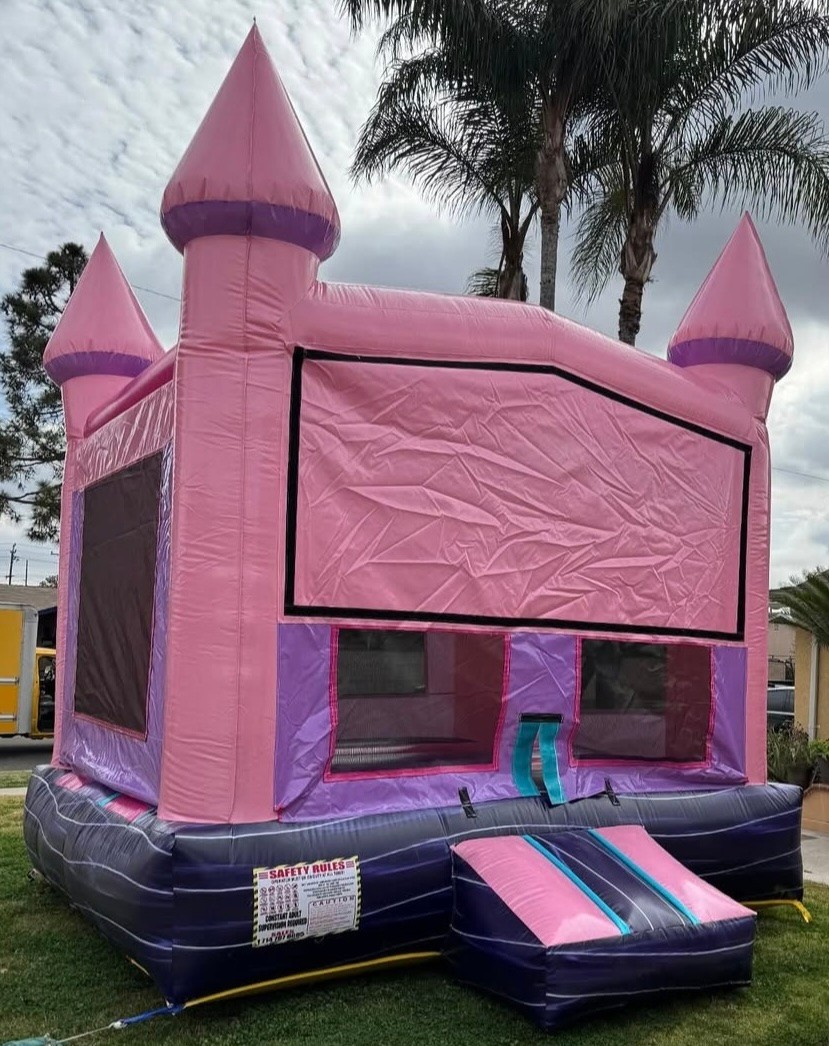
If you want a real-world reference for how commercial units are sized and paired with appropriate blowers, browsing Jump High's rental fleet gives you a practical baseline. The units in active rental rotation reflect the kind of spec decisions that hold up under repeated daily use, which is exactly the standard you want for your own inventory.
HP, CFM, and Voltage: Reading Commercial Blower Ratings
Three numbers appear on every commercial blower spec sheet: horsepower (HP), cubic feet per minute (CFM), and voltage. Understanding what each one actually measures helps you avoid the most common purchasing mistakes.
Horsepower describes the motor's power output. Most commercial-grade bounce house blowers fall between 1 HP and 2 HP, with larger combo units and obstacle courses often requiring 1.5 HP or higher. A 1 HP blower running a unit designed for 1.5 HP will run continuously at or near its thermal limit, which shortens motor life significantly. For fleet operations where units run four to eight hours at a stretch, that thermal stress adds up fast.
CFM is the more operationally useful number. It measures how much air the blower moves per minute, which directly determines whether the unit can maintain proper inflation pressure under real use conditions. A bounce house with kids jumping inside is constantly losing air through seams, mesh windows, and the entrance opening. The blower has to replace that lost volume continuously. Manufacturers typically publish a recommended CFM range for each unit, and staying within that range is non-negotiable for safe operation. As a general rule, larger units with more interior volume require higher CFM ratings, not just higher HP.
Voltage requirements split into two categories for most TX fleet buyers: standard 120V single-phase and 240V single-phase. Nearly all residential and small commercial venues in Texas run 120V circuits, which means your blowers need to operate on standard household current if you want maximum booking flexibility. Some larger commercial blowers are rated for 240V, which limits where you can deploy them without renting a generator. For a startup fleet, sticking with 120V blowers across your inventory keeps your logistics simpler and your venue options wider.
Wattage is the number that connects HP and voltage in practical terms. A 1.5 HP blower typically draws around 1,100 to 1,500 watts depending on efficiency ratings. At 120V, that translates to roughly 10 to 13 amps of continuous draw. Most standard 15-amp circuits can handle a single blower, but a 20-amp dedicated circuit is strongly preferred for commercial use. The National Electrical Code (NEC) recommends that continuous loads not exceed 80 percent of a circuit's rated capacity, which means a 15-amp circuit should carry no more than 12 amps of continuous draw. Knowing this before you arrive at a venue prevents the breaker-tripping scenarios that frustrate clients and damage your reputation.
Matching Blower Size to Inflatable Dimensions and Volume
The most reliable way to match a blower to a unit is to start with the manufacturer's published volume specification, usually expressed in cubic feet. A standard 13-by-13-foot bounce house has a relatively modest interior volume compared to a 40-foot obstacle course or a dual-lane waterslide. Each category has a different CFM requirement, and using a one-size-fits-all blower across your fleet is a shortcut that creates problems.
Small to mid-size bounce houses in the 13-by-13 to 15-by-15-foot range typically pair well with 1 HP blowers rated at 600 to 900 CFM. Combo units that include a bounce area plus an attached slide generally need 1.5 HP blowers in the 900 to 1,200 CFM range. Full obstacle courses and large waterslides often require 1.5 to 2 HP blowers with CFM ratings above 1,200. Some manufacturers include two blower ports on their largest units, meaning you'll need two separate blowers running simultaneously to maintain proper inflation.
When you're evaluating a vendor's spec sheet, look for the recommended blower size listed alongside the unit dimensions, not just the overall footprint. A 20-by-20-foot bounce house with a 10-foot ceiling has significantly more interior volume than a 20-by-20-foot unit with a 7-foot ceiling. Both have the same ground footprint, but the taller unit requires more airflow to stay firm. If the spec sheet doesn't include interior volume or a blower recommendation, ask the vendor directly before ordering. Reputable manufacturers will have that data available.
For TX fleet buyers building inventory from scratch, a practical approach is to standardize around two blower sizes: a 1 HP unit for your smaller bounce houses and a 1.5 HP unit for combos and larger attractions. This keeps your spare parts inventory manageable and means your crew can swap a failed blower quickly without hunting for a specific model. Carrying two spare blowers per blower type in your fleet is a reasonable operational buffer for busy weekends.
The ASTM International F24 Committee standards for amusement rides and devices include guidance on inflatable amusement device performance that references blower adequacy as part of safe operation. Reviewing those standards as part of your vendor evaluation process is a useful step, particularly if you plan to operate at permitted public events in Texas where inspectors may ask about compliance.
Power Supply Realities at TX Venues and Outdoor Sites
Texas outdoor events present a specific set of power challenges that fleet buyers need to plan around before their first booking. Backyard residential events typically offer one or two exterior outlets on a 15 or 20-amp circuit. School campuses and church grounds vary widely, with some facilities offering dedicated outdoor power pedestals and others relying on extension cords run from interior outlets. Public parks in Texas cities often have no power infrastructure at all, which means generator dependency for any outdoor event.
Understanding your power supply situation before delivery day is part of professional fleet operations. Your crew should carry a clamp meter or outlet tester to verify circuit capacity at unfamiliar venues. A 14-gauge extension cord is the minimum acceptable gauge for a commercial blower run, and most operators prefer 12-gauge for runs over 50 feet. Longer runs increase resistance and voltage drop, which reduces the effective power reaching the blower motor and can cause overheating over a multi-hour event. The Jump High power and extension cord guide covers the core principles of cord sizing that apply regardless of geography.
For TX fleet buyers who plan to serve outdoor festivals, school field days, or HOA community events, investing in at least one commercial generator rated for your peak load is worth building into your startup budget. A 3,500 to 5,000-watt generator covers two standard blowers with margin to spare. Generator rentals are available, but owning your own means you control the fuel, the maintenance schedule, and the availability on peak weekends when rental equipment is scarce.
Heat management matters here too. Blower motors generate their own heat during operation, and placing them in direct Texas sun on a 100-degree afternoon accelerates thermal stress. Training your crew to position blowers in shade where possible, or to use a simple fabric cover that blocks direct sun without restricting airflow, extends motor life meaningfully over a full season.
Sourcing, Warranties, and What to Ask Vendors Before You Buy
The commercial inflatable market includes manufacturers at every quality tier, and the spec sheet alone doesn't tell you everything you need to know about what you're buying. For TX fleet buyers, sourcing decisions involve freight costs, lead times, warranty terms, and the vendor's ability to support you after the sale.
Freight is a significant line item for Texas buyers, particularly for large units shipping from overseas manufacturers. A full obstacle course or large waterslide can weigh 300 to 500 pounds and ship in multiple bags. Freight quotes should include liftgate service if you don't have a loading dock, and you should confirm whether the quoted price is door-to-door or requires pickup at a freight terminal. Damage claims on commercial inflatables are easier to process when you inspect every bag at delivery and note any damage on the freight receipt before the driver leaves.
Warranty terms vary considerably between manufacturers. Look for warranties that cover the vinyl material separately from the blower motor, since those two components have different failure modes and lifespans. A two-year warranty on the vinyl with a one-year warranty on the blower is a reasonable baseline for commercial-grade units. Ask specifically whether the warranty covers commercial rental use or only residential use, because some manufacturers void coverage the moment a unit enters a rental fleet. That distinction matters enormously for your operating costs.
Before placing a large order, ask vendors for references from other fleet operators in similar climates. A manufacturer whose units perform well in mild Pacific Northwest weather may not have the same track record in Texas heat. Ask about replacement part availability, specifically blower motors, anchor stakes, and repair patches, and confirm that parts can ship within a few business days rather than weeks. A unit sitting idle waiting for a replacement blower is lost revenue.
For fleet buyers who want to see how commercial units hold up in real rental rotation before committing to a purchase, reviewing an active rental catalog is a useful research step. The Jump High rentals page shows the range of unit types and sizes that see regular commercial use, which gives you a practical frame of reference for what holds up and what clients actually book. If you have sourcing questions or want to discuss fleet sizing for your market, the Jump High contact page is a good starting point for that conversation.
Building a fleet that performs reliably in the Texas market starts with getting the fundamentals right: correct blower specs, appropriate power planning, and vendors who stand behind their product after the sale. Those decisions made at the purchase stage determine whether your fleet earns revenue or generates headaches for the next several years.