
Buy vs Rent Inflatables: ROI Breakdown for CA Events
If you're running a party rental business in California or seriously thinking about starting one, the question of whether to buy commercial inflatables or rent them from a peer operator comes up fast. The answer isn't the same for everyone. It depends on your booking volume, your storage situation, your freight costs, and how long you plan to stay in the business. This guide breaks down the real numbers and operational realities so you can make a decision that actually pencils out for your market.
California is one of the most active party rental markets in the country. Demand for bounce houses, waterslides, and obstacle courses runs nearly year-round in Southern CA, which makes the ownership case look attractive on paper. But ownership comes with overhead that first-time buyers often underestimate. Understanding those costs before you sign a purchase order is what separates operators who scale profitably from those who get stuck with depreciating inventory they can't move.
What Owning Commercial Inflatables Actually Costs in CA
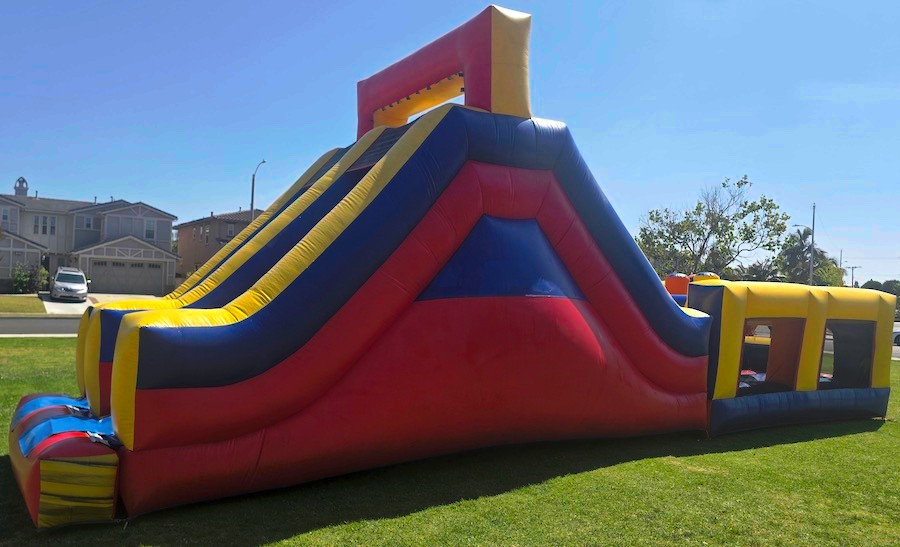
The sticker price of a commercial inflatable is only the beginning. A standard commercial-grade bounce house from a reputable manufacturer typically runs between $1,500 and $3,500 depending on size, material weight, and features. A combo unit with a slide and bounce area can push $3,000 to $6,000. A large dual-lane waterslide or a full obstacle course can land anywhere from $5,000 to $12,000 or more for a quality unit built to handle repeated rentals.
Beyond the unit price, CA fleet operators carry costs that operators in lower-cost states sometimes overlook. Commercial liability coverage for inflatable rental businesses in California tends to run higher than national averages, and your insurer will want to see documentation on each unit you own. (This article does not provide insurance advice. Consult a licensed commercial insurance broker for your specific situation.) Storage in Southern CA is another real line item. Industrial storage units or warehouse space in Orange County, Los Angeles, or the Inland Empire can run $200 to $600 per month for a modest bay, and a growing fleet needs more square footage than most operators expect.
Maintenance and repair costs add up across a season. Seams split, blowers burn out, and vinyl patches are a routine part of keeping units rentable. Budget roughly 5 to 10 percent of a unit's purchase price annually for upkeep, more if you're running high-volume weekends. Cleaning supplies, sanitizing solutions, and labor time for post-rental prep are real costs that don't appear on a manufacturer's spec sheet.
Finally, depreciation matters for your bookkeeping and your long-term planning. Commercial inflatables typically have a usable lifespan of five to eight years under regular rental conditions, though some operators get more with careful maintenance. How you account for that depreciation on your books is a question for your accountant, not this guide, but the practical implication is straightforward: every unit you own is losing value over time, and your rental revenue needs to outpace that decline.
How to Calculate ROI Before You Buy Your First Unit
The core ROI calculation for a commercial inflatable is simple in concept. Take the unit's total landed cost (purchase price plus freight plus any initial setup or repair), divide it by your average rental revenue per booking, and you get a rough breakeven number in bookings. From there, you compare that number against your realistic booking capacity.
Here's a practical example. Suppose you buy a combo bounce house and slide for $4,500, pay $400 in freight to get it to your CA warehouse, and spend $150 getting it inspection-ready. Your total landed cost is $5,050. If you charge $350 per rental day for that unit, you need roughly 15 bookings to recover your initial investment before accounting for ongoing costs. If you can realistically book that unit 30 to 40 times per year in a strong Southern CA market, the unit pays for itself in under a year and generates margin from there.
The math shifts when you factor in storage, insurance allocation, and maintenance. Add $150 per month in storage allocation and $50 per month in insurance allocation for that unit, and your annual overhead for owning it (beyond the initial purchase) is $2,400. At $350 per booking, you need about seven additional bookings per year just to cover carrying costs. That's still very achievable in a healthy OC market, but it illustrates why booking volume is the most critical variable in your ROI model.
Where operators get into trouble is buying too many units before their booking pipeline can support the inventory. A fleet of ten units sounds impressive, but if you're only moving five bookings per weekend, you're carrying overhead on five idle units every week. Start with two or three high-demand unit types, maximize their utilization, and expand from there. You can browse Jump High's rental catalog to get a real-world sense of which unit types see consistent demand in the Orange County market.
Freight, Delivery, and Storage Realities for CA Fleet Operators
Freight is one of the most underestimated costs for CA fleet buyers, particularly for operators sourcing units from manufacturers in the Southeast or Midwest. Most commercial inflatables ship via LTL (less-than-truckload) freight on pallets. A single large unit can weigh 300 to 600 pounds crated, and LTL rates to California from Georgia or Texas typically run $300 to $700 per unit depending on weight, dimensions, and current carrier rates. Expedited shipping or liftgate delivery adds to that figure.
Crating standards matter. Units that arrive improperly crated can sustain damage in transit, and warranty claims on shipping damage require documentation that many first-time buyers don't think to collect at delivery. Always inspect units at receipt, photograph any damage before signing the delivery receipt, and confirm with your vendor what their freight damage policy covers before you place an order.
Once units arrive, storage logistics in CA require real planning. Inflatables need to be stored dry, rolled or folded properly to avoid crease damage, and kept in a climate-appropriate environment. Southern CA's heat can degrade vinyl over time if units are stored in poorly ventilated spaces. A 10x20 storage unit can hold three to five smaller units reasonably well, but larger obstacle courses and waterslides need more floor space for proper rolling and access. For more on surface and setup considerations that affect your delivery logistics, the water slide rental setup on sloped CA backyards guide offers useful context on what your customers will face on delivery day.
Warranties, Vendor Support, and Inventory Planning for CA Buyers
Not all commercial inflatable warranties are created equal. Most reputable manufacturers offer one to three years on seams and structural stitching, with shorter coverage on blowers and electrical components. Read the warranty terms carefully before purchasing. Some warranties require that repairs be performed by the manufacturer or an authorized repair center, which can mean shipping a unit back across the country for a seam fix. Others allow field repairs with approved materials, which is far more practical for an active rental operator.
Vendor support quality varies widely. Established manufacturers with dedicated commercial sales teams can provide replacement parts, repair kits, and technical guidance when something goes wrong mid-season. Buying from a discount reseller or an overseas supplier with no US-based support can leave you without recourse when a blower fails the Friday before a packed weekend. Ask vendors directly about parts availability, typical repair turnaround times, and whether they have CA-based service contacts before committing to a purchase.
Inventory planning for a CA fleet should reflect your local demand patterns. In Orange County and the broader Southern CA market, waterslides and combo units drive strong summer bookings, while dry bounce houses and obstacle courses hold demand through fall and into the holiday season. A balanced starter fleet might include one or two versatile combo units, a standalone waterslide for summer peak, and a dry bounce house for cooler-month events. The multi-unit inflatable rentals guide for large OC events shows how operators think about unit mix when serving larger events, which is useful context for planning your own inventory.
For operators serving schools, churches, and HOAs alongside private parties, unit versatility matters. A unit that works for a backyard birthday also needs to work for a church carnival or a school field day. The church and VBS inflatable rental guide for OC is a good reference for understanding what institutional clients expect from rental equipment.
When Renting Units Makes More Sense Than Buying
Ownership is not always the right answer, and being honest about that is part of making a sound business decision. If you're in your first year of operation and still building your booking pipeline, renting units from a peer operator or a wholesale rental network can let you test demand without committing capital to inventory. You learn which unit types your market actually wants before you spend $5,000 to $10,000 finding out the hard way.
Renting also makes sense for unit types you need infrequently. If you get one or two requests per season for a very large obstacle course, buying one may not be justified. Sourcing it from a peer operator for those specific bookings keeps your capital free for units you'll use every weekend.
Seasonal demand spikes are another case where renting supplements ownership well. If your owned fleet is fully booked on a peak summer weekend and you have overflow demand, renting additional units to fulfill those bookings is a reasonable short-term solution. The key is tracking your overflow frequency. If you're consistently turning away bookings because you don't have enough inventory, that's a clear signal that buying additional units will pay off.
The broader point is that buy versus rent is not a one-time decision. It's an ongoing evaluation as your business grows. Start with a clear-eyed look at your current booking volume, your storage capacity, and your capital position. Build your ROI model around realistic numbers, not optimistic projections. And use resources like the Jump High guides hub to stay current on what's working for operators in the CA market.
If you want to see what a well-maintained, actively booked fleet looks like in practice, browse the Jump High rental catalog for a real-world reference point on unit types, sizes, and the kind of inventory that drives consistent bookings in Orange County. When you're ready to talk through your own setup, the contact page is the right place to start.