
Why Concrete and Artificial Turf Need a Different Anchoring Approach
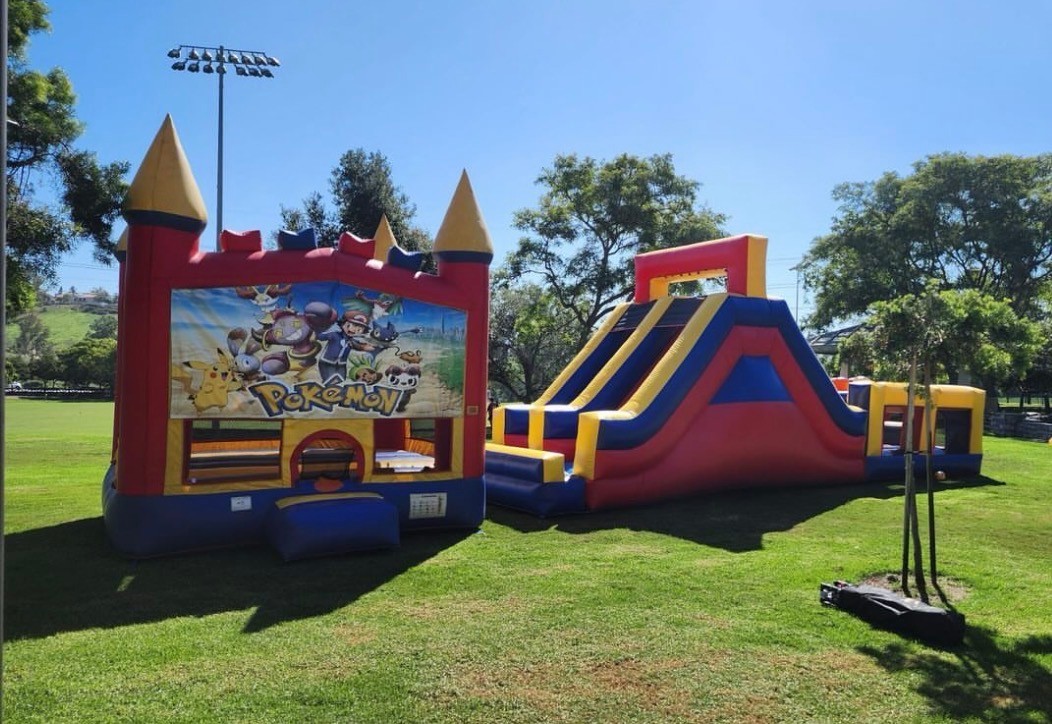
If your backyard looks like most Orange County homes, you probably have a concrete patio, a paver deck, or a stretch of artificial turf where the grass used to be. That is completely normal, and it does not mean you cannot rent a bounce house. It does mean that the setup crew needs to anchor the inflatable differently than they would on a natural grass lawn.
On grass, the standard approach is to drive long steel stakes through the inflatable's tie-down loops and deep into the soil. The ground holds the stake, the stake holds the strap, and the strap keeps the inflatable from shifting during use. That system works well because soft soil accepts the stake and grips it under load.
Concrete and pavement do not accept stakes at all. Artificial turf looks softer, but driving stakes into it can damage the turf backing, void a venue's warranty, or simply be prohibited by the property owner or HOA. So the anchoring logic has to change entirely. Instead of going down into the surface, the crew goes wide and heavy, using weighted ballast at each tie-down point to hold the inflatable in place from the outside.
This is not a workaround or a compromise. Weight-based anchoring is the recognized method for hard-surface inflatable setups, and it is exactly what Jump High Rentals crews use when they arrive at a patio, a school courtyard, or a synthetic-turf backyard across Orange County. The key is that every anchor point gets secured, not just the corners. Leaving even one strap unweighted creates uneven tension across the inflatable, which can allow movement during active use.
If you are planning a party at a venue with a paved or synthetic surface, the most reassuring thing to know is this: the surface type is a setup detail, not a reason to cancel. You just need to communicate it clearly before delivery day so the crew arrives prepared.
How Weight-Based Anchoring Works on Hard Surfaces
The core idea behind weight-based anchoring is straightforward. Each inflatable has built-in tie-down loops or D-rings at multiple points around its base. On grass, those loops connect to stakes. On hard surfaces, they connect to straps that run to sandbags or other approved ballast weights placed on the ground beside the unit.
A common starting point for hard-surface setups is roughly 40 to 50 pounds of ballast per anchor point, though larger inflatables require more. The exact weight depends on the size of the unit, the number of anchor points, and the conditions at the venue. Jump High's crew evaluates this on arrival and adjusts accordingly. You do not need to source sandbags yourself or calculate load requirements. That is part of what the setup service covers.
One detail that matters a lot in practice is surface protection. On artificial turf or decorative pavers, the crew may place a protective mat or padding beneath the sandbags to prevent scuffing, crushing the turf fibers, or marking the surface. This is especially important at venues like school courtyards or HOA common areas where the property manager expects the space to look the same after the event as it did before. If you are renting for an event at one of those locations, it is worth mentioning the surface material when you contact us to book so the crew can bring the right protective materials.
Wind is the other factor that makes anchoring on hard surfaces worth taking seriously. An inflatable that is properly anchored on grass can still shift on a concrete patio if the ballast is too light or if anchor points are skipped. Orange County afternoons can bring steady onshore breezes, particularly in coastal communities and open park settings. The crew checks anchor tension after the unit is fully inflated and before any kids get on, because the inflated shape creates a sail-like surface area that responds to wind differently than the flat, deflated unit does. For more on how wind conditions affect inflatable safety at OC events, the wind speed limits and inflatable safety guide covers what to watch for throughout the day.
Artificial Turf: What Makes It Different From Grass
Artificial turf looks like grass and feels a little like grass underfoot, but it behaves very differently when it comes to anchoring an inflatable. Understanding that difference helps you set realistic expectations before the crew arrives.
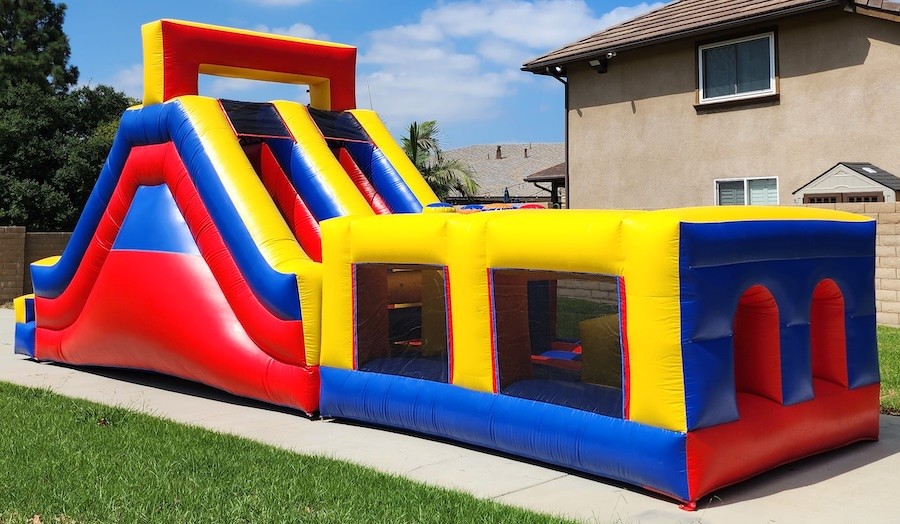
Natural grass is a living surface over soil. Stakes go into the soil, which compresses around the stake and holds it. Artificial turf is a manufactured product, typically a woven or tufted fiber layer over a backing material, installed over a base of compacted aggregate or sand infill. The turf itself is often secured to the ground during installation using seam tape, adhesive, nails, or staples along the edges. None of that means the surface is ready to accept inflatable stakes later. In fact, driving stakes into artificial turf after installation can tear the backing, disrupt the infill, or damage the seams.
Many Orange County HOAs, schools, and commercial venues with artificial turf have explicit rules against staking anything into the surface. Even in residential backyards, the turf installer's warranty may prohibit it. This is why weight-based anchoring is the default approach for turf setups, not just a fallback.
There is also a practical difference in how turf responds to the weight and movement of an inflatable during use. Turf does not compress and recover the way grass does. If the inflatable sits on turf for several hours, the fibers underneath can flatten temporarily. Placing a ground tarp or protective layer under the inflatable base helps distribute the load and reduces the chance of visible impressions after pickup. Jump High crews typically use a ground cover for this reason, and it also keeps the inflatable base cleaner throughout the rental period.
If you have artificial turf and are not sure whether your specific installation allows any form of anchoring beyond weights, the safest approach is to check with whoever installed it or the property manager before booking. You can also review the bounce house on artificial turf setup guide for a deeper look at what the crew evaluates on arrival.
What to Tell Your Rental Company Before Setup Day
The most common setup complications on delivery day come from surprises, not from difficult surfaces. A crew that knows in advance that your backyard is entirely concrete patio will arrive with the right ballast, the right protective materials, and a plan. A crew that expects grass and finds pavers has to improvise, which takes extra time and can delay the start of your party.
Here is what to share when you book or confirm your reservation. First, describe the surface where the inflatable will be placed. Concrete, pavers, artificial turf, a mix of surfaces, or a gym floor at a school or church all require slightly different preparation. Second, mention any surface rules you are aware of. If your HOA has restrictions on what can be placed on the common area turf, or if the school has a policy about the courtyard, pass that along so the crew can plan accordingly.
Third, let the rental company know about access. Sandbags are heavy, and the crew needs a clear path from the delivery vehicle to the setup area. If the only access is through a narrow side gate or up a flight of stairs, that affects how the equipment gets staged. A quick description of the path from the street to the setup spot helps the crew plan their route and arrival time.
Finally, if the surface is sloped, mention that too. A slope changes how the inflatable sits and can affect how ballast is distributed across anchor points. The sloped backyard guide covers what to check before you book if your yard has any grade to it.
For schools, churches, and HOAs planning larger events, the inflatable rentals for OC school and community events guide walks through the logistics of multi-unit setups on paved and synthetic-turf venues.
Frequently Asked Questions About Hard-Surface Inflatable Setup
Can a bounce house really stay secure without stakes?
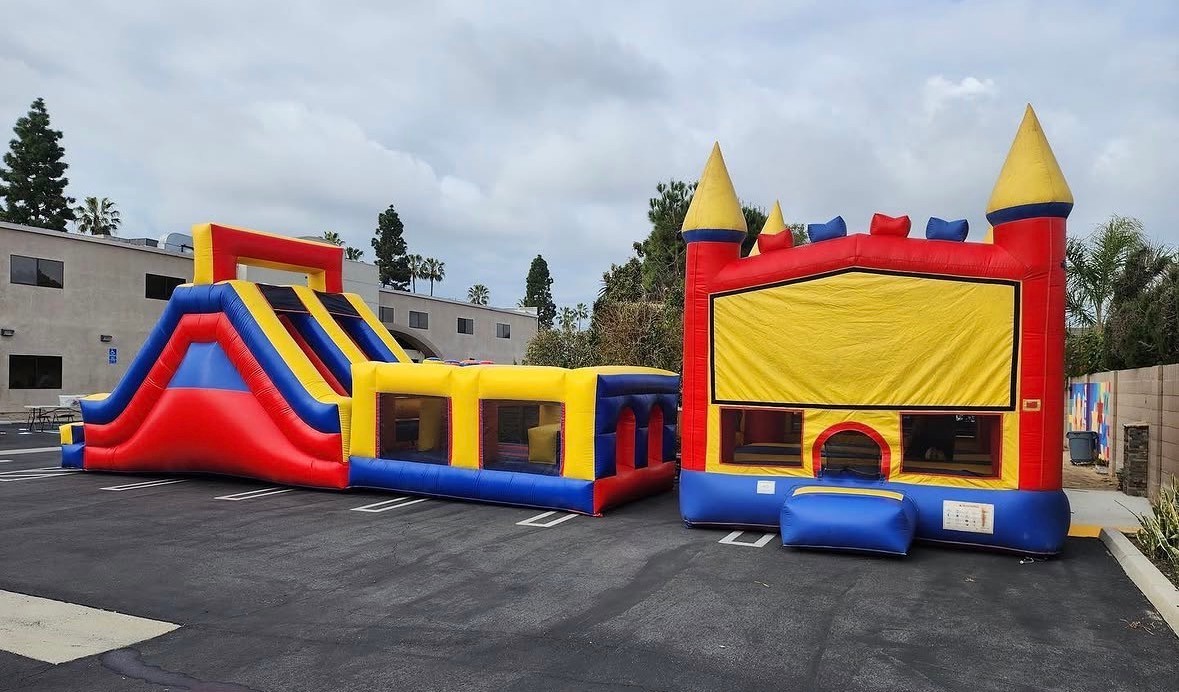
Yes, when every anchor point is properly weighted. Weight-based anchoring is the standard method for hard surfaces and is used by professional rental crews across California. The key is that all tie-down points are secured, not just a few, and that the ballast weight is appropriate for the size of the unit and the wind conditions at the venue.
Will sandbags damage my concrete or pavers?
Sandbags placed directly on concrete can leave scuff marks or grit behind, particularly on decorative pavers or sealed surfaces. Crews typically place a protective mat or padding under the weights to prevent this. If you have a surface you are particularly concerned about, mention it when you book so the crew can bring the right materials.
What if my artificial turf has infill? Does that change anything?
Infill (the granular material between turf fibers, often crumb rubber or sand) does not make the surface stakeable in the way that soil is. The infill sits loosely between fibers and does not grip a stake the way compacted earth does. Weight-based anchoring is still the correct approach regardless of infill type.
Do I need to do anything to prepare the surface before the crew arrives?
Clear the area of furniture, toys, hoses, and anything else that would be in the footprint of the inflatable plus a few feet of clearance on each side. If the turf has recently been watered or cleaned, let it dry before setup if possible. Beyond that, the crew handles the anchoring process. Your job is to make sure the path to the setup area is clear and accessible.
What happens if wind picks up during the party?
The crew sets anchoring based on conditions at setup time, but wind can increase throughout the day. If conditions change significantly, the right response is to pause use and check anchor tension. Jump High's wind speed limits and inflatable safety guide explains the thresholds that matter and what to do if the wind picks up unexpectedly.
Ready to book for a concrete patio or turf backyard? Tell us your surface type when you reach out and the crew will handle the rest. Visit the rentals page to browse available units, or contact us to confirm your setup details before delivery day.
SEO metadata