
ROI Comparison: Standalone vs Combo Bounce House for OK
If you're building an inflatable rental fleet in Oklahoma, the unit selection decision you make today shapes your revenue ceiling for the next five to seven years. Standalone bounce houses and combo units both have loyal advocates in the industry, but the right answer for your operation depends on metrics that go well beyond sticker price. Think about revenue per weekend, storage footprint, freight costs from manufacturer to your warehouse, and how each unit type holds its value as it ages. This guide walks through each of those factors so you can make a confident, data-informed decision before you place your first or next purchase order.
Whether you're launching a one-unit side business in Tulsa or scaling a multi-unit fleet in Oklahoma City, the standalone vs combo question is one of the most consequential calls you'll make. The good news is that the math is clearer than most vendors let on.
How Standalone and Combo Units Differ for Commercial Buyers
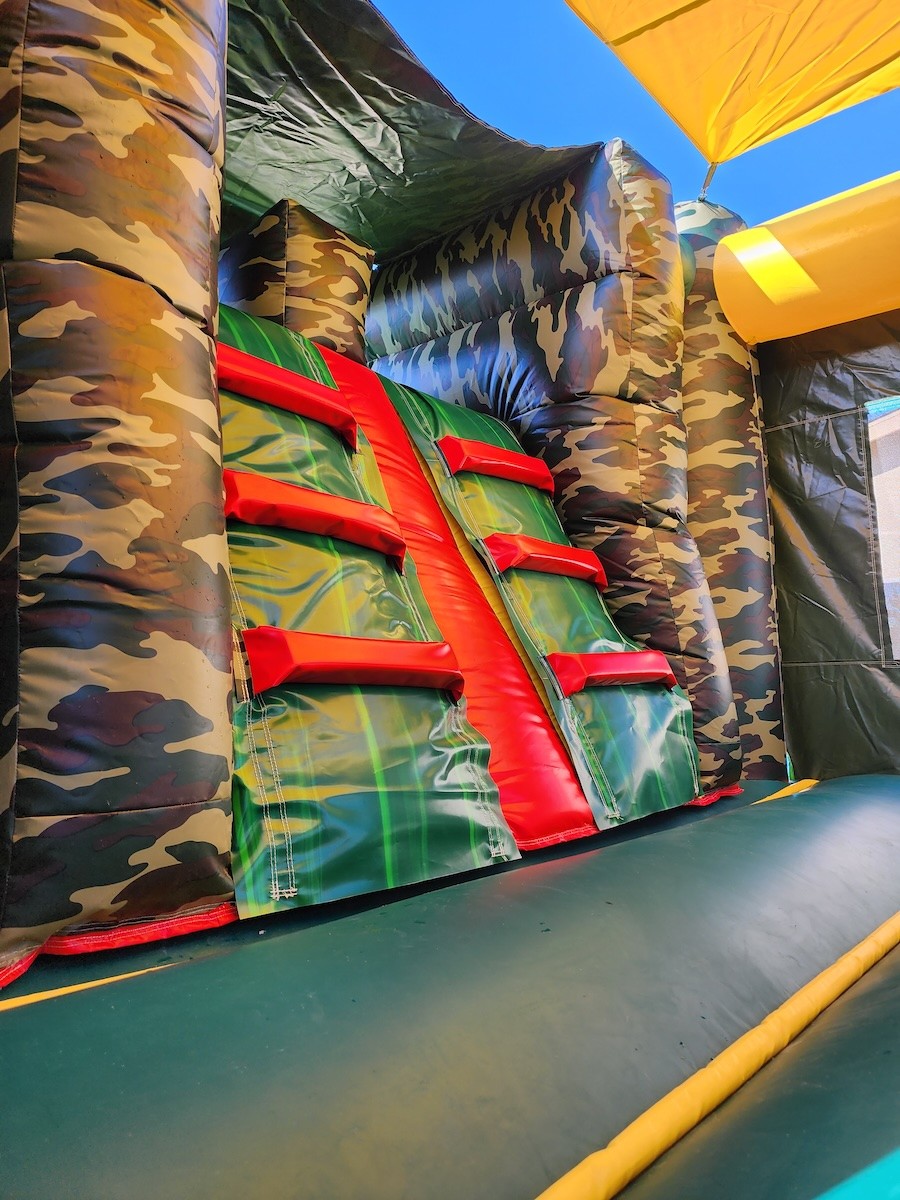
The core difference between these two unit types is scope of play, and that difference ripples through every downstream business decision. A standalone bounce house is a single-function inflatable: kids jump, the blower runs, and the unit does one job very well. A combo unit adds at least one additional feature, most commonly a slide, but sometimes a basketball hoop, climbing wall, or pop-up obstacles integrated into the same structure.
For commercial buyers, the distinction matters most in three areas: purchase price, shipping weight and dimensions, and booking versatility. Standalone units in the 13x13 to 15x15 foot range typically run between $1,200 and $2,500 from reputable commercial-grade manufacturers, depending on PVC weight and theme. Combo units in the 15x15 to 20x20 foot range often start around $2,000 and can reach $4,500 or more for larger configurations with wet/dry capability.
The higher upfront cost of a combo unit is not automatically a disadvantage. If that unit commands a higher rental rate and books more consistently across a broader range of event types, the cost-per-booking figure can actually favor the combo over a three to four year horizon. The key is understanding your local Oklahoma market before you commit.
For a deeper look at how unit specs translate to real-world setup decisions, the Jump High Rentals guides library covers inflatable sizing, surface requirements, and capacity planning in detail.
Revenue Per Weekend: Which Unit Type Books More Often in OK
Standalone bounce houses are workhorses. They book easily for toddler birthdays, church events, school carnivals, and neighborhood block parties because they are familiar, affordable to rent, and easy for customers to understand. In Oklahoma markets, a clean 13x13 standalone in a popular theme can realistically generate $150 to $250 per rental day, with weekend double-booking (Friday delivery, Sunday pickup) pushing weekly revenue to $300 to $500 per unit during peak season.
Combo units command higher per-rental rates, often $250 to $400 per day depending on size, features, and whether the unit operates wet or dry. The tradeoff is that some customers perceive combos as more complex or more expensive than they need for a small backyard party. This means your marketing has to work a little harder to communicate the value. However, for school events, HOA gatherings, and graduation parties where organizers want maximum entertainment per dollar spent, a combo unit frequently wins the booking over a standalone.
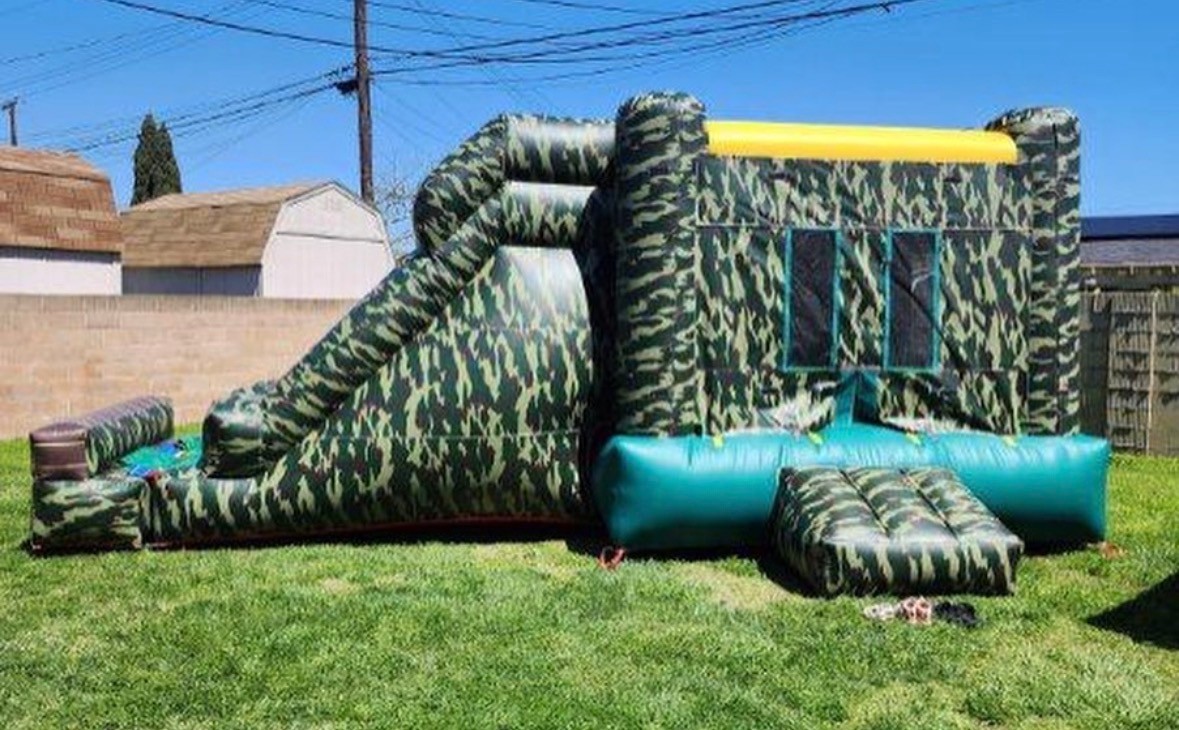
Oklahoma's peak inflatable season runs roughly from late March through October, with summer weekends in May, June, and July being the highest-demand window. During that window, a well-maintained combo unit in a desirable configuration can book every available weekend and generate 20 to 30 percent more gross revenue per season than a comparable standalone, simply because the rental rate is higher and customers booking larger events actively prefer the added features.
The practical takeaway: if your target customer is primarily backyard birthday parents with smaller budgets, a standalone fills your calendar reliably. If you're pursuing schools, churches, and community events, a combo unit's higher rate and broader appeal often justify the premium. Many successful Oklahoma operators run both, which is exactly what the final section of this guide addresses.
Freight, Footprint, and Storage Costs in Oklahoma
Freight is a cost that first-time fleet buyers consistently underestimate, and it deserves its own honest accounting. Commercial inflatables ship from manufacturers primarily in the southeastern United States and from overseas suppliers via West Coast ports. Oklahoma sits in a relatively favorable freight position compared to coastal states, but shipping a large combo unit can still add $300 to $700 to your landed cost depending on carrier, weight, and dimensions.
Standalone units are lighter and pack into smaller bags, which means lower freight costs and easier handling on delivery day. A typical 13x13 standalone weighs 150 to 250 pounds packed. A large combo unit with a slide and wet/dry capability can weigh 400 to 600 pounds or more, which affects not just freight but also your delivery vehicle requirements and setup labor.
Storage is the other footprint consideration that operators sometimes overlook until they're stacking units in a garage that was never designed for it. A standalone bounce house in its bag takes up roughly 3 to 5 cubic feet of shelf space. A large combo unit can require 8 to 15 cubic feet, and that's before you account for the blower, stakes, tarps, and extension cords that travel with every rental. If you're operating out of a residential garage or a small commercial unit in the Oklahoma City metro, storage capacity can become a real constraint on how many units you can run simultaneously.
The Jump High Rentals FAQ addresses common questions about inflatable setup and logistics that are useful context even for buyers thinking through their own operational requirements.
Warranty, Vendor Support, and Depreciation Over Time
A commercial inflatable is a depreciating asset, and how fast it depreciates depends heavily on material quality, usage frequency, and how well the manufacturer supports you when something goes wrong. This is where the standalone vs combo comparison gets more nuanced than a simple price-per-feature calculation.
Standalone units from reputable commercial manufacturers typically carry warranties of one to three years on seams and materials, with blower warranties handled separately. Because standalone units have fewer structural features, there are fewer failure points. A seam blowout on a bounce house wall is a straightforward repair. A seam failure on the slide attachment point of a combo unit is a more complex fix that may require the unit to be out of service for a longer period.
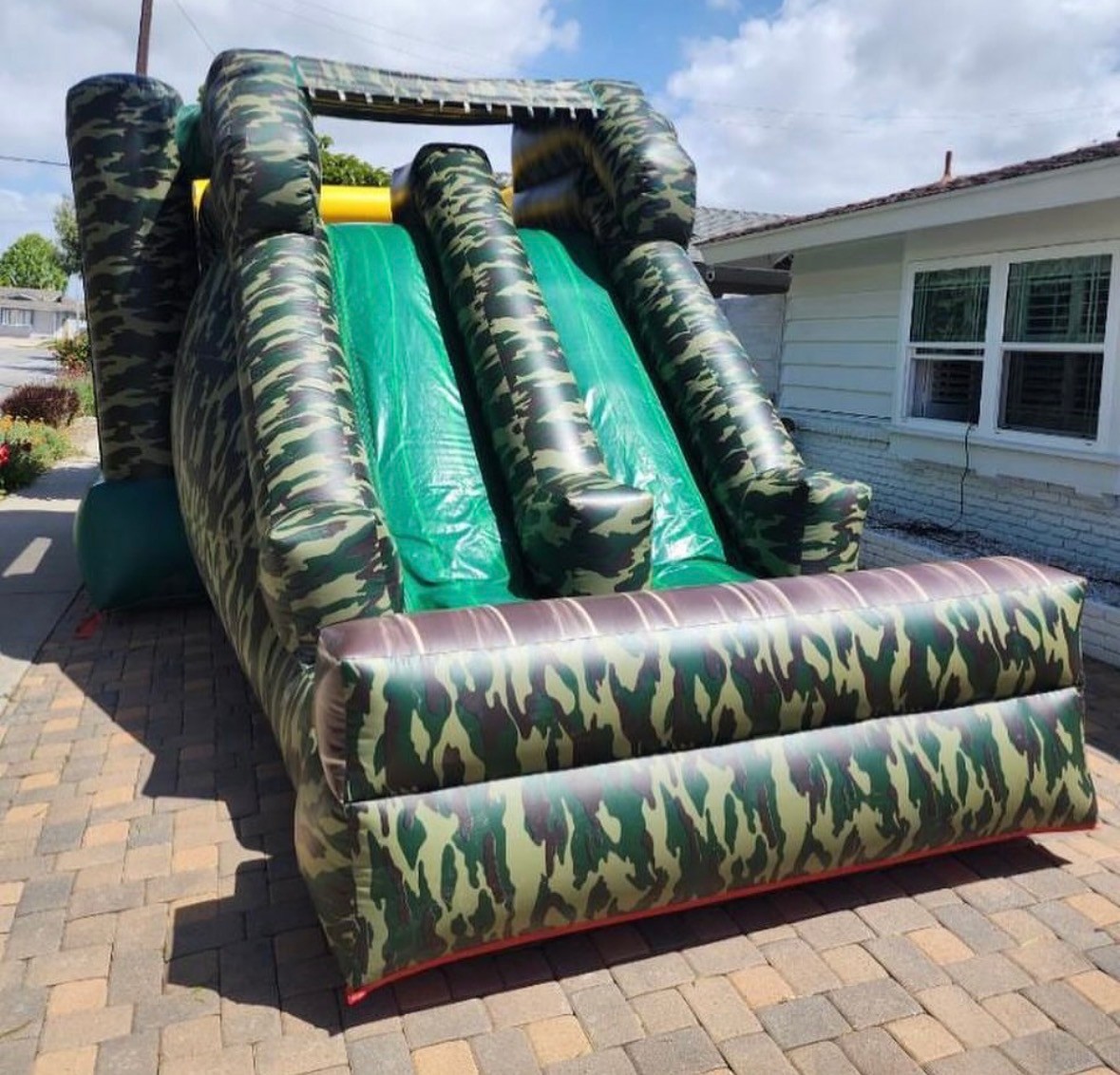
Combo units also tend to show wear faster in high-traffic areas, particularly on slide surfaces and around climbing features. If your Oklahoma operation runs a combo unit every weekend through a full season, you should budget for more frequent patch repairs and plan for a potential slide resurfacing or replacement within four to five years of heavy use.
On the depreciation side, a $2,000 standalone unit that generates $200 per rental and books 40 weekends per year produces $8,000 in gross annual revenue. At that rate, the unit pays for itself in roughly three months of active bookings. A $3,500 combo unit generating $325 per rental and booking 35 weekends per year produces $11,375 in gross annual revenue, paying for itself in about four months. The combo takes slightly longer to recoup its cost but generates more total revenue over a five-year lifespan, assuming comparable maintenance and booking rates.
These figures are illustrative estimates based on typical market rates and booking patterns. Your actual results will vary based on your local pricing, marketing, competition, and operational costs. Always build your own projections using your specific cost structure before making a purchase decision.
Building Your OK Fleet Around the Right Unit Mix
The most resilient Oklahoma inflatable fleets are not built around a single unit type. They're built around a deliberate mix that covers different price points, event sizes, and customer segments. A practical starting point for a new operator is one standalone and one combo unit, which gives you the flexibility to serve budget-conscious backyard bookings while also competing for higher-value school and community events.
As you scale, think about adding units that expand your booking calendar rather than duplicate what you already have. A wet/dry combo unit opens summer waterslide bookings without requiring a separate waterslide investment. A themed standalone in a popular character or color scheme captures niche demand (princess parties, sports themes, seasonal events) that a generic combo unit won't attract as effectively.
Sourcing strategy matters here too. Buying direct from a commercial manufacturer typically offers better pricing and warranty terms than purchasing through a middleman, but it requires more due diligence on your end. Ask for material specifications, seam construction details, and references from other operators before committing. The Jump High Rentals guides cover inflatable inspection and sourcing considerations that apply whether you're buying for a California operation or building a fleet in Oklahoma.
When you're ready to think through unit selection, delivery logistics, or fleet planning strategy in more detail, the Jump High team is available to help. And if you want to see the full range of inflatable types that inform these comparisons, the Jump High rentals catalog gives you a practical reference point for unit sizing, configurations, and what real-world setups look like in the field.
Building a profitable inflatable rental business in Oklahoma is absolutely achievable. The operators who do it well start with clear-eyed unit selection, honest freight and storage accounting, and a fleet mix that grows with their market rather than against it.