
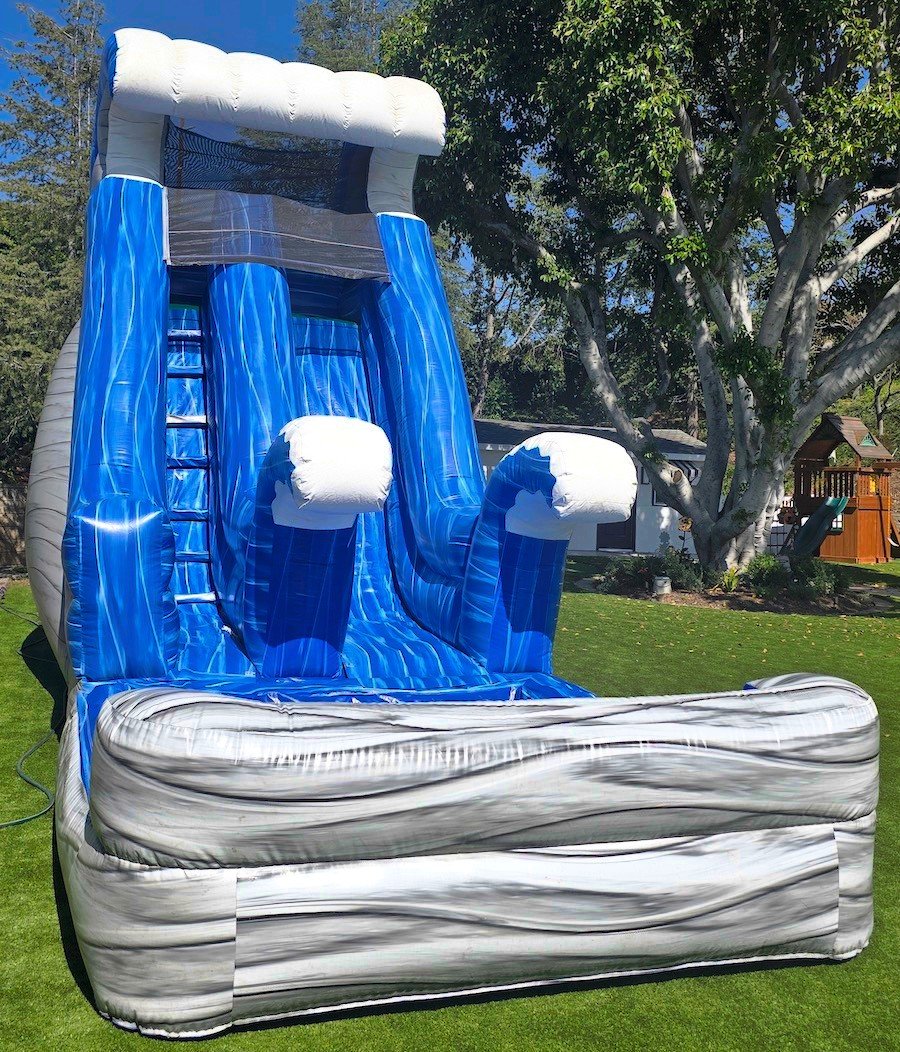
A backyard water slide is one of those summer party ideas that kids talk about for weeks afterward. But if your Orange County yard has a noticeable slope, you may be wondering whether a rental will actually work for your space. The honest answer is: it depends, and knowing what to check before you book can save you a lot of stress on party day.
This guide walks through the practical side of sloped-yard setups, from measuring your usable space to asking the right questions before you confirm your reservation. Think of it as a pre-booking checklist you can work through at your own pace.
Why Slope Affects Water Slide Setup More Than Most Renters Expect
Most people assume that a water slide just needs enough square footage to fit. Slope is often an afterthought, right up until the setup crew arrives. In reality, grade is one of the first things a rental team evaluates, and here is why it matters more than it might seem.
Inflatable water slides are designed to sit on reasonably level ground. When the base of the unit tilts, even slightly, a few things can go wrong at once. The landing zone at the bottom of the slide shifts out of its intended position, which affects how riders exit the unit. The anchoring stakes or sandbags that hold the inflatable in place work best when the ground is flat, so a slope puts uneven tension on the tie-down points. And the water itself follows gravity, which means runoff does not always go where you expect it to.
None of this means a sloped yard is automatically off the table. A mild grade, especially one that runs parallel to the slide rather than directly under it, can often be managed with careful positioning. But a steep drop, or a yard where the only flat section is too small for the unit's footprint, may genuinely limit your options. Knowing this ahead of time lets you have a productive conversation with your rental company rather than a disappointing one on the morning of the party.
One more thing worth understanding: water changes the setup equation. A dry inflatable on a slight slope behaves differently than a wet one with a hose running continuously. The added moisture makes the surrounding ground slicker, shifts how the landing area drains, and can create puddles in spots that looked fine during a dry walkthrough. That is why wet slides deserve a closer look at site conditions than a standard bounce house rental.
How to Measure and Describe Your Yard Before You Book
The most useful thing you can do before calling a rental company is gather real information about your space. Guessing at dimensions or describing the yard in general terms makes it hard for anyone to give you a confident recommendation.
Start with these steps:
- Measure the flattest section of your yard. Use a tape measure to get the length and width of the area where you picture the slide going. Write down both numbers, because rental units have specific footprint requirements that include the slide body, the landing zone, and a safety buffer around the perimeter.
- Estimate the slope. You do not need a surveyor's level for this. Walk the length of the space and notice whether the ground drops noticeably from one end to the other. A rough sense of "about a foot of drop over 20 feet" is genuinely helpful to a setup crew.
- Take photos from multiple angles. A photo taken from the back of the yard looking toward the house, and another from the side, gives the rental team a much clearer picture than a verbal description. Include the area where the slide would sit and any obstacles nearby.
- Note what surrounds the space. Fences, retaining walls, garden beds, and patio furniture all affect how a crew can position and anchor the unit. If there is a retaining wall at the low end of the slope, that is important context.
- Check for underground irrigation lines or sprinkler heads. Staking an inflatable into a yard with active irrigation lines requires care. Let the rental company know where your sprinkler heads are so the team can anchor around them safely.
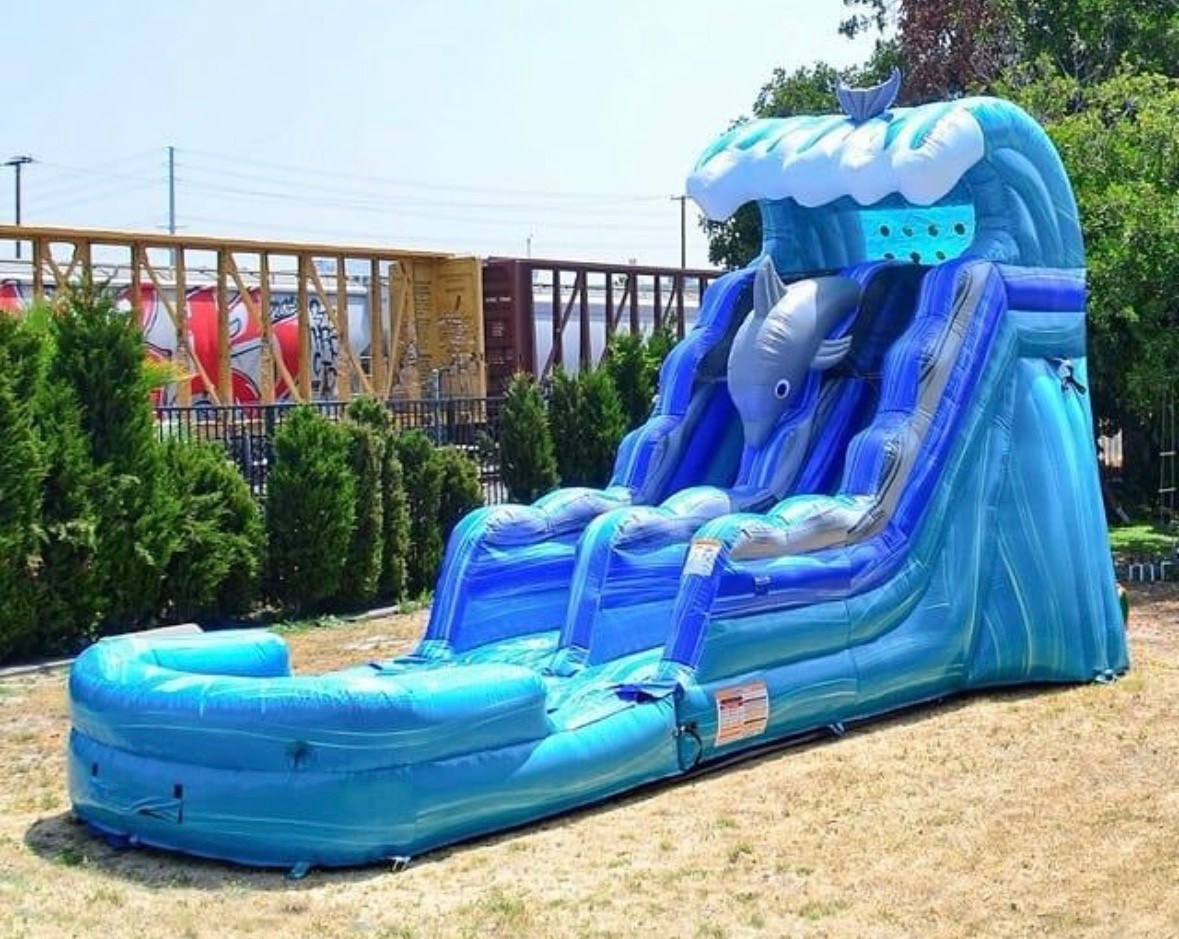
Sending this information before you book, rather than after, gives the rental company what they need to recommend the right unit size and confirm whether setup is realistic for your yard. It also protects you from reserving a unit that turns out to be too large or too heavy for the space.
Drainage, Runoff, and Wet-Ground Safety on a Sloped Lot
Water slides are a lot of fun, and they also produce a steady stream of water for the duration of the party. On a flat yard, that water spreads out and soaks in or drains toward a natural low point. On a sloped lot, it moves with purpose, and not always in the direction you would choose.
Before your party, walk your yard with a hose running and watch where the water goes. Does it pool near the base of the slide area? Does it run toward a patio, a neighbor's fence line, or a walkway that guests will be using? Does it collect near the entry point of the slide, where kids are climbing barefoot?
Slick ground outside the inflatable itself is one of the more common safety concerns at backyard water slide events. The inflatable unit has a contained wet zone, but the surrounding grass or soil can become muddy and slippery with extended use, especially on a slope where water drains consistently to one spot.
A few practical steps can help:
- Place rubber-backed mats or non-slip outdoor rugs near the entry and exit points of the slide.
- Ask guests to wear water shoes rather than going barefoot on the surrounding lawn.
- Keep a towel station near the slide exit so kids can dry off before walking on hard surfaces like a patio or driveway.
- Check the ground condition about an hour into the party, not just at the start. Soil that looked firm at setup can soften significantly once water has been running for a while.
If your yard has a steep enough slope that water runoff would consistently flow toward your home's foundation, a neighbor's property, or a public walkway, that is worth discussing with your rental company before you book. It may point toward a different unit placement or a different unit altogether.
Delivery Access: Gates, Side Yards, and Narrow Paths
A sloped yard often comes with a secondary challenge that renters do not always think about: getting the equipment there in the first place. Inflatable water slides are large, and they arrive rolled or folded on a dolly or cart. The path from the delivery truck to your backyard needs to accommodate that.
Walk your access route before your delivery date and look for the following:
- Gate width. Most standard backyard gates are 36 to 48 inches wide. Larger inflatable units may need a wider opening, or the crew may need to lift equipment over a fence section. Measure your gate and share that number when you book.
- Stair steps or level changes. A side yard that drops down a few steps between the driveway and the backyard can make delivery significantly harder. Let the rental team know if there are any elevation changes along the path.
- Narrow passages. A side yard that is only a few feet wide between the house and a fence may not allow the crew to carry or roll equipment through. If your access path is tight, describe it when you call.
- Overhead clearance. Low-hanging branches, pergola beams, or utility lines along the delivery path can create obstacles. Check the full route from the street to the setup area.
- Surface condition. A muddy or soft side yard can make it difficult to move heavy equipment without damaging the ground or the rental unit. If your yard has been recently watered or rained on, mention that.
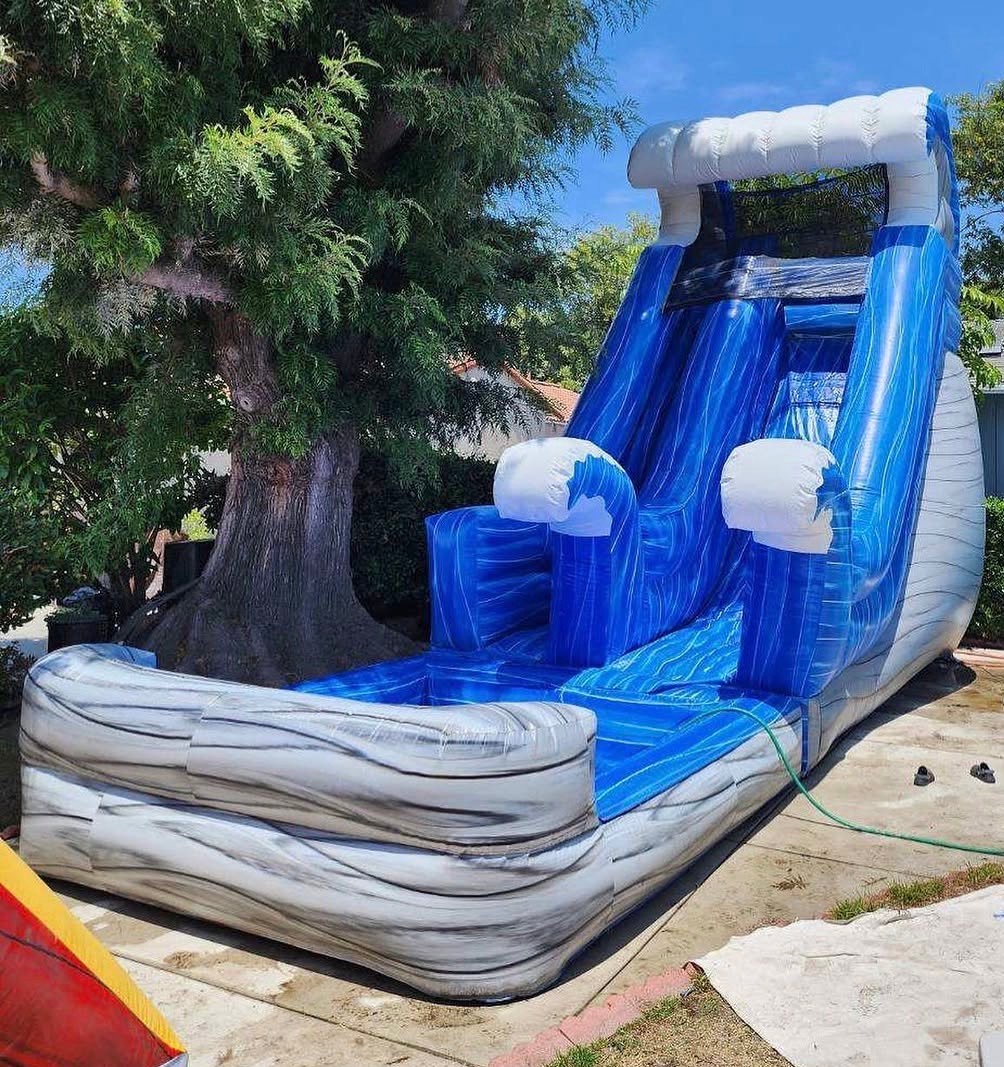
None of these issues are necessarily deal-breakers, but they are much easier to solve before the delivery truck arrives than during setup. A quick walkthrough and a few photos shared in advance give the crew the information they need to bring the right equipment and plan the best approach.
Questions to Ask Your Rental Company Before You Confirm
Once you have measured your yard, taken photos, and walked your access route, you are ready to have a genuinely useful conversation with your rental company. Here are the questions worth asking before you finalize your reservation.
Can you confirm this slide is appropriate for my yard's slope and dimensions? Share your measurements and photos and ask for a direct answer. A good rental company will tell you honestly if a unit is not a fit for your space.
What is the minimum flat area required for this unit, including the landing zone and safety clearance? This number is different from the slide's physical footprint, and it matters for sloped yards where the truly flat section may be smaller than the overall yard.
How do you anchor the unit on a sloped surface? Understanding the setup approach helps you know what to expect and whether your yard's soil and irrigation layout will work with the anchoring method.
What happens if the crew arrives and determines the yard is not suitable? Ask about the company's policy in advance so there are no surprises. Some companies will work with you to find an alternative unit; others may have specific cancellation or rescheduling terms.
Is there a size or style of slide that tends to work better on sloped lots? Rental companies that serve Orange County backyards regularly have seen a wide range of yard conditions. They may have a recommendation based on experience.
At Jump High Rentals, we are happy to look at photos and measurements before you book so we can point you toward the right unit and confirm that setup is realistic for your yard. Reaching out early, before you finalize your date and unit, gives us the best chance to set your party up for a smooth, safe, and genuinely fun day.