
How Long Do Commercial Obstacle Course Inflatables Actually Last?
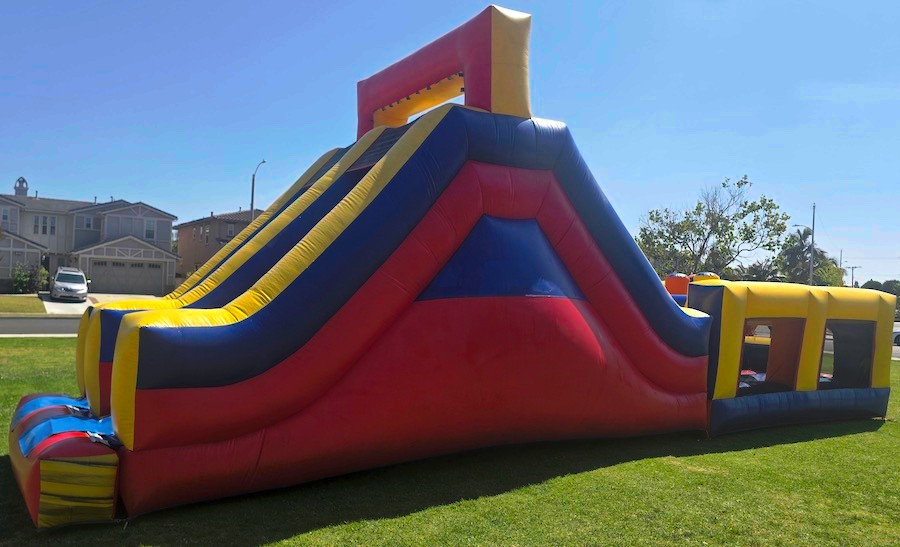
If you're building or scaling a rental fleet in Washington state, obstacle course units are likely your highest-earning and hardest-wearing assets. They command premium rental rates, attract schools, churches, and corporate clients, and they run hard every weekend from late spring through early fall. That earning power comes with a tradeoff: obstacle courses take more abuse per rental than almost any other inflatable category.
Industry experience from commercial operators generally puts the working lifespan of a quality obstacle course inflatable somewhere between five and eight years under normal rental conditions. That range shifts considerably based on how the unit is used, stored, and maintained. A well-cared-for unit from a reputable manufacturer can push past eight years with selective repairs. A unit that gets rolled wet, stored in a damp trailer, and transported over rough terrain without padding can show serious seam fatigue inside three seasons.
The material gauge matters from day one. Commercial-grade obstacle courses built for rental fleets are typically constructed from 18-ounce PVC vinyl or reinforced Oxford fabric. Thinner materials in the 14- to 15-ounce range are more common in consumer-grade units and will not hold up to the frequency and weight loads that rental use demands. When you're evaluating a purchase, ask the manufacturer or distributor for the specific vinyl weight and thread count on stress points like tunnels, climbing walls, and slide seams. Those are the areas that fail first.
Stitching type also affects longevity. Quadruple-stitched seams with reinforced webbing at anchor points and high-traffic transitions will outlast double-stitched construction by a meaningful margin. The upfront cost difference between a well-built unit and a budget alternative often pays for itself within the first two seasons simply by avoiding repair bills and downtime.
WA Climate and Usage Patterns That Accelerate Wear
Washington operators face a specific set of environmental pressures that fleet buyers in drier climates don't have to think about as carefully. The Pacific Northwest's wet season is long, and even during the summer event window, morning dew, coastal humidity, and unexpected rain are facts of life. Moisture is the primary enemy of inflatable longevity when units aren't dried and stored properly.
Mold and mildew don't just create a hygiene problem for your customers. They degrade vinyl at the fiber level, weakening seams and causing discoloration that makes units look worn long before they structurally fail. Any obstacle course that gets rolled or folded while still damp is accumulating damage with every storage cycle. WA operators need a reliable drying protocol as a non-negotiable part of every post-event workflow, not an optional step when time allows.
Transport wear is another factor that hits obstacle course units harder than simpler bounce houses. These units are larger, heavier, and more complex in shape. Loading and unloading them repeatedly over a season, especially if your delivery routes include gravel driveways, hillside properties, or tight backyard access points common in parts of western WA, creates friction and stress on seams and anchor points. Investing in padded storage bags and proper tie-down systems for your trailer or truck bed is not a luxury. It's maintenance you're doing before the unit even reaches the event site.
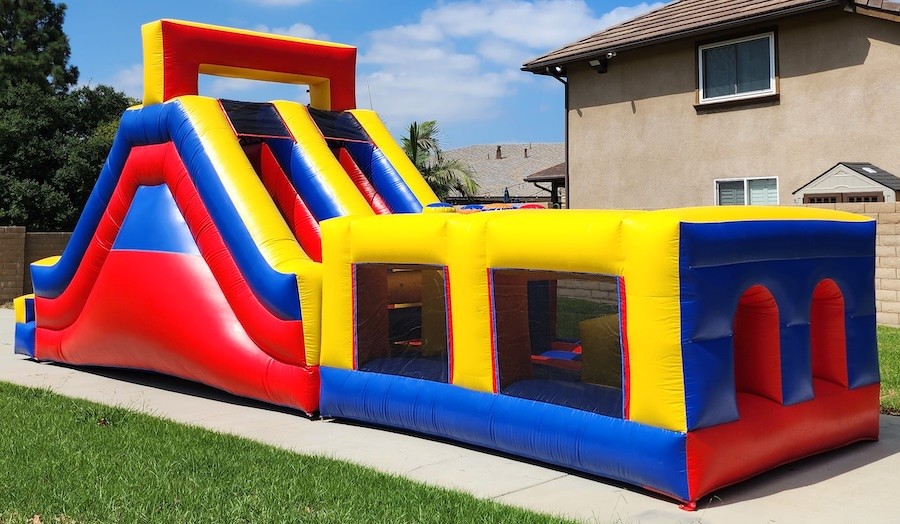
WA's event season also tends to compress into a shorter window than operators in California or the Southwest experience. That compression means your units may run eight to twelve events in a single month during peak summer, then sit largely idle through the wet fall and winter. Idle storage in unheated spaces introduces its own risks: vinyl can become brittle in sustained cold, and condensation in a sealed trailer creates exactly the damp environment that accelerates mold growth. Climate-controlled or at minimum well-ventilated storage is worth budgeting for as part of your fleet overhead.
Routine Maintenance Tasks That Extend Unit Life
A consistent maintenance routine is the single most controllable variable in how long your obstacle course units last. The operators who get eight-plus years out of their inventory are almost always the ones who treat post-event inspection as a standard operating procedure, not something that happens when a problem becomes obvious.
After every rental, walk the entire unit before rolling it. Look at seam lines along the tunnel sections, the climbing wall base, and the slide exit. These are the highest-stress zones on a typical obstacle course layout. Small separations caught early can be repaired with vinyl patch kits or heat-bonded seam tape for under twenty dollars and thirty minutes of work. The same separation left for three more rentals becomes a structural failure that requires professional repair or, in some cases, makes the unit unrentable.
Blower connections and motor mounts deserve attention on the same schedule. A blower that's working harder than it should to maintain pressure is often signaling an air leak somewhere in the unit, not a failing motor. Tracing and sealing leaks early protects both the unit and your blower investment. Keep a log of which units have had which repairs, including the date, the location on the unit, and the repair method. That log becomes your most useful tool when you're deciding whether a unit is worth repairing or approaching replacement.
Cleaning protocol matters beyond basic hygiene. Use cleaners that are specifically formulated for PVC vinyl. Harsh solvents and bleach-based products can break down the plasticizers in the vinyl over time, leading to cracking and stiffness. The ASTM International standards for inflatable amusement devices provide a useful reference point for understanding material care requirements in a commercial context. Rinse thoroughly and allow complete drying before storage every single time.
Anchor hardware, including stakes, sandbags, and D-ring connections, should be inspected for rust, bending, and wear at least monthly during active season. A failed anchor point during an event is a safety incident, not just an equipment problem. Replacing a corroded stake costs almost nothing. The alternative is not worth calculating.
Repair vs. Replace: Reading the Cost Signals
Every fleet owner eventually faces the question of whether a unit is worth repairing or whether the money is better spent toward a replacement. There's no universal threshold, but there are practical signals that experienced operators use to make that call with some objectivity.
A commonly applied guideline in the commercial inflatable industry is the fifty-percent rule: if the estimated cost of repairs on a unit approaches fifty percent of the unit's current replacement value, replacement is almost always the better financial decision. Repair costs don't reset the clock on underlying material fatigue, and a unit that has reached that level of wear is likely to generate additional repair needs within the same season.
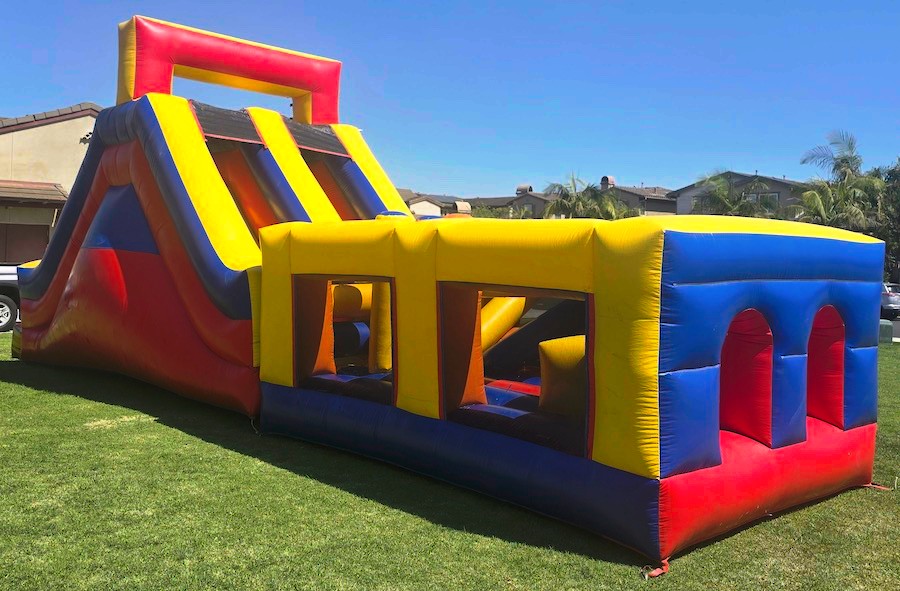
Beyond raw repair cost, consider downtime. An obstacle course unit sitting in a repair shop during peak WA summer season isn't just costing you repair fees. It's costing you the rental revenue it would have generated. If a unit requires professional repair more than twice in a single season, that pattern is worth tracking against your revenue data. The math often makes replacement look more attractive than it initially seems.
Appearance matters more than some fleet owners account for. Faded graphics, permanent staining, and visibly patched sections affect customer perception and booking rates, particularly for clients like schools and corporate event planners who are comparing options. A unit that is structurally sound but looks tired can drag down your brand positioning even if it technically passes a safety inspection.
When you do decide to replace, timing the purchase matters for WA operators. Ordering in late fall or early winter, during the off-season, gives you lead time for freight delivery and allows you to inspect and test the unit before the spring booking rush begins. Freight costs for large obstacle course units shipping to Washington from manufacturers in the Southeast or Midwest can be substantial, and delivery timelines from some vendors run four to eight weeks. Building that lead time into your replacement planning avoids the scramble of trying to source a unit in April when everyone else is doing the same thing.
Warranty Coverage and Vendor Support for WA Buyers
Warranty terms vary significantly across commercial inflatable manufacturers, and the details matter more than the headline coverage period. A three-year warranty that excludes seam failures and blower damage covers relatively little of what actually goes wrong with a high-use obstacle course unit. A two-year warranty that includes seam repair, material defects, and responsive vendor support is often more valuable in practice.
When evaluating a purchase, ask specifically what the warranty covers for seams, vinyl material, and blower motors. Ask whether warranty service requires shipping the unit back to the manufacturer or whether the vendor supports field repairs with supplied materials. For WA buyers, shipping a large obstacle course unit back to a manufacturer in Georgia or Texas for warranty work is a significant cost and a multi-week disruption to your rental calendar.
Look for vendors who offer replacement parts, patch kits, and technical support as part of their ongoing relationship with buyers. The best commercial inflatable vendors function more like partners than one-time sellers. They can tell you which units in their catalog hold up best in high-humidity environments, which seam constructions have the best track record under heavy use, and what maintenance practices they recommend based on real fleet data.
Domestic manufacturers and distributors with established reputations in the commercial rental industry are generally a safer starting point than overseas suppliers offering significantly lower prices. The price gap can look compelling on a spreadsheet, but warranty enforcement, parts availability, and quality consistency are harder to guarantee when your vendor relationship crosses international shipping lanes and time zones.
If you're sourcing your first obstacle course unit or expanding an existing WA fleet, connecting with a knowledgeable local resource can help you ask the right questions before you commit to a purchase. The team at Jump High Rentals is happy to talk through what we've seen work in the field and point you toward the right considerations for your inventory goals. You can also browse our rentals catalog to get a sense of the unit types and configurations that perform well in the Pacific Northwest market, or visit our guides library for additional resources on inflatable operations and event planning.