
CA Commercial Bounce House Fleet Startup Cost Guide
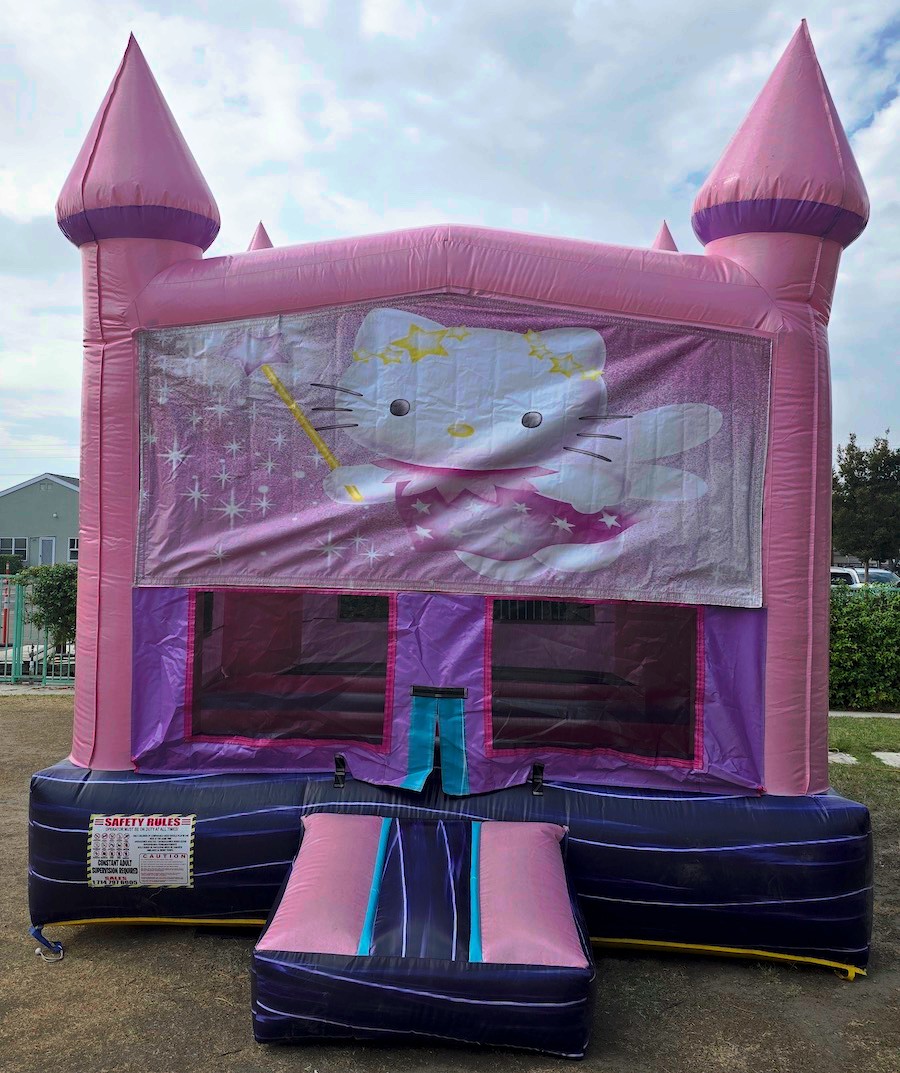
Starting a commercial bounce house rental business in California is genuinely achievable, but the gap between "I heard it's profitable" and "I understand what it actually costs" is where most new operators stumble. This guide walks you through the real numbers behind building a CA fleet, from your first wholesale unit purchase through storage setup and long-term depreciation planning. The figures here reflect current 2026 market conditions and are meant to help you plan honestly, not to promise any specific return on your investment.
If you want to benchmark the kinds of units a working OC rental operation actually deploys before you commit to buying, browsing Jump High's rental catalog is a practical starting point. You will see unit types, sizes, and configurations that move regularly in the Southern California market.
What Commercial Inflatables Actually Cost in CA
The single biggest misconception new buyers bring to the table is that commercial inflatables cost roughly the same as the residential units you see at big-box stores. They do not. A commercial-grade bounce house built to withstand repeated daily rentals, outdoor UV exposure, and the wear of hundreds of kids per week is a fundamentally different product.
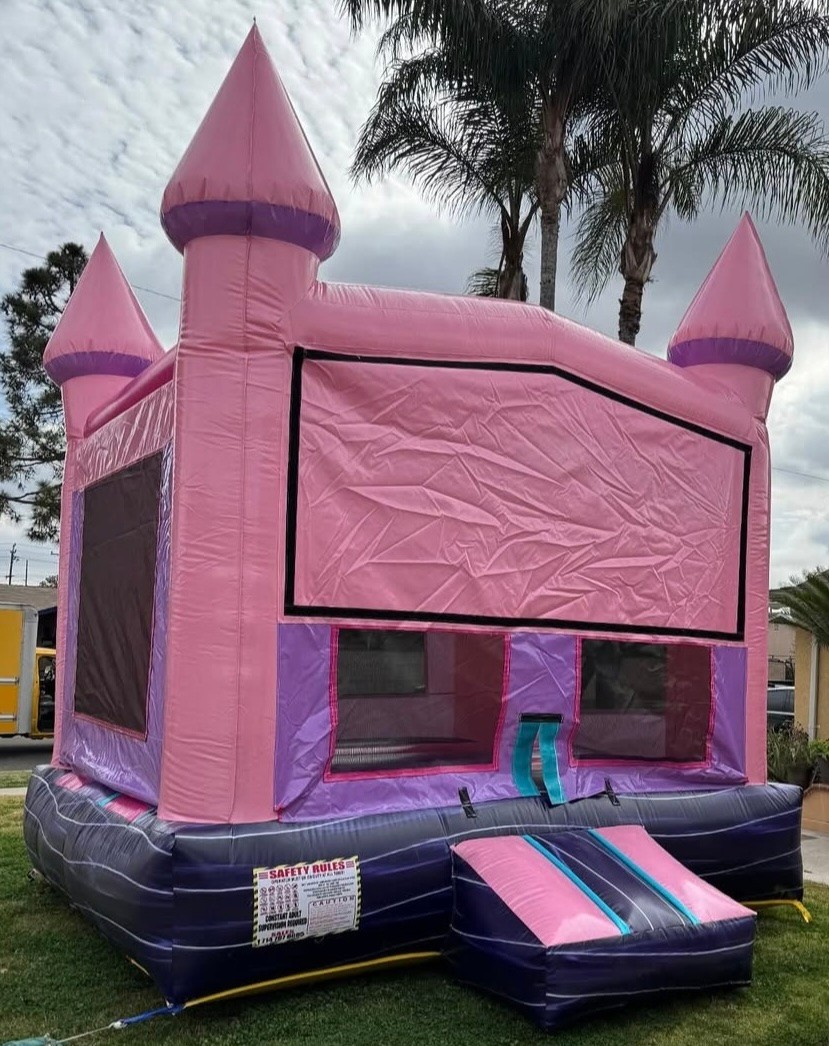
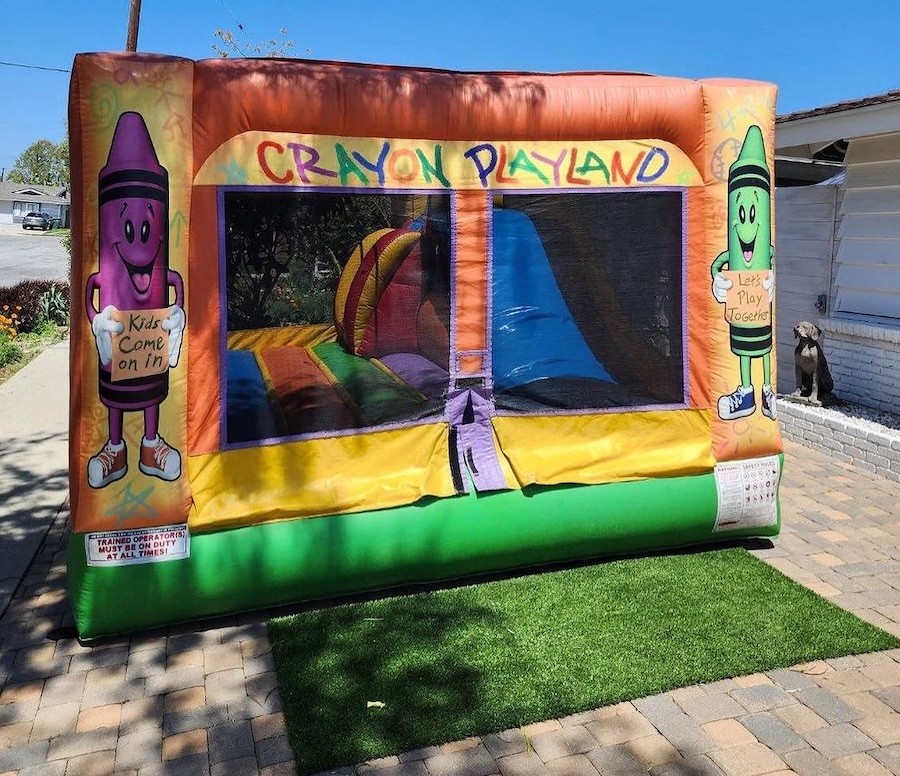
In 2026, a standard commercial bounce house from a reputable manufacturer typically runs between $1,200 and $2,800 depending on size, theme, and construction quality. Entry-level units at the lower end of that range are usually smaller (around 13x13 feet) with basic themes and lighter-gauge vinyl. Mid-range units in the $1,800 to $2,500 window offer heavier 18-ounce vinyl, reinforced stitching at stress points, and more visual appeal for themed parties. Premium units, including large combo bouncers with attached slides, can push $3,500 to $6,000 or more.
Waterslides and combo obstacle course units carry higher price tags because of their size and complexity. A standalone commercial waterslide runs $2,500 to $5,500 on average, while a full obstacle course can reach $6,000 to $10,000 depending on length and configuration. If you are planning to serve schools, HOAs, or large community events (the kinds of clients described in Jump High's church and community event guide), larger units will be essential to your lineup.
One cost that catches new buyers off guard is the blower motor. Most commercial units require a dedicated 1 HP or 1.5 HP continuous-duty blower, which typically adds $80 to $200 per unit if not included. Budget for at least one spare blower per three to four units in your fleet, because a failed blower on event day is a serious operational problem.
Freight, Delivery, and First-Year Setup Expenses
Buying commercial inflatables in California means you are almost certainly ordering from a manufacturer based in another state or overseas. Most major commercial inflatable manufacturers are located in the southeastern United States or source production from overseas factories. Either way, freight is a line item you cannot ignore.
Domestic freight for a single bounce house typically runs $150 to $400 depending on the carrier, origin point, and whether you are receiving at a residential address, a commercial dock, or a storage unit. Larger units like obstacle courses or waterslides may ship on pallets and require liftgate service, which adds $75 to $150 per delivery. If you are ordering multiple units at once, consolidated freight can reduce your per-unit cost, but you will need to coordinate with the manufacturer on timing.
For CA buyers, some manufacturers offer direct West Coast warehouse pickup or partner with regional distributors, which can cut freight costs significantly. It is worth asking every vendor you evaluate whether they have a CA distribution point before assuming you will pay full cross-country shipping.
Beyond the units themselves, your first-year setup expenses include a few categories that new operators consistently underestimate. A commercial-grade hand truck or dolly rated for 400 to 600 pounds is essential for safe loading and unloading, running $150 to $400. Tarps, ground covers, and anchor stakes add another $100 to $300 depending on how many units you are launching with. A reliable cargo van or enclosed trailer capable of carrying two to four units is often the largest single non-unit expense, and used cargo vans in CA currently run $18,000 to $35,000 depending on age and mileage.
How Many Units Do You Need to Start Generating Revenue
This is the question every new operator asks, and the honest answer is: it depends on your market density, your pricing, and how many weekends you can actually book. That said, most successful small fleet operators in California start with three to five units and build from there.
Here is the logic. A single bounce house rented at $200 to $350 per day (a realistic range for Orange County and surrounding markets in 2026) generates meaningful revenue only when it is booked consistently. With three units, you can potentially run two or three bookings on a busy Saturday and still have a unit available for a Sunday event. With five units, you start to have enough inventory to serve a school field day or a multi-unit HOA event, which are higher-value bookings that justify the logistics investment.
The inflatable rental checklist for OC parties with 50 guests gives you a sense of how multi-unit demand works at the consumer level. Events with 50 or more guests often require two or three inflatables to keep wait times manageable, which means a fleet of one or two units simply cannot serve that segment.
A realistic starter fleet for a CA operator might include two standard bounce houses (one themed for younger kids, one more neutral for mixed ages), one combo unit with a slide, and one waterslide for summer bookings. That four-unit lineup covers the most common booking requests without overextending your storage or transport capacity in year one.
Warranties, Vendor Support, and What to Ask Before You Buy
Commercial inflatables are a significant capital investment, and the warranty terms you accept at purchase will affect your operating costs for years. Most reputable manufacturers offer a one-year warranty on materials and stitching, with some extending coverage to two or three years on specific components. Read the fine print carefully, because many warranties exclude damage from improper use, UV degradation after a certain period, or repairs made by anyone other than an authorized service center.
Before committing to any vendor, ask these questions directly. What is the typical lead time from order to delivery, and does that change during peak season (spring and summer)? Is warranty service handled domestically, or do you need to ship units back to the manufacturer? Does the company offer replacement parts like patches, zippers, and blower connectors, and can you order them independently? What is the process if a unit arrives with a manufacturing defect?
Vendor responsiveness matters as much as the warranty text itself. A manufacturer that takes two weeks to respond to a warranty claim is effectively leaving you without a revenue-generating unit for that entire period. Ask other operators in CA rental communities about their experiences with specific vendors before you buy. The ASTM International standards for inflatable amusement devices (ASTM F2374) are the recognized industry benchmark for commercial unit construction, and any vendor worth considering should be able to confirm their products meet or exceed those specifications.
Storage, Depreciation, and Keeping Your Fleet Profitable
Storage is the operational cost that most startup guides underplay. Commercial inflatables need to be stored dry, clean, and protected from rodents and UV exposure. A standard bounce house folds down to roughly 4x4x3 feet and weighs 150 to 300 pounds. A waterslide or obstacle course can weigh 400 to 700 pounds and take up significantly more floor space even when deflated.
For a four-unit starter fleet, you will need at minimum a 10x20-foot climate-influenced storage space, though a 10x30 gives you room to work safely around the units. Self-storage units in Orange County and surrounding CA markets currently run $180 to $400 per month for that size range depending on location and whether climate control is included. Climate control is worth the premium in CA, where summer heat can degrade vinyl faster than most operators expect.
Depreciation planning is not tax advice, but it is practical business planning. Commercial inflatables have a realistic useful life of five to eight years with proper care, though heavy-use units may need significant repairs or replacement sooner. Tracking your per-unit revenue against your original purchase cost helps you understand when a unit has paid for itself and when it is becoming a maintenance liability rather than an asset.
Routine maintenance costs, including patching, blower replacement, and cleaning supplies, typically run $200 to $500 per unit per year for a well-managed fleet. Units that are cleaned thoroughly after every rental, stored properly, and inspected before each deployment last significantly longer than those that are not. Jump High's guide on how inflatables are cleaned and sanitized covers the operational side of that process in detail.
Building a profitable CA bounce house fleet is a realistic goal for operators who go in with clear numbers and a patient approach to growth. Start with a focused inventory, understand your true cost per unit, and let your booking volume guide when to expand. When you are ready to see what a working rental lineup looks like in practice, Jump High's full rental catalog and the guides library are good resources for benchmarking unit types and event formats before you finalize your purchasing decisions. And if you have questions about how the Orange County market operates day to day, the Jump High contact page is the right place to start that conversation.