
Why Anchoring Matters for Every CA Backyard Setup
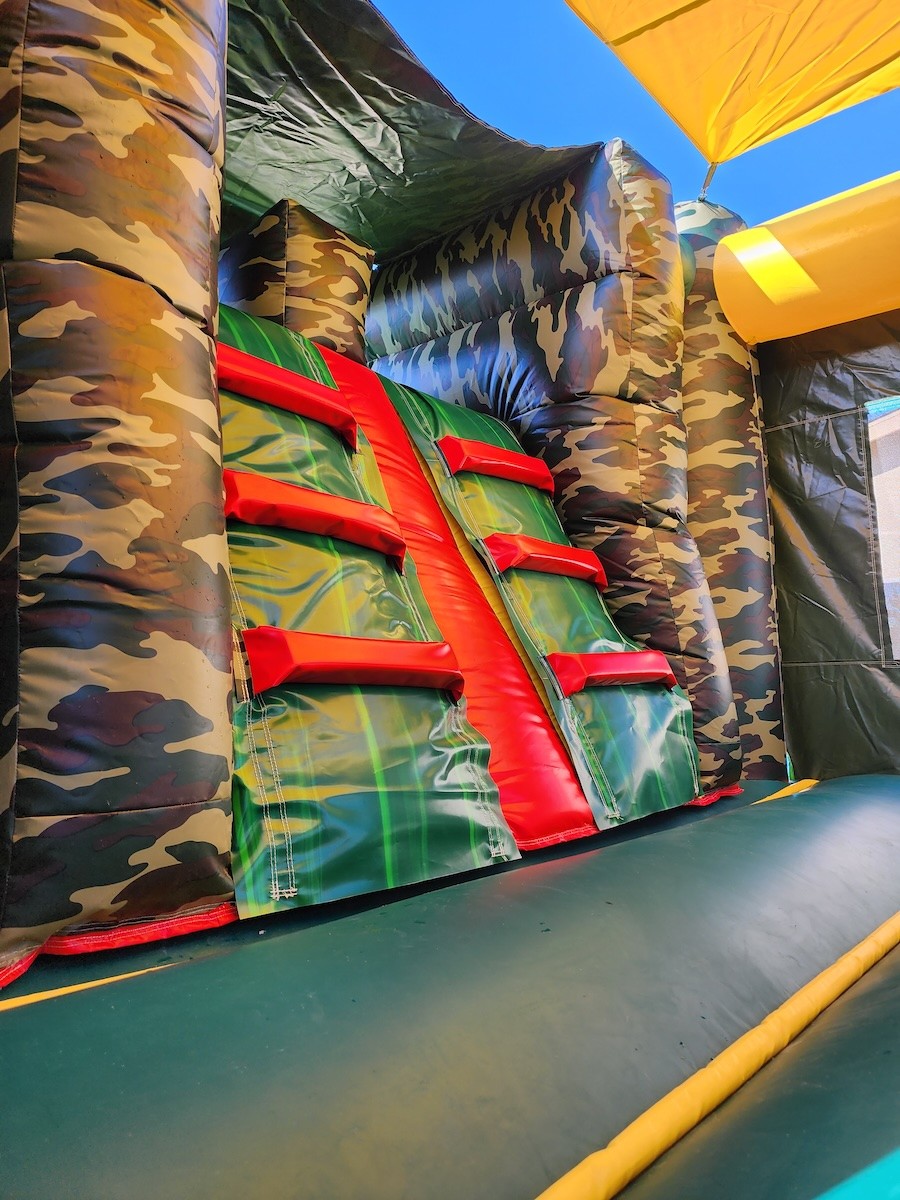
When most Orange County families start planning a bounce house party, the first questions are usually about themes, colors, and whether to go with a waterslide combo or a classic jumper. Those are great questions, and they matter. But the question that determines whether your party day goes smoothly is a more practical one: can your yard actually anchor the unit correctly?
Anchoring is not a finishing detail. It is the foundation of a safe inflatable setup. A bounce house that is not properly secured can shift, tip, or in high-wind conditions become a serious hazard. The U.S. Consumer Product Safety Commission (CPSC) is clear that inflatables must be anchored according to the manufacturer's instructions at every required anchor point, and that improvised tie-offs, including using vehicles as anchors, are not acceptable substitutes for proper hardware.
For Orange County backyards, this matters because the region has a wide variety of surface types. Some homes in Yorba Linda or Anaheim Hills have large grass lawns. Others in Irvine or Huntington Beach have concrete patios, pavers, or a mix of both. The anchoring method that works on one surface does not work on another, and knowing which category your yard falls into before booking helps the setup crew arrive prepared with exactly the right equipment.
Wind is also a real factor in Southern California. Seasonal Santa Ana conditions and afternoon coastal breezes can push wind speeds above the 15 to 25 mph range that most manufacturers set as the upper limit for safe inflatable use. Proper anchoring does not override a wind shutdown, but it does mean the unit stays stable during normal party conditions. You can read more about how wind affects inflatable safety in our wind speed limits and inflatable safety guide for OC parties.
The short version: anchoring is not optional, it is not the same on every surface, and it is something you can prepare for before the crew ever pulls into your driveway.
Grass, Concrete, and Mixed Surfaces: What Changes
The surface under your bounce house determines everything about how it gets anchored, and the two most common scenarios in Orange County backyards are natural grass and hard surfaces like concrete, asphalt, or pavers.
On grass, the standard approach is heavy-duty metal stakes driven into the ground through the anchor loops on the inflatable's base. Stake length matters. Shorter stakes can pull out under load, especially in softer or recently watered soil. Professional setups typically use stakes in the 18-inch to 24-inch range, and some larger units or windier conditions call for even longer hardware. The goal is enough depth that the stake resists upward pull when the inflatable shifts or bounces. Stakes should be driven at an angle away from the unit, not straight down, so the pull direction works against the stake rather than with it.
On concrete, asphalt, or pavers, stakes are not an option. The anchoring method shifts entirely to sandbags or weighted ground anchors placed at each anchor point on the inflatable. These weights need to be substantial enough to hold the unit under active use. This is not the place to improvise with random heavy objects from the garage. Sandbags designed for inflatable anchoring distribute weight correctly and attach to the anchor loops in a way that keeps the unit stable without damaging the surface underneath.
Mixed surfaces are common in Orange County yards, where a grass lawn meets a concrete patio or a side yard has both dirt and pavers. In these cases, the setup crew evaluates each anchor point individually and uses the appropriate method for that specific spot. A unit that straddles two surface types may use stakes on the grass side and sandbags on the hard side. The key is that every anchor point is addressed, not just the convenient ones.
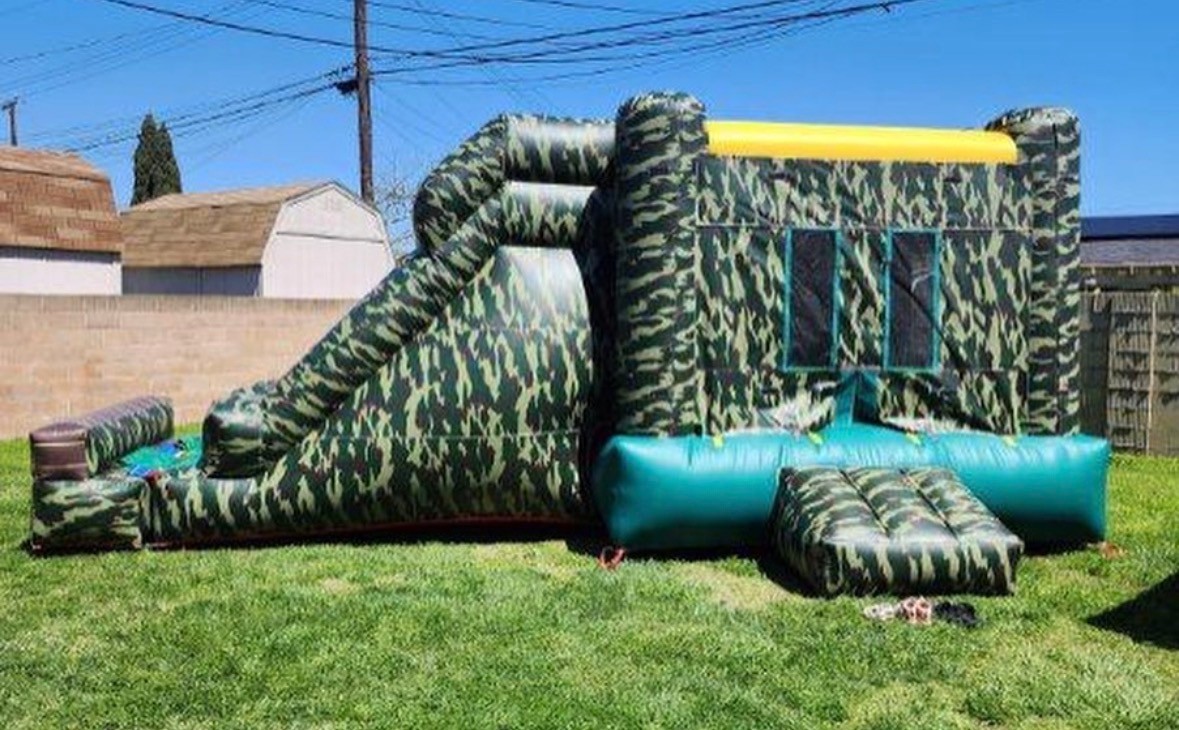
One misconception worth clearing up: one stake per corner is not always enough. The correct number of anchor points depends on the size of the inflatable, its height, and the manufacturer's specifications. Larger units and taller slides have more anchor points and require more hardware. When you browse the rental catalog, the size and footprint of each unit is part of what the team reviews when confirming your setup plan.
Space, Clearance, and Ground Prep Before Setup Day
Anchoring works best when the ground underneath the inflatable is properly prepared, and that preparation starts before the crew arrives. A flat, clean surface is the baseline. Rocks, toys, sticks, garden hoses, and anything sharp or uneven should be cleared from the setup area before the team gets there. Muddy or waterlogged ground creates problems for both anchoring and the inflatable's base material, so if your yard has had recent irrigation or rain, let the crew know in advance.
Level ground is important too. A slope that looks minor from across the yard can create real problems for an inflatable, both for anchoring stability and for the experience of kids bouncing inside. Our sloped backyard guide covers this in detail, but the general rule is that the setup area should be as flat as possible, and any significant slope should be flagged before booking so the right unit and placement can be confirmed.
Overhead clearance is a planning point that surprises some families. Most inflatables need at least 15 feet of vertical clearance, and taller slides or combo units need more. Low-hanging tree branches, rooflines, patio covers, and overhead utility lines are all potential conflicts. Walk the setup area and look up, not just around. A branch that seems far enough away at ground level can be much closer once a 14-foot inflatable is fully inflated underneath it.
Side clearance matters as well. The inflatable footprint on paper is the unit itself, but in practice you want several feet of buffer on each side so kids can exit safely, adults can supervise, and the crew has room to work during setup and takedown. Tight fences, walls, or garden beds right at the edge of the unit create both safety and anchoring challenges. If your usable space is close to the minimum for a unit you are considering, describe the layout when you reach out to the team so the right size can be confirmed before your booking is finalized.
What a Professional Setup Crew Checks Before Leaving
A professional inflatable setup is not just inflation and a handshake. Before the crew leaves your yard, there is a systematic check that covers the unit itself, the anchoring, and the operating conditions.
The blower connection is confirmed secure, because a loose connection can cause partial deflation during use. Seams, zippers, and stitching are inspected for any damage that may have occurred during transport. The anchor points are checked to confirm that every stake is fully driven or every sandbag is correctly placed and attached. On grass setups, the crew verifies that stakes have not hit underground irrigation lines or other obstructions that would prevent full depth.
The crew also reviews the area around the unit one more time before leaving. This includes a quick look at overhead clearance, side buffer space, and the path kids will use to enter and exit. If anything looks like it needs adjustment, it gets adjusted before the crew signs off.
This pre-departure inspection is part of what separates a professional rental from a DIY inflatable purchase. When you rent from a company that handles setup and takedown, you are not just paying for the equipment. You are paying for the crew's experience in recognizing what a correctly anchored, correctly positioned inflatable looks like in your specific yard. Our guide on what to expect on delivery day walks through the full timeline so you know exactly what happens from the moment the truck arrives.
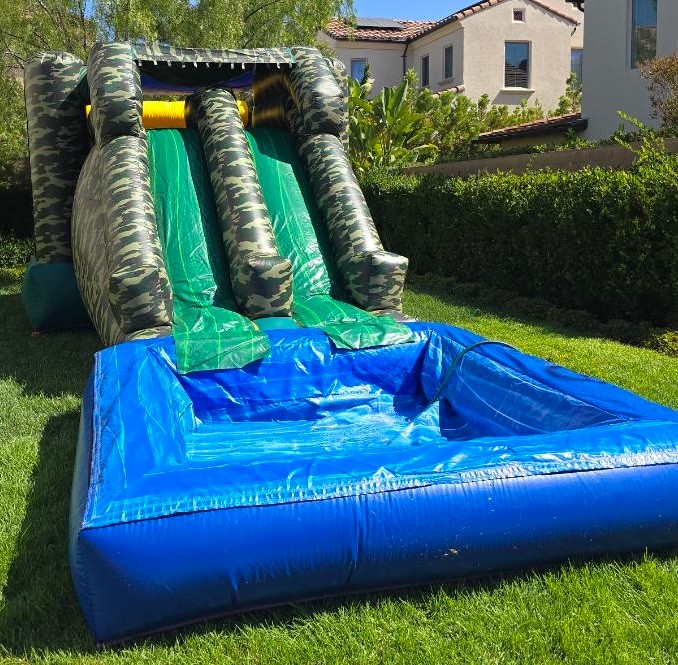
After the crew leaves, adult supervision remains essential throughout the event. Anchoring keeps the unit in place, but it does not manage capacity, weather changes, or the behavior of excited kids. Keeping the number of kids inside the unit within the posted limit, watching for wind changes, and having a clear plan for getting kids off the inflatable quickly if conditions shift are all part of running a safe party. Our supervision tips guide for OC parents covers those responsibilities in practical detail.
Backyard Anchoring FAQ for OC Parents
Can I use sandbags I already own instead of the ones the crew brings?
The crew brings anchoring equipment sized and rated for the specific unit being set up. Sandbags from a hardware store may not have the right weight, attachment points, or placement design for inflatable anchoring. It is always better to let the crew use their own equipment and confirm every anchor point is correct.
What if my yard has artificial turf?
Artificial turf is a common surface in Orange County yards and it has its own anchoring considerations. Stakes can be used in some artificial turf installations, but the backing material and any padding underneath affect how stakes hold. The artificial turf anchoring guide covers this specifically, and it is worth reading before your booking if your yard has synthetic grass.
What if the wind picks up during the party?
Anchoring keeps the unit stable in normal conditions, but if wind speeds exceed the manufacturer's recommended maximum, the inflatable should be shut down regardless of how well it is anchored. This is a safety rule, not a judgment call. The FAQ page includes guidance on weather policies and what to do if conditions change during your rental window.
Do I need to do anything to prepare the grass before the crew arrives?
Mow the area if possible, remove any debris, and avoid watering the lawn the day before setup. Dry, firm soil holds stakes better than soft or waterlogged ground. If you have known irrigation lines or underground utilities in the setup area, let the crew know so they can adjust stake placement accordingly.
What if my yard is mostly concrete with a small grass strip?
Describe the layout when you contact the team before booking. Mixed surfaces are handled regularly, and knowing the breakdown in advance means the crew arrives with both stakes and sandbags ready. The goal is always that every anchor point is properly secured, regardless of what the surface looks like.