
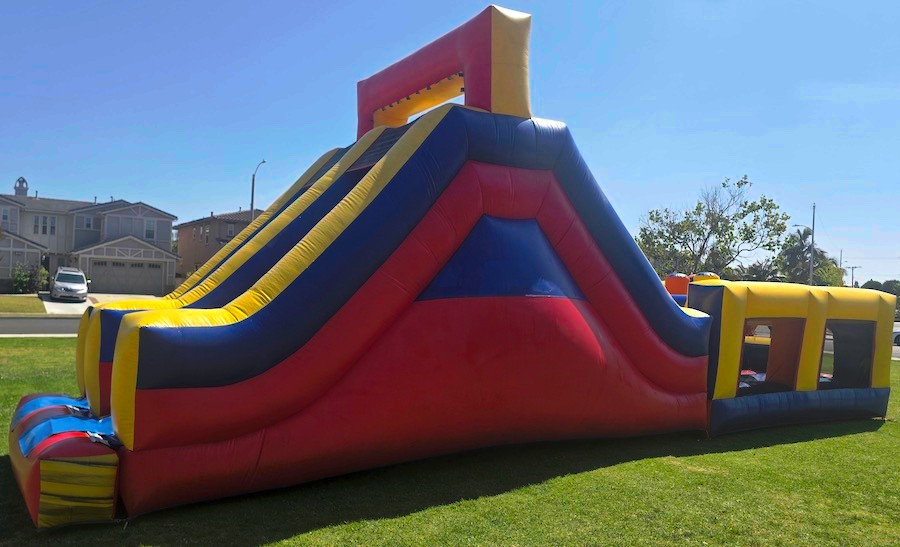
Planning a 100-person gathering in Orange County comes with a lot of moving parts, and figuring out how many inflatables to rent is one of the questions that trips up even experienced organizers. The good news is that there is a practical framework for getting to a confident answer before you ever pick up the phone. Once you understand what actually drives inflatable demand, the math becomes much more manageable.
Why Headcount Alone Does Not Tell the Whole Story
A guest list of 100 people sounds like a clear data point, but it leaves out most of what actually determines how many inflatables you need. The more useful questions are: How many of those 100 guests are children who will actively use the inflatables? How long is the event? And will everyone arrive at the same time, or will attendance build gradually over several hours?
Crowd flow matters far more than raw headcount. One well-chosen inflatable can serve dozens of kids over the course of a four-hour event if the line keeps moving. But if 80 children show up at the same moment and you only have one bounce house, you will have a long, frustrated line within the first fifteen minutes.
Age spread is another factor that changes the count quickly. A party where toddlers, elementary-age kids, and middle schoolers are all attending usually calls for separate inflatables by age group. Mixing a four-year-old and a twelve-year-old in the same bounce house is not a great experience for either child. When you plan for age separation, your inflatable count goes up, but so does the safety and enjoyment for every guest.
Event duration also shifts the calculation. A two-hour birthday party has very different throughput needs than a six-hour school carnival. Shorter events concentrate demand, which means you may need more inflatables to handle the peak. Longer events spread demand out, which gives you more flexibility with fewer units, as long as the inflatables stay engaging throughout.
A Practical Inflatable Count by Event Type
Rather than applying one formula to every gathering, it helps to start with a range based on the type of event you are hosting. Here is how those ranges typically break down for a 100-person Orange County event in 2026.
Backyard birthday parties usually work well with one or two inflatables. Most backyard events have a smaller active-kid count, and guests naturally rotate between the inflatable, food, and other activities. Two inflatables become useful when you have a wide age range or want to separate younger and older kids.
Family and community gatherings tend to land in the two-to-three inflatable range. These events often run longer and attract a broader mix of ages, so having a second or third unit keeps engagement high and prevents bottlenecks.
School, church, and HOA events are where three to four inflatables becomes a common starting point. Kids at these events arrive in waves, stay engaged for extended periods, and expect variety. A single bounce house will feel undersized by mid-morning at a school carnival.
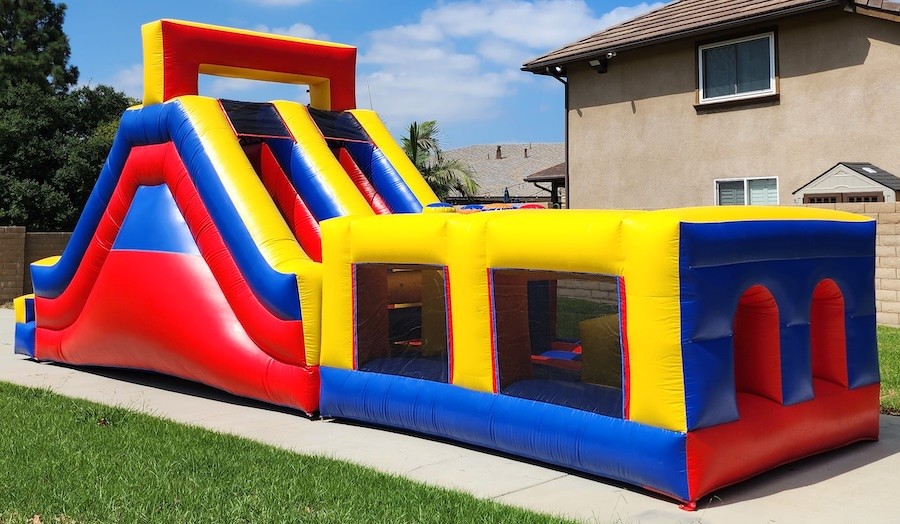
Festival-style or all-day programs often call for four or more inflatables, or one large obstacle course attraction paired with supporting games and activities. These events have the highest throughput demands and the widest range of participant ages.
Keep in mind that these are starting estimates. The actual number for your event may be higher or lower depending on the specific factors covered in the sections below.
Choosing the Right Mix: Bounce Houses, Combos, and Obstacle Courses
Getting the count right is only half the job. Choosing the right combination of inflatable types is what keeps guests happy and lines short throughout your event.
Standard bounce houses are a great fit for younger children and shorter play cycles. They are simple to supervise, easy for small kids to navigate, and work well as a dedicated toddler zone when you separate age groups.
Combo units add a slide, basketball hoop, or climbing wall to the basic bounce house format. They increase the variety of activities without requiring a second standalone unit, which makes them a smart choice when you want to stretch your budget while still offering more than a plain jumper.
Obstacle courses are often the best choice for larger crowds because they keep lines moving. Guests enter one end, work through the course, and exit the other side, which creates a natural flow that reduces wait times. Obstacle courses also appeal to a wider age range, including older kids and teens who might find a standard bounce house too basic.
Water slides deserve a special mention for Orange County events. They are consistently popular during the warmer months, which in Southern California means spring through early fall. A water slide adds a high-energy attraction that draws guests back repeatedly, but it does require more space, access to a water source, and closer supervision than a dry inflatable. If your venue can support it, a water slide is one of the strongest crowd-pleasers you can add to a mid-to-large event.
A practical mix for a 100-person school or HOA event might look like this:
- One obstacle course to handle the main crowd flow
- One combo unit for elementary-age kids who want variety
- One standard bounce house or toddler jumper for younger children
- One water slide if the venue has space and water access (spring and summer events especially)
Space, Power, and Layout Factors That Change the Math
Even if your guest count and event type point toward four inflatables, your venue may not support that number. Physical constraints are real, and they need to be part of your planning conversation before you finalize a booking.
Flat, open space is the most basic requirement. Each inflatable needs a clear footprint with several feet of buffer on all sides for safe operation and staking. A backyard that comfortably holds one bounce house may not have room for two without compromising the buffer zones.
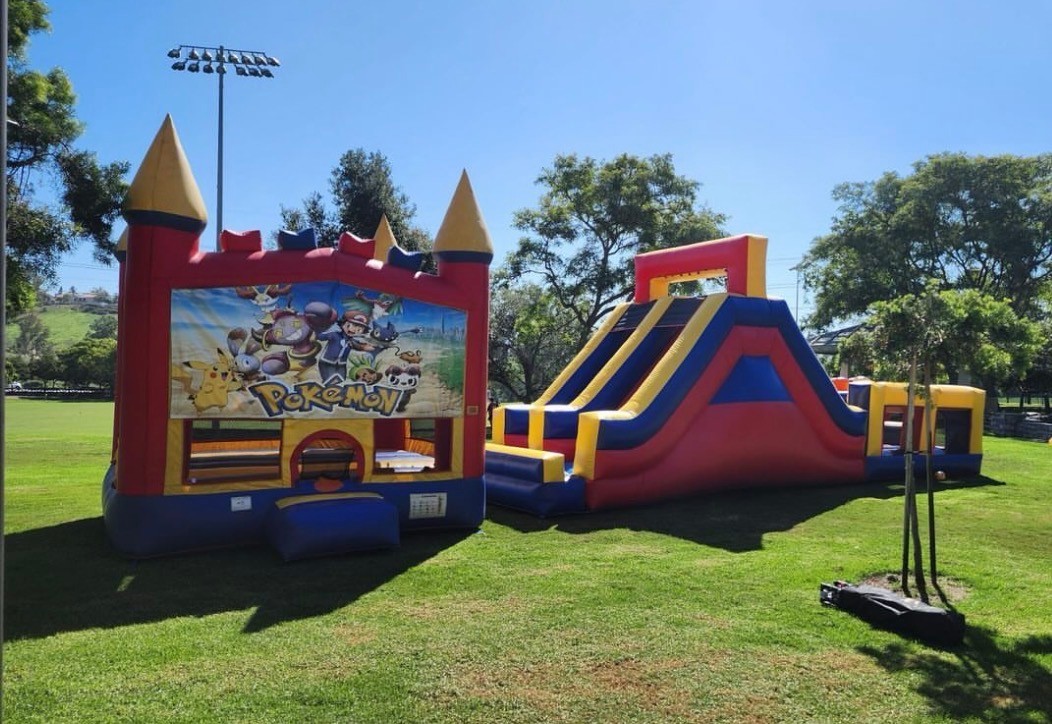
Power access matters more than many planners expect. Each inflatable runs on a blower motor that draws consistent power throughout the event. Multiple inflatables mean multiple blowers, and if your venue only has one or two accessible outdoor outlets, you may need to rent a generator or plan your layout around the available power sources.
Shade and surface type also affect the setup. Orange County summers are warm, and inflatables placed in direct afternoon sun can become uncomfortable quickly. Grass surfaces are generally the preferred setup surface, but concrete and artificial turf are workable with the right anchoring approach. If your venue has a mix of surfaces, that can influence where each inflatable is positioned and how the overall layout comes together.
Park events in Orange County add one more layer of planning. OC park venues may require permits for inflatable use, and the permit process can affect your timeline, your approved setup area, and the number of units you are allowed to bring. If your event is at a park, build in extra lead time and confirm the venue's requirements before you finalize your inflatable count.
How to Lock In the Right Setup Before You Book
The most efficient way to arrive at the right inflatable count is to answer four questions before you contact a rental company.
First, how many children will actively use the inflatables, and what ages are they? Total guest count matters less than the active-kid count and the age spread.
Second, how long is your event, and when do you expect peak attendance? A two-hour party with simultaneous arrivals needs more capacity than a four-hour event with rolling attendance.
Third, how much flat, open space does your venue have, and what is the surface type? Knowing your layout constraints helps narrow down which units will fit and how many can be safely operated at once.
Fourth, do you have adequate power access, or will you need a generator? This affects both the number of inflatables you can run and the setup logistics on the day of the event.
Once you have those answers ready, a conversation with Jump High Rentals becomes much more productive. The team can help you match your guest count, event type, and venue details to the right combination of inflatables from the inventory, whether that is a single combo unit for a backyard birthday or a four-piece setup for a school carnival.
Jump High Rentals serves families, schools, churches, and HOAs across Orange County with delivery, setup, and pickup included. If you are planning a 100-person event and want a free inflatable count recommendation based on your specific situation, reach out before the spring and summer booking rush fills the calendar. Getting the right setup confirmed early means one less thing to manage as your event date approaches.