
Booking a bounce house or waterslide for your child's birthday is one of the easiest ways to guarantee a memorable afternoon. But somewhere between choosing the inflatable and sending out invitations, a common question comes up: how many kids can actually use this thing at once?
Capacity limits are the answer to that question, and they are more useful than most parents realize. Understanding rider limits and weight limits before your party day helps you choose the right equipment, plan smooth rotations, and keep every child safe while they play. Think of capacity information as a planning tool, not a restriction designed to slow things down.
Here is what inflatable capacity limits actually mean, how they work in practice, and how to use them to run a better party in Orange County.
What Inflatable Capacity Limits Actually Mean
Every inflatable rental unit, whether it is a classic bounce house, a towering waterslide, or a multi-lane obstacle course, is manufactured with a defined safe operating limit. That limit reflects how many riders the structure can safely support at one time without compromising the integrity of the inflatable, the anchoring system, or the play experience for the kids inside.
Capacity limits are not arbitrary numbers. They come from the manufacturer's engineering specifications and account for factors like the size of the jumping surface, the height of the walls, the strength of the seams, and the airflow from the blower keeping the unit inflated. When a unit is used within its rated capacity, it performs the way it was designed to perform.
What capacity limits do not mean is that every child at your party has to wait on the sidelines. They mean that a certain number of kids can be on the unit at one time, and the rest rotate in. For most backyard birthday parties in Orange County, that rotation happens naturally and quickly. Kids bounce for a few minutes, come out for a snack or a drink, and cycle back in. The limit keeps the experience fun and safe for everyone who steps inside.
It is also worth knowing that capacity limits apply to the specific unit you rent, not to inflatables as a category. A small starter bounce house and a large combo unit with a slide and climbing wall are rated for very different numbers of riders. Asking about the exact limit for the unit you want is always the right first step.
How Rider Counts and Weight Limits Work Together
Most inflatables carry two related but distinct figures: a rider count and a weight limit. Both matter, and they work together rather than independently.
The rider count is the maximum number of children allowed on the unit at the same time. The weight limit is the maximum combined load the inflatable is rated to handle. These two numbers interact in ways that are easy to overlook. A unit rated for eight children assumes a typical mix of younger, lighter kids. If your guest list skews older or heavier, the weight limit may be reached before the rider count is, which means fewer kids on at once.
The reverse is also true. A group of very young toddlers may fall well under the weight limit even with several children inside, but the rider count still applies because the space and airflow are designed around a specific number of bodies moving around at once.
A few other factors that commonly affect how capacity limits apply in practice:
- Age and height restrictions. Some inflatables are designed for children above a minimum height, which is meant to match the impact level and scale of the equipment to the child's size.
- Mixed age groups. When older kids and younger children share the same unit, many rental companies recommend keeping them separated by age group to prevent rough play and accidental collisions.
- Water inflatables. Waterslides and wet combos have the same rider and weight limits as dry units, and those limits apply whether the slide is wet or dry.
- Park events. If your event is at an Orange County park rather than a private backyard, the capacity limits on the inflatable remain the same, but you may also need to account for permit requirements and generator logistics that affect your overall setup.
When you contact Jump High Rentals about a specific unit, asking for both the rider count and the combined weight limit gives you the complete picture you need to plan your rotation schedule.
Matching the Right Inflatable to Your Guest List
Choosing the right inflatable for your guest count is one of the most practical things you can do before booking. A unit that is too small for your crowd creates long waits and frustrated kids. A unit that is far larger than you need may not fit your backyard or your budget.
A good starting point is to think about your active guest count, meaning the number of children who will actually want to use the inflatable, rather than your total headcount. At a birthday party with 30 guests, some of those guests are parents, grandparents, and older siblings who are there to watch. The kids who want to bounce might number closer to 15 or 20, and that is the figure that should guide your unit selection.
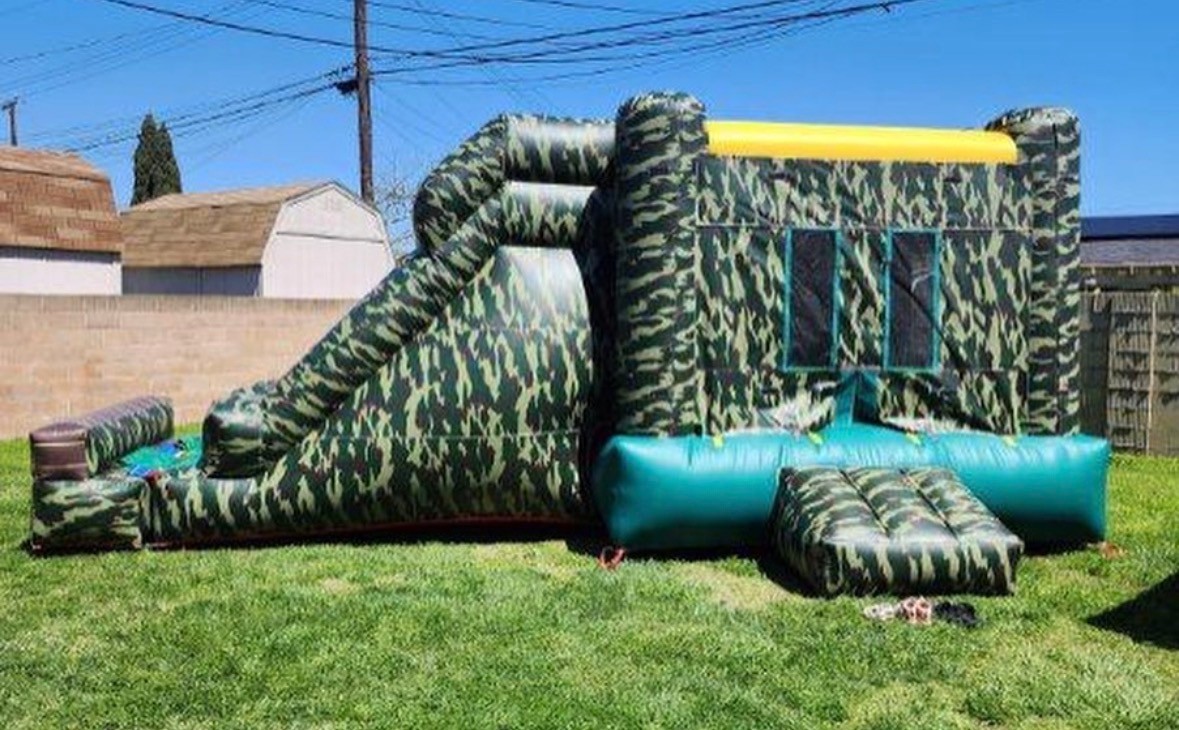
From there, consider the age range of your guests. Younger children (roughly ages 3 to 7) tend to do well in standard bounce houses with lower walls and simple layouts. Older kids (ages 8 and up) often prefer obstacle courses, combo units with slides, or larger structures that give them more to do. Mixing very young children with older, more active kids on the same unit at the same time is generally something to avoid, and many rental companies will flag this when you describe your guest mix.
If your party includes a wide age range, one option is to rent two smaller units rather than one large one, keeping age groups separated and giving each group an experience suited to their size and energy level. Jump High Rentals can help you think through whether one unit or multiple units makes more sense for your specific event.
How to Run Rotations So Every Kid Gets a Turn
Once you know the capacity limit for your unit, building a simple rotation plan is straightforward. The goal is to keep the line moving, prevent crowding at the entrance, and make sure every child gets a fair amount of time on the inflatable.
A few approaches that work well for Orange County backyard parties:
- Set a timer. Give each group of riders a set amount of time, typically five to ten minutes, before rotating the next group in. A kitchen timer or a phone alarm works fine. Kids respond well to a clear, neutral signal.
- Designate a line spot. Pick a specific spot in the yard where kids waiting for their turn stand. Keeping the entrance area clear makes it easier for adults to count riders and spot anyone who needs help getting in or out.
- Assign a rotation helper. Ask one adult to manage the line and count riders at the entrance. This does not need to be a formal role. It just means one person is paying attention to who is on the unit and when it is time to rotate.
- Separate age groups during their turns. If your guest list includes both young children and older kids, run separate rotation windows for each group. Younger kids go first, then older kids, or alternate by group throughout the party.
- Keep the area around the inflatable clear. Shoes, bags, and toys near the entrance create tripping hazards. A simple rule posted near the entrance (shoes off, one at a time through the door) helps keep things orderly without a lot of adult intervention.
Rotations are not a sign that your party is too crowded. They are a sign that you planned ahead, and kids generally accept a fair rotation system without complaint, especially when there are other activities, snacks, or games to fill the wait.
Questions to Ask Jump High Rentals Before You Book
Before your rental is confirmed, a short conversation about capacity details can save a lot of guesswork on party day. Here are the questions worth asking:
- What is the rider limit for this specific unit?
- What is the combined weight limit?
- Are there age or height restrictions I should know about?
- Is this unit recommended for backyard use, park use, or both?
- If my event is at a park, what permits or generator requirements should I be aware of?
- Would you recommend one unit or multiple units for my guest count and age range?
The team at Jump High Rentals is happy to walk through these details with you before you book. Knowing the answers ahead of time means you can plan your rotation schedule, brief the adults helping you supervise, and arrive at party day with a clear picture of how the inflatable will run.
Capacity limits exist to protect the kids using the equipment and to make sure the inflatable performs the way it was designed to. When you understand what those limits mean and plan around them, every child gets a safe, fun turn, and you get a party that runs smoothly from start to finish. Reach out to Jump High Rentals to confirm the rider limits, weight limits, and age restrictions for the unit you have in mind, and let the planning begin.