
What a Side-by-Side Obstacle Course Actually Is
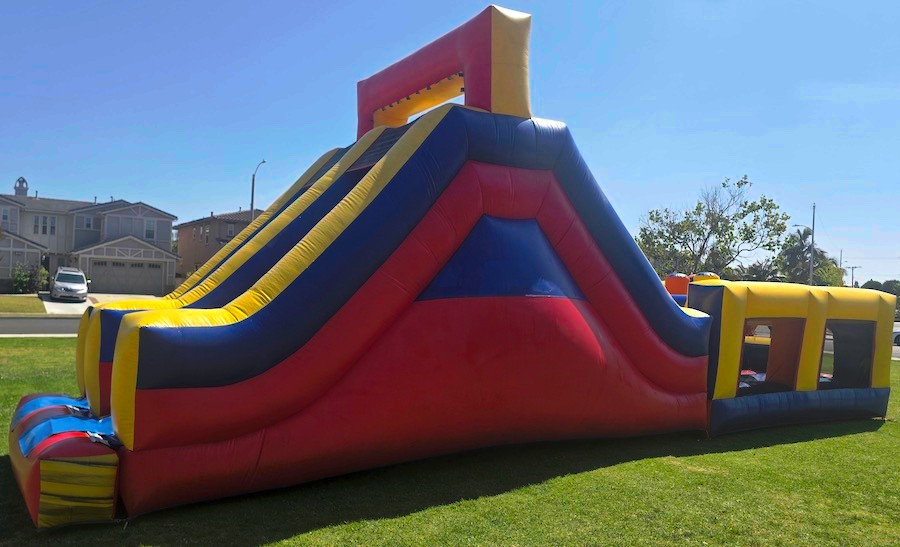
If you have ever watched a group of kids line up at a starting line and bolt through tunnels, over climbing walls, and down a slide at the finish, you already understand the appeal. A side-by-side obstacle course inflatable puts two identical lanes next to each other so two kids (or two teams) can race at exactly the same time. The format is what makes these units special. Instead of one child going through while everyone else waits, you get head-to-head competition, cheering from the sidelines, and a natural rhythm that keeps the whole group engaged.
These units are longer and wider than a standard bounce house or combo unit. A typical side-by-side course might run anywhere from 30 to 60 feet in length and include a sequence of obstacles: pop-up bumpers, crawl-through tunnels, climbing walls, and a slide exit at the far end. The two lanes mirror each other so neither racer has an advantage based on layout. That symmetry is part of what makes the format feel genuinely fair to kids, which matters a lot when the competition gets spirited.
Because of their size and the active, running-style play they encourage, side-by-side obstacle courses are positioned as a premium rental category. In Orange County, you can expect pricing to start around $400 and move higher depending on unit size, rental duration, and any add-ons. That investment makes the most sense when you have enough kids to keep both lanes busy throughout the event, which is why guest count is one of the first things worth thinking through before you book. You can also browse Jump High's full rental catalog to see current options and get a sense of what fits your event size.
Who These Rentals Work Best For in OC
Side-by-side obstacle courses are not the right fit for every party, and that is actually a good thing. Knowing who they serve best helps you make a confident decision rather than guessing.
The format shines at events where the guest list is large enough to sustain ongoing competition. Think a birthday party with 30 or more kids, a school field day where classes rotate through stations, a church carnival with multiple activity zones, or an HOA community event where families from across the neighborhood show up. When you have that kind of volume, the race format keeps lines moving and energy high. Kids who just finished a run immediately want to go again, which means the unit stays active and the crowd stays entertained.
For school and church event planners, the side-by-side format also solves a common logistical problem: how do you keep a large group of kids occupied without constant adult intervention? The race structure is self-directing. Kids understand the rules immediately, they self-organize into pairs or teams, and the competitive element keeps attention focused on the activity rather than drifting toward trouble. If you are coordinating a field day or a carnival with multiple stations, an obstacle course can anchor one zone while other activities run in parallel. The inflatable rentals for OC school field days guide covers how that kind of multi-station setup typically works.
Smaller birthday parties with 10 to 15 kids and a mix of toddlers and older children are usually better served by a combo unit or a standard bounce house. The obstacle course format works best when kids are old enough to navigate the obstacles independently, generally six and up, and when there are enough participants to keep both lanes competitive. If your crowd skews younger or smaller, a different unit will likely give you more value and a better experience.
Space and Surface Planning Before You Book
This is where a lot of bookings either go smoothly or hit a snag, so it is worth spending real time here before you confirm your reservation.
Side-by-side obstacle courses need significantly more open space than a standard bounce house. The unit itself may be 40 to 60 feet long, but you also need clearance on all sides for safe setup, for kids to queue at the start, and for the delivery crew to position and anchor the inflatable properly. A good working rule is to add at least five feet of buffer on each end and a few feet on each side beyond the unit's listed dimensions. That means a 40-foot course could realistically require a 50-foot clear run of usable space.
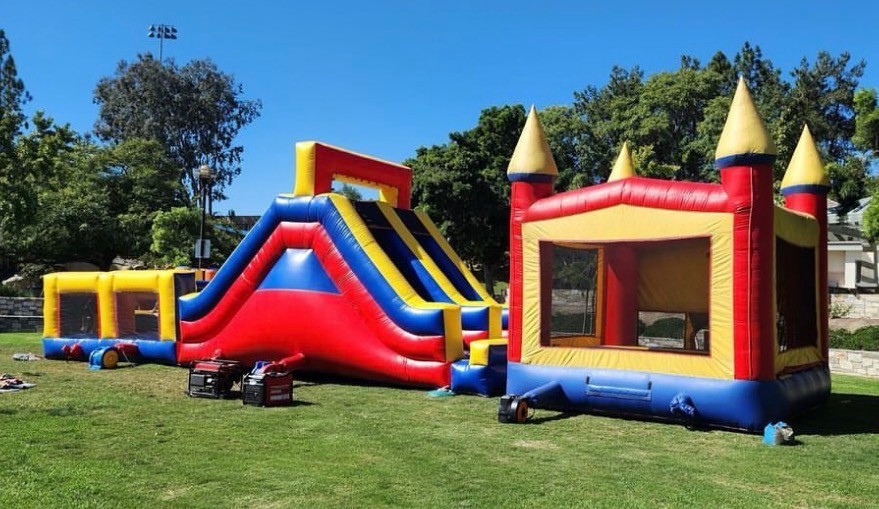
Surface type matters too. Grass is the most common setup surface and generally the easiest to work with because stakes can anchor the unit securely into the ground. Concrete, pavers, and asphalt are workable but require a different anchoring approach using sandbags or weighted anchor points rather than stakes. If your venue has a mix of surfaces or a slope, that is important to communicate when you book. The bounce house anchoring and staking setup guide explains how anchoring works across different surface types, and the same principles apply to obstacle courses.
Backyard gate clearance is another detail that catches people off guard. Obstacle courses arrive rolled or folded on a cart, and the delivery crew needs a clear path from the street or driveway to the setup area. A gate width of at least four feet is a reasonable minimum, though wider is always better. If your access path includes steps, a narrow side yard, or a locked gate, flag that early so the team can plan accordingly.
Power access is also part of the equation. Obstacle courses run on a blower motor that needs a dedicated electrical circuit. If the setup area is far from your home's exterior outlets, you may need an extension cord rated for outdoor use and the correct amperage. The power and extension cord guide for OC inflatables walks through what to look for so you are not scrambling on event day.
Safety Standards and Supervision That Matter
Inflatable obstacle courses are designed for active, competitive play, which means safety planning deserves more attention than it would for a standard bounce house where kids are mostly jumping in place.
The industry reference point for inflatable amusement equipment safety is the ASTM F24 committee, which develops standards covering design, anchoring, and operational guidelines for inflatables. Reputable rental operators follow manufacturer instructions, respect posted weight and capacity limits, and anchor units according to those guidelines. When you book with Jump High Rentals, setup is handled by a trained crew that follows these protocols so you do not have to figure it out yourself.
From your side as the event host, the most important safety contribution you can make is consistent adult supervision at the unit throughout the event. Obstacle courses move kids quickly through a sequence of physical challenges, and the race dynamic can encourage pushing or rushing at the start. Designating one or two adults to monitor the entrance, manage the queue, and watch for kids who may need help on the climbing section goes a long way toward keeping the energy fun rather than chaotic.
Age and size separation is worth enforcing as well. If your event includes a wide age range, consider setting aside specific time windows for younger kids and older kids rather than mixing them in the same race. A six-year-old and a twelve-year-old competing in the same lane is not a safety emergency, but it does create an uneven experience and can lead to collisions at the start. Keeping age groups reasonably matched makes the competition feel fair and keeps the activity safer for everyone. The supervising kids on inflatables guide has practical tips you can share with the adults helping you run the event.
Shoes should come off before kids enter the unit, and any sharp accessories like belts, watches, or hair clips with hard edges should be removed. These are simple rules, but communicating them clearly at the start of the event saves you from having to repeat them all afternoon.
Backyard vs. Park and School Field Setup in Orange County
The location of your event shapes almost every other planning decision, so it is worth thinking through the differences before you finalize your booking.
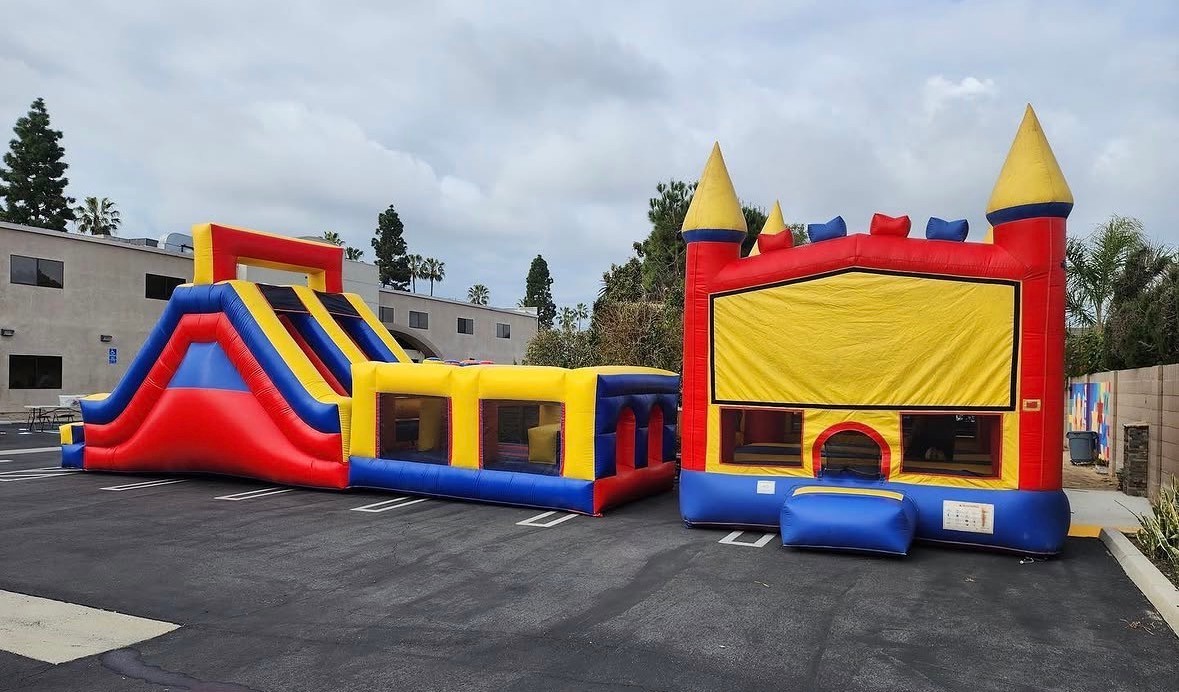
Backyard events offer the most control. You manage the space, you know the surface, and there is no permit process to navigate. The main constraints are physical: gate width, yard dimensions, surface type, and power access. If your backyard can accommodate the footprint and you have a clear delivery path, a backyard obstacle course event is usually the most straightforward option. Orange County backyards vary widely in size, especially across communities like Yorba Linda, Mission Viejo, and Irvine, so measuring carefully before you book is the single most useful thing you can do.
Park events introduce a few additional layers. Most Orange County parks that allow inflatables require a permit, and some have specific rules about vendor insurance, generator use, and where inflatables can be positioned relative to trees, pathways, and other park users. Lead times for park permits can run several weeks, so if you are planning a community event at a public park, start that process early. The inflatable rentals for Irvine park permit events guide covers how that process typically works in one of OC's most popular park systems.
School and church fields are often the ideal setting for side-by-side obstacle courses because they offer the open space these units need without the permit complexity of a public park. If you are coordinating a field day or carnival on school grounds, confirm with your facilities coordinator that inflatables are permitted and ask about power access. Many school fields have exterior outlets, but the distance from the outlet to your setup area may require a heavy-duty extension cord.
For any venue type, clear communication with your rental company before booking day is what separates a smooth event from a stressful one. When you reach out to Jump High Rentals, sharing your venue address, surface type, gate dimensions, and guest count lets the team confirm the right unit for your space and flag any setup considerations before the truck arrives. That conversation is part of the service, not an extra step. If you are ready to start planning, the contact page is the easiest place to begin, and the FAQ covers many of the most common questions about delivery, setup, and what to expect on event day.
Side-by-side obstacle courses bring a level of organized, competitive energy that standard inflatables simply cannot match. When the guest count is right, the space is ready, and the supervision plan is in place, they create the kind of event kids talk about for weeks. Browse the Jump High rentals catalog to see what is available for your date, and reach out to confirm your space dimensions before you book. The team is here to help you plan, not just deliver.