
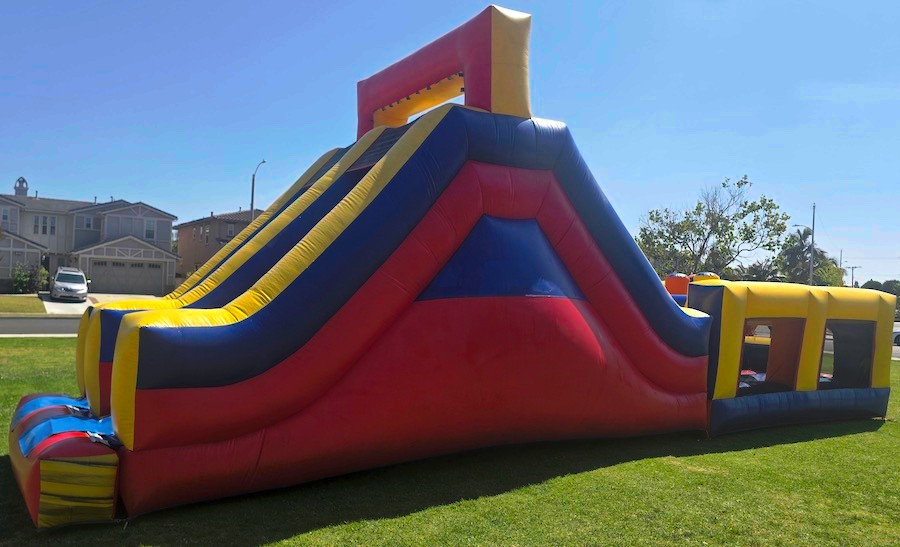
Planning a birthday party or community celebration at a local park is one of those ideas that sounds simple until you start asking questions. Can you bring an inflatable? Do you need a permit? Where does the power come from? For families and event planners across Orange County, the answers matter more than most people expect, and finding them out after you have already booked a bounce house is the wrong order of operations.
This guide walks you through the right sequence: confirm the park rules first, then choose your inflatable, then think through setup logistics, and finally plan for safe supervision on the day of the event.
Check the Park Rules Before You Book Anything
This is the step most people skip, and it is the one that causes the most last-minute headaches. Public parks in Orange County are managed by a mix of city recreation departments, county parks, and in some cases private HOAs or school districts. Each one has its own policies about inflatables, and those policies are not always posted in an obvious place.
Before you reserve a unit or pick a date, contact the park directly and ask a few specific questions. Find out whether inflatables are allowed at all. Some parks welcome them with a simple reservation, while others restrict large equipment because of turf protection, irrigation systems, or safety guidelines. Ask whether you need a park use permit and how far in advance you need to apply. Popular parks in cities like Anaheim, Irvine, and Huntington Beach can book out weeks ahead for weekend dates, especially in spring and summer.
Ask the park whether your rental company needs to provide any documentation before setup. Schools, churches, and HOAs that use shared park spaces sometimes have their own approval process on top of the city or county permit. If the park asks for proof of insurance or a certificate of liability from your rental company, find that out early so you can confirm what your provider can supply.
One practical note: Jump High Rentals works with families and event organizers across Orange County regularly, so if you have questions about what documentation parks typically request, reaching out before you book is a good way to get ahead of any surprises.
Choose the Right Inflatable for an Open Park Space
Once you know the park allows inflatables, the next step is matching the unit to the space. Parks feel open, but usable flat area is often more limited than it looks. Trees, benches, pathways, and irrigation heads all reduce the footprint available for a bounce house, and every inflatable needs clearance around it, not just the footprint of the unit itself.
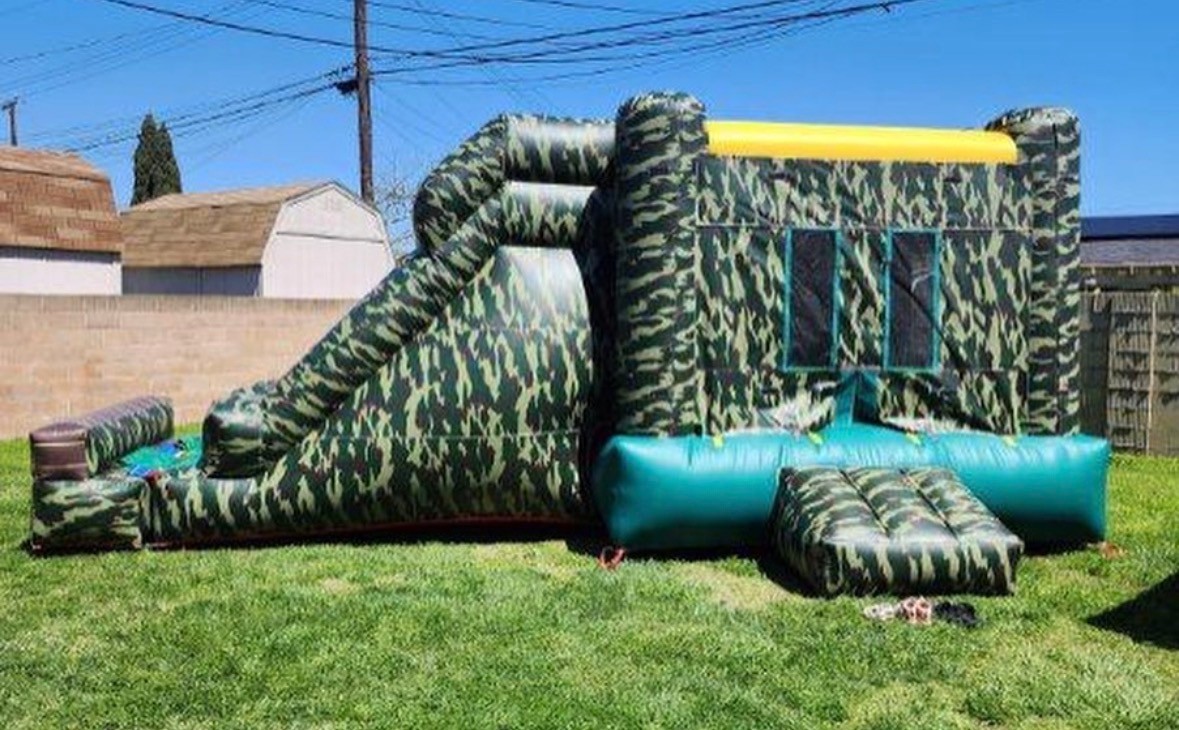
Measure the area you plan to use before you browse units. A standard bounce house for younger kids typically needs a space of around 15 by 15 feet at minimum, but larger combo units, obstacle courses, and waterslides need significantly more room. When you contact Jump High Rentals, sharing your approximate dimensions helps narrow down which units will actually work in your space.
Think about your guest count and age range too. A smaller bounce house works well for a birthday with 15 to 20 kids in the five-and-under crowd. A bigger group or an older crowd of elementary-age kids often benefits from a combo unit or an obstacle course that keeps more kids active at once and reduces the wait time at the entrance. Mixing very young children with older or larger kids in the same unit is something to avoid, and a well-sized unit for your specific group makes that easier to manage.
For park events in 2026, waterslides are popular during warm months, but check whether the park allows wet inflatables and whether there is a drainage concern before you commit to one.
Power, Anchoring, and Surface: What Parks Require
Two practical questions come up at almost every park event: where does the power come from, and how does the inflatable stay anchored?
On power, most inflatables need a continuous blower to stay inflated. Some parks have electrical outlets available near picnic shelters or event areas, but access is not guaranteed. Ask the park whether outlets are available and whether you are permitted to use them. If not, find out whether a generator is allowed. Some parks permit generators with restrictions on noise levels or fuel type, while others prohibit them entirely. Knowing this before delivery day prevents a situation where the inflatable arrives and has no way to run.
On anchoring, bounce houses need to be secured to the ground to stay safe during use. On grass, this is typically done with stakes driven into the ground. Some parks restrict staking because of underground irrigation lines, and in those cases, sandbags or water weights are used instead. Let Jump High Rentals know about any staking restrictions when you book so the crew arrives prepared with the right anchoring method.
Surface matters too. Inflatables should be set up on level ground. Slopes, uneven terrain, or hard surfaces like asphalt or concrete require extra planning and are not always appropriate for every unit. If your park space has any of those conditions, describe them when you call so the right setup approach can be confirmed in advance.
Supervising Kids Safely at a Park Bounce House Event
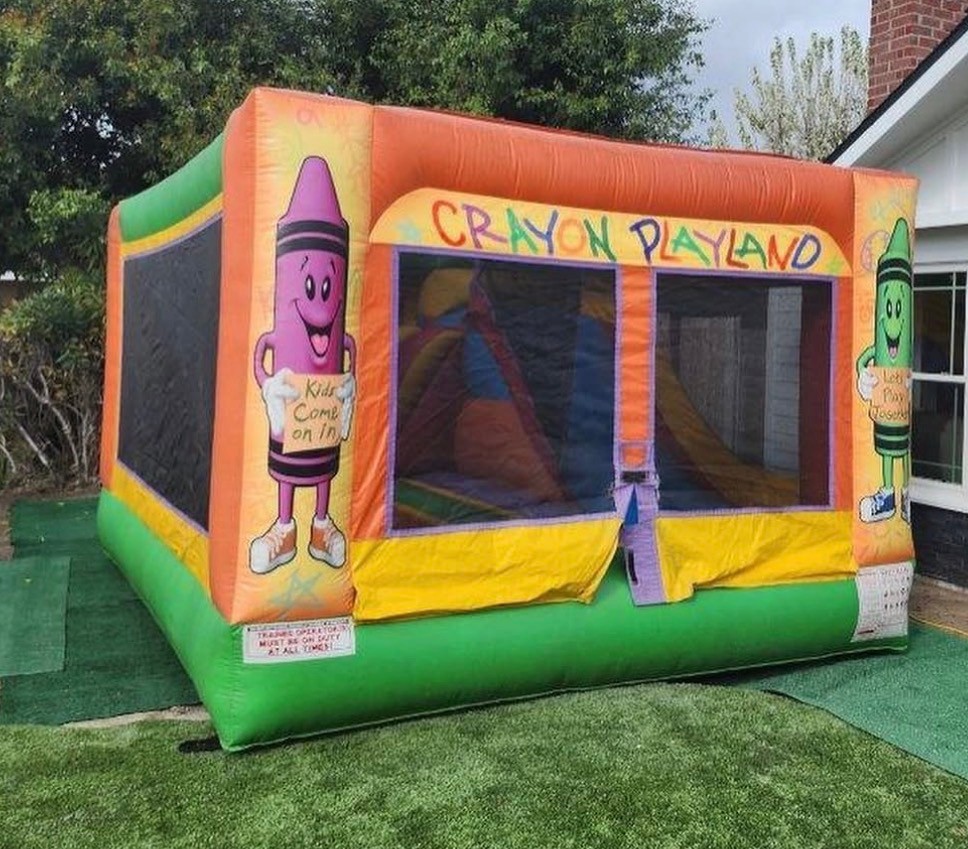
A bounce house at a park is a different environment than a backyard. There are more kids around, more distractions, and often less natural separation between the inflatable and the rest of the event. That makes active adult supervision more important, not less.
Assign at least one adult to the bounce house at all times. That person's job is to watch the entrance and exit, manage how many kids are inside at once, and stop rough play before it becomes a problem. Flips, wrestling, and collisions are the most common causes of minor injuries in inflatables, and most of them are preventable with consistent supervision.
Keep a few basic rules in place before kids enter. Shoes, glasses, jewelry, and sharp objects should come off. Food and drinks stay outside. Younger children and older or larger kids should not share the unit at the same time. These are simple rules, but they work best when one adult is dedicated to reinforcing them rather than trying to manage them while also handling food, guests, or other event logistics.
Weather is worth monitoring throughout the event. Orange County is sunny most of the year, but wind can pick up quickly, especially near the coast or in areas like the Inland areas of the county. If winds reach around 15 to 20 miles per hour or if a storm moves in, the inflatable should be shut down. Have a plan for that scenario so you are not making the call under pressure with a group of disappointed kids waiting nearby.
How Jump High Rentals Makes Park Events Easier
Booking a bounce house for a park event involves more moving parts than a backyard party, and working with a local company that understands Orange County parks makes a real difference. Jump High Rentals handles delivery, setup, and pickup, which matters at parks where timing and access windows can be tight. Knowing the crew will arrive, install the unit correctly, and return to break it down at the end of the event removes a significant logistical burden from the organizer.
The units Jump High Rentals provides are commercially rated and cleaned before each use, which is especially important for community events where many children from different households are sharing the same equipment.
If you are planning a park event and want to confirm which unit fits your space, ask about anchoring options for a specific park, or find out what documentation support is available for permit applications, reaching out before you finalize your park reservation is the best first step. The earlier you start that conversation, the more options you have for date, unit, and setup logistics.
Orange County has some genuinely great parks for outdoor celebrations. With the right preparation, a bounce house rental can be one of the easiest and most memorable parts of the whole event.